
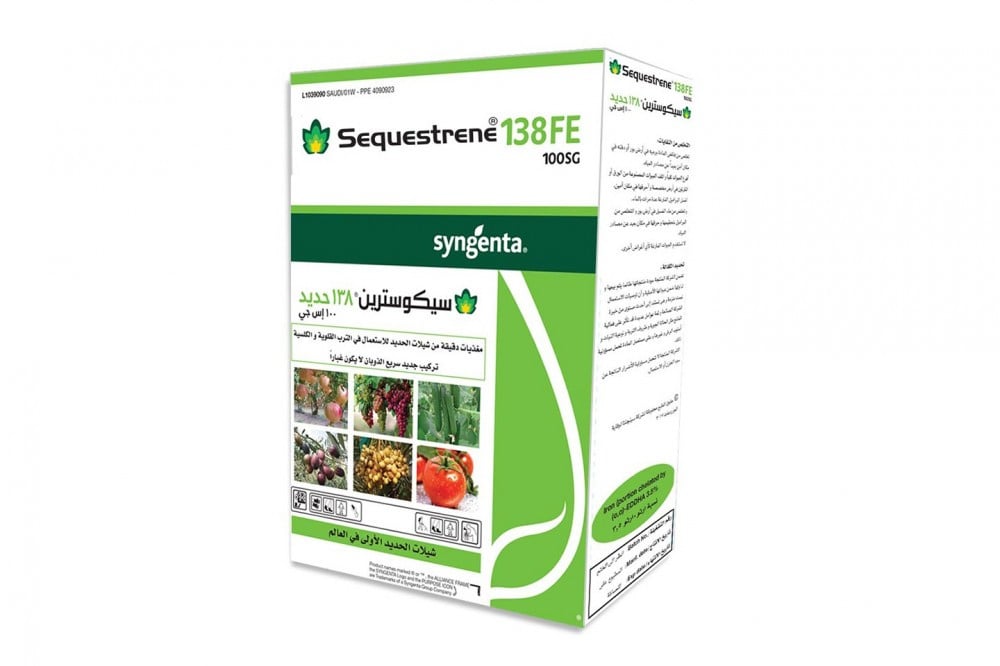
- Fully water-soluble granules containing 6.24% ortho-ortho chelated iron (of which 3.5% is in the ortho-ortho EDDHA 3.5% form), which is the most effective form thanks to the strength of the bond.
- It was developed to treat and prevent iron deficiency in a wide range of growing field and horticultural crops due to its high ability to protect and make iron available in the most challenging soil types, namely alkaline and calcareous soils.
- It is characterized by a stable pH ranging from 3.5 to 11, which helps prevent the fixation of iron and its rapid absorption, and it is available for an extended period. The highest efficiency of chelated iron by EDDHA can be obtained when it is added to the soil through drip irrigation, or scattered around the bases of trees or next to planting lines, or added to hydroponics. It is advised not to add it as a foliar spray unless it is not possible to add it through the soil.
- High stability in soil and solutions within a pH range of 3.5 to 11. It can be added alone or mixed with most soluble fertilizers or pesticides, but a preliminary test is recommended before preparing any product.
- Sequestrin 138 Iron 100 SG is a food supplement of iron chelates that is very effective in treating iron deficiency in plants such as citrus, field crops, orchards and ornamental plants.
- This food supplement promotes darker-colored vegetables that are free from yellowing. It also enhances bud and flower development, leading to increased yields and improved crop quality.
- Studies indicate excellent efficacy of Sequestrin 138 Iron 100 in alkaline and calcareous soils, where iron may not be available in sufficient quantities to meet plant needs. The compound is typically applied by broadcasting it on the soil or spraying it on green leaves.
- The mixture consisting of the fertilizer includes iron at a rate of 5.5%, potassium at a rate of 15%, and nitrogen at a rate of 3%.
For best results
Sequestrin is absorbed by the roots and leaves, but root absorption is superior in terms of duration and effectiveness.
Addition to the soil: This is done by injection, scattering next to the plant, in a trench around the tree trunks or plant lines, or through irrigation.
Addition: Spray onto the leaves: Use enough water to completely cover the plant.
For preventative use: It is preferable to add it early in the season with planting or at any time during the active growth of the plant.
For therapeutic use: Add at any time during the growing season as long as environmental conditions support active growth and do not interfere with flowering or fruiting. The rates mentioned are for guidance only; exact rates depend on crop type, age, planting density, and other factors.