
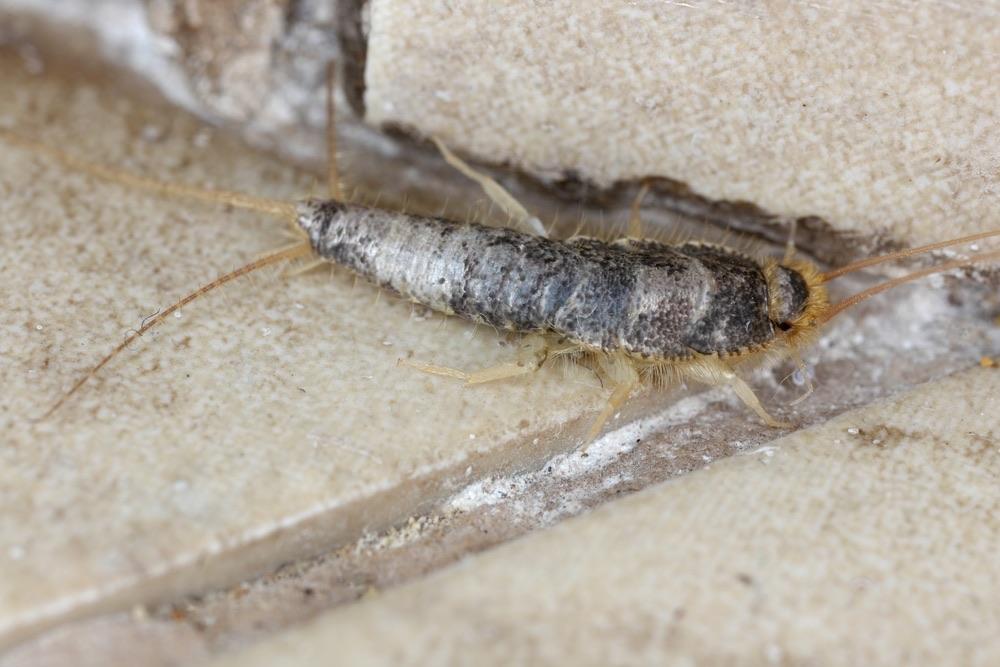

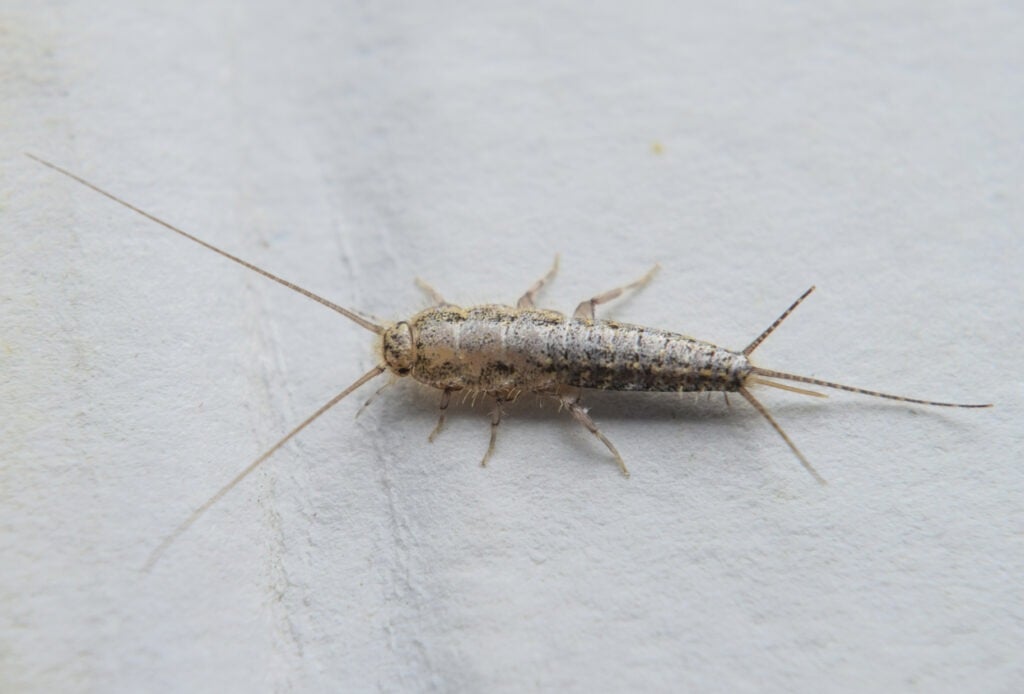
You might notice a small, silvery insect moving quickly when you open a cupboard or move a storage box, or you might see it at night in the bathroom or kitchen. This insect is known as the silverfish , and it gets its name from its silvery body color and its fast, fish-like scurrying motion.
Silverfish don't live in homes by chance; they seek out moisture, hiding places, and suitable food sources . Therefore, simply getting rid of the insects you see may not be enough if the conditions that help them survive and reproduce persist.
What is a silverfish insect?
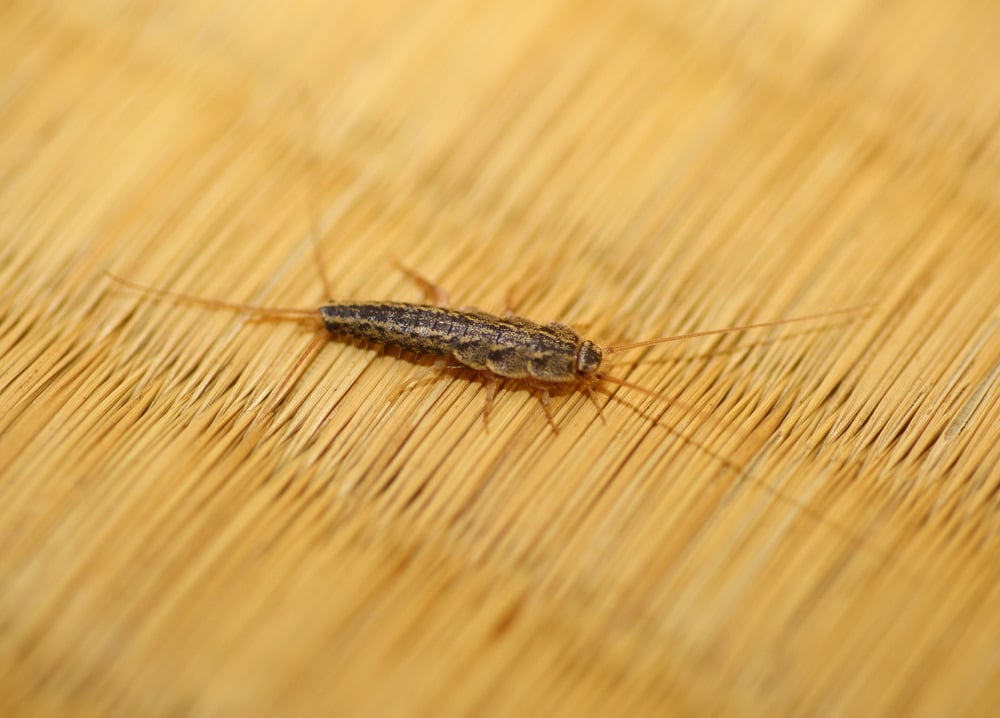
The silverfish is a small, wingless insect with an elongated body covered in shiny silver or gray scales, tapering gradually towards the rear. It has two long antennae at the front of its body and three long appendages at its rear.
The adult insect is typically about 6–13 mm long , though some individuals may be larger. It is a nocturnal insect that hides during the day, and when something it was hiding under is disturbed, it quickly moves to find another dark place.
Why do silverfish appear in the house?
The appearance of silverfish is usually linked to the presence of moisture, food sources, and hiding places . Therefore, they are commonly found in quiet, dark areas where the contents are not constantly disturbed.
Some places where you might find it:
- Bathrooms and laundry rooms.
- Under basins and around damp areas.
- Warehouses and old cardboard boxes.
- Bookcases and libraries.
- Behind the wallpaper.
- Inside the cracks and crevices.
- Closets and low-traffic areas.
The presence of water leaks or high humidity helps to provide a suitable environment for silverfish, and therefore treating the source of moisture is an important part of the control and not just an additional procedure.
What does silverfish eat?
Here is one of the most important pieces of information for understanding why the insect persists inside the house.
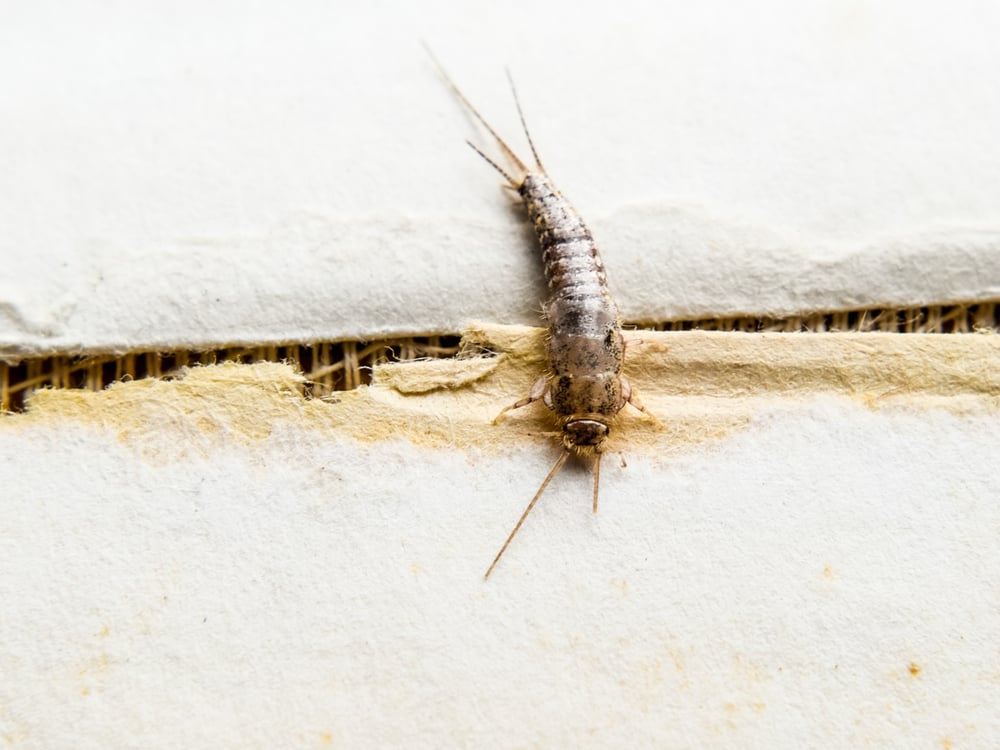
Silverfish can feed on a wide variety of materials, especially those containing starches, carbohydrates, and some protein-rich substances .
Its food sources include:
- Paper and some paper products.
- Adhesives used in books and wallpaper.
- Starch is found in some fabrics.
- Flour, grains, pasta and dry foods.
- Dry animal feed.
- Dust and some organic waste.
- Dead insects.
- Some fungi.
Therefore, cardboard boxes, old books, and warehouses containing paper materials and dry food can provide both food and a hiding place at the same time .
Do silverfish eat clothes and books?
Silverfish can cause damage to some property, but the damage varies depending on the material involved.
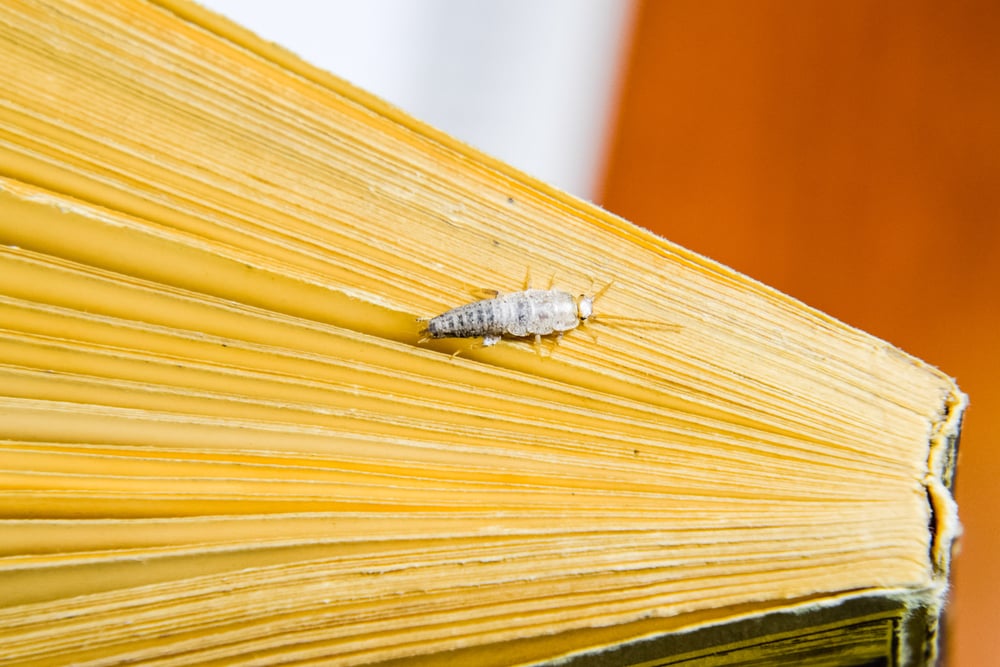
In books and papers, it may feed on adhesives, starches, and paper components , and with persistent infestations, eroded surface areas or irregular holes may appear.
Wallpaper, some fabrics, and stored materials containing starch can also be damaged. Therefore, infestations may be more significant in libraries, warehouses, and places containing large quantities of paper, cardboard, and old materials .
Do silverfish bite humans?
Silverfish are considered more of a nuisance in homes than a health hazard to humans , and are not known as blood-sucking insects like bedbugs or fleas.
The main problem with it is its ability to reproduce, hide, and cause damage to books, papers, and some stored materials if the infestation becomes large.
Where do silverfish lay their eggs?
The female lays the eggs in hidden and protected places such as cracks and crevices, and may also be placed near dust or materials that provide suitable conditions for the young.
The eggs are very small, so it is unusual for a homeowner to discover an infestation by seeing the eggs themselves; in most cases, adult or young insects are observed moving, or the damage they cause is noticed .
Data from the University of California indicates that silverfish eggs can hatch under suitable conditions in about 19–32 days , while the rate of growth varies greatly depending on temperature, humidity and surrounding conditions.
Why do silverfish appear in the bathroom?
Seeing silverfish in the bathroom is common due to their need for humidity and a protected environment . However, it doesn't necessarily mean the insect came from the drain.
The insect may be hiding in a crack or nearby crevice and then fall into the bathtub or sink, unable to easily escape due to the smooth surface. The University of California specifically points out that seeing silverfish in sinks does not necessarily mean they came up from the drain. ( UC IPM )
So if you see it constantly in the bathroom, check for leaks, cracks, gaps around pipes, and areas that remain damp for long periods instead of focusing only on the drain opening.
How do you know if you have a silverfish infection?
Seeing a single insect does not necessarily mean there is a major infestation, especially since silverfish move long distances while searching for food.
However, repeated viewings warrant an investigation of the location, especially if:
- Small silver insects that move quickly at night.
- Small and large individuals of different sizes.
- Irregular damage to paper or books.
- Activity inside cartons and warehouses.
- The insect is frequently found in humid areas.
Sticky traps can be used in corners and along walls to help identify areas of activity and monitor infection levels. ( UC IPM )
How do you get rid of silverfish?
Effective control doesn't just rely on spraying the insects you see. You must address moisture, food sources, hiding places, and any insects present simultaneously.
Begin with the following steps:
- Repairing water leaks and sources of moisture.
- Improve ventilation in bathrooms and wet areas.
- Reduce humidity in enclosed spaces when needed.
- Get rid of unnecessary cardboard boxes and old papers.
- Cleaning dust and debris inside closets and storage areas.
- Store flour, grains, and dry foods in airtight containers.
- Seal cracks, gaps, and spaces around pipes.
- Use sticky traps to identify areas of activity.
- Treat hiding places with the registered insecticide for silverfish according to the product instructions when an infestation requires treatment.
Addressing moisture is crucial; relying solely on pesticides while leaks, moisture, and food sources persist may lead to the problem continuing or recurring. ( UC IPM )
Where is processing most important?
If the infestation is obvious, the goal is not to spray the entire floor, but to identify the places where the silverfish hide and move and treat them appropriately according to the product label.
During the inspection, focus on cracks and gaps, behind cabinets, along wall edges, in bookcases, in storage areas, around pipe penetrations, and in dark places where they are frequently seen.
If silverfish continue to appear after treatment, there may be a hidden infestation or an untreated damp area . UC IPM guidelines indicate that continued activity weeks after treatment warrants searching for untreated hiding places and persistent sources of water or moisture.
Is the silverfish the same as the Firebrat?
No. There is a great similarity between silverfish and firebrat , so they may be confused.
Silverfish are usually silver or pearly gray and prefer damp places, while firebugs are gray or mottled brown and prefer warmer places , so they can be found near ovens, hot water pipes and heat sources.
Knowing the difference between them is important if the infestation is ongoing, because the location to look for the source of the problem may vary depending on the insect present.
How do you prevent silverfish from returning?
Prevention relies on making the home less hospitable to the insect. By reducing humidity, food, and hiding places, its ability to settle and reproduce decreases.
Focus on three key things:
- Humidity: Repair leaks, improve ventilation, and dry damp areas.
- Food: Store dry foods properly and minimize the accumulation of paper, cardboard, and dust.
- Hiding: Seal cracks, clean storerooms and cupboards, and move stored items around periodically.
In this way you not only get rid of the silverfish you see, but also address the conditions that allowed it to exist in the first place .
Summary
Silverfish are small nocturnal insects that prefer hidden and damp places, and feed on a wide range of materials including starches, paper, adhesives, dry food, and some organic waste.
If you see them frequently, don't just focus on killing the visible insects. Look for the source of moisture, their hiding places, and their food source . Use traps to monitor their activity, and then use a registered silverfish control product when necessary and according to the label instructions.
The more you treat the environment in which the insect lives, in addition to direct control, the better the chance of controlling the infestation and preventing its return.