
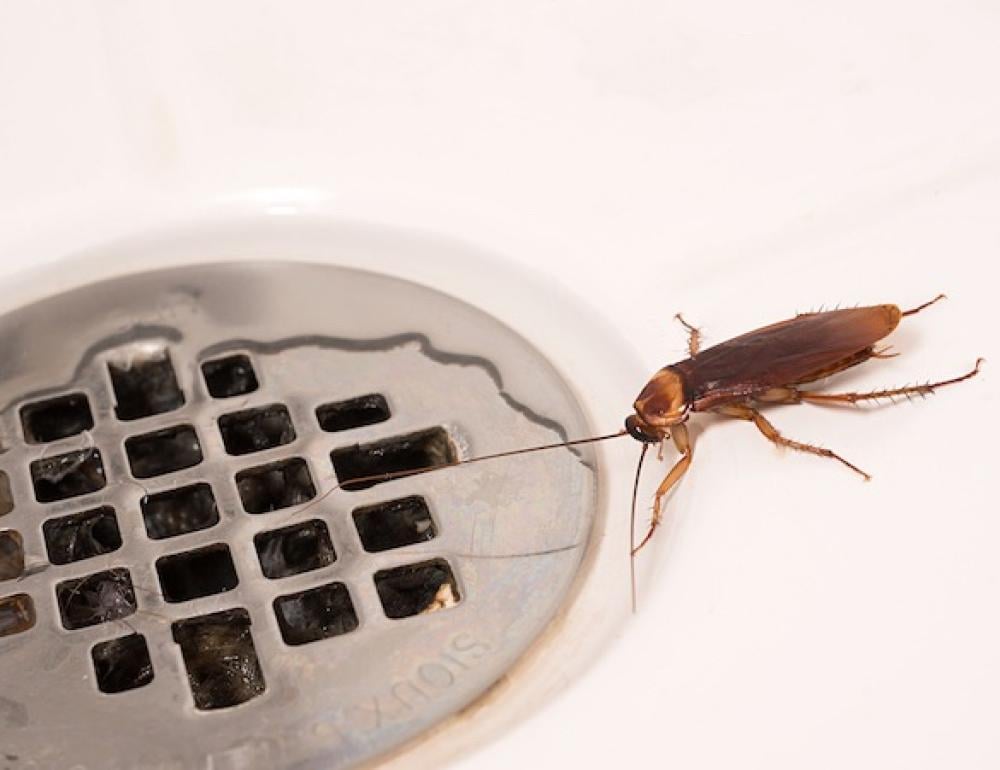

- The American cockroach is one of the most widespread cockroach species in Saudi Arabia. It is characterized by its large size and ability to live in sewers, inspection chambers, and drainage pipes, then easily enter homes through plumbing openings and damp cracks. Its danger is not limited to nuisance; it also carries bacteria and microbes, contaminating food and surfaces, and has a high reproduction rate in hard-to-see or inaccessible places. Therefore, controlling it requires a comprehensive program that begins with treating the external source before addressing the internal one.
🧭 Why does it appear so frequently in winter?
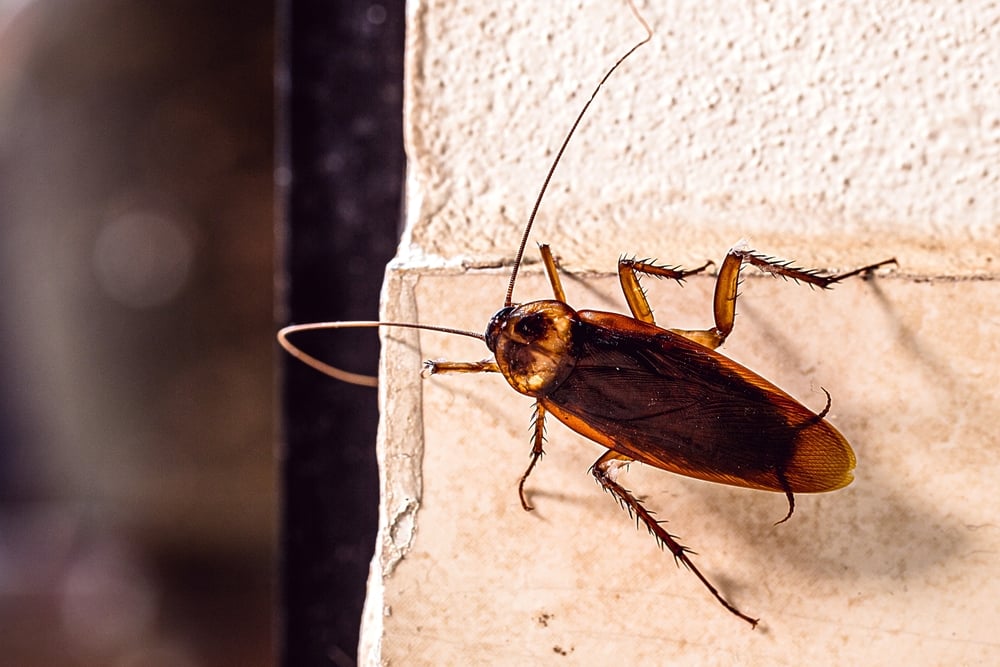
- In winter, the American cockroach becomes more prevalent indoors because it seeks a warm, humid environment. Kitchens, bathrooms, and laundry rooms are warmer than outdoors, which encourages them to enter through drains. Food is also scarce outdoors during this season, so cockroaches seek out food scraps, grease, and moisture around sinks and toilet bowls. Therefore, winter is considered one of the most severe seasons for indoor infestations.
🔍 Where it is found and the reasons for its appearance
- The American cockroach infests inspection chambers, septic tanks, and sewer systems, then spreads to kitchens and bathrooms through open drains or cracks around pipes. The main causes of infestation are high humidity, accumulated grease and food scraps, unsealed drains, water leaks, and cracks behind sinks or appliances that collect moisture. An untreated external source of infestation can also perpetuate the infestation even with internal treatments.

🕳️ His hiding places inside the house
- The American cockroach often hides behind refrigerators, ovens, and dishwashers, under sinks and behind the toilet siphon, in cracks under kitchen cabinets and inside old air conditioner vents, around toilet bowls, and in damp corners behind heat-emitting appliances such as washing machines and water heaters.
🧠 American cockroach behavior
- The American cockroach is a nocturnal insect that moves in the dark and hides at sudden lights. It relies on its antennae to navigate and find food, and can survive for extended periods on very simple food sources, enabling it to thrive in damp environments such as bathrooms and kitchens. It also moves quickly inside pipes and cracks, allowing it to infest several rooms in a single night.
🔄 The life cycle of the American cockroach
- Its life cycle goes through three main stages. The first stage begins with the otheca, which is the egg capsule that the female lays in moist and dark places and contains 14–16 eggs. This capsule is characterized by being resistant to pesticides and is not affected by spraying, and this is a major reason for the return of the infestation if the source is not treated.
- After hatching, the nymphs undergo several developmental stages, the most responsive to residual pesticides. Upon reaching maturity, the adult insect emerges, capable of reproduction and short-distance flight in warm conditions. The entire life cycle takes between four and six months, allowing for rapid infestation if not controlled early.
💥 The dangers of the American cockroach
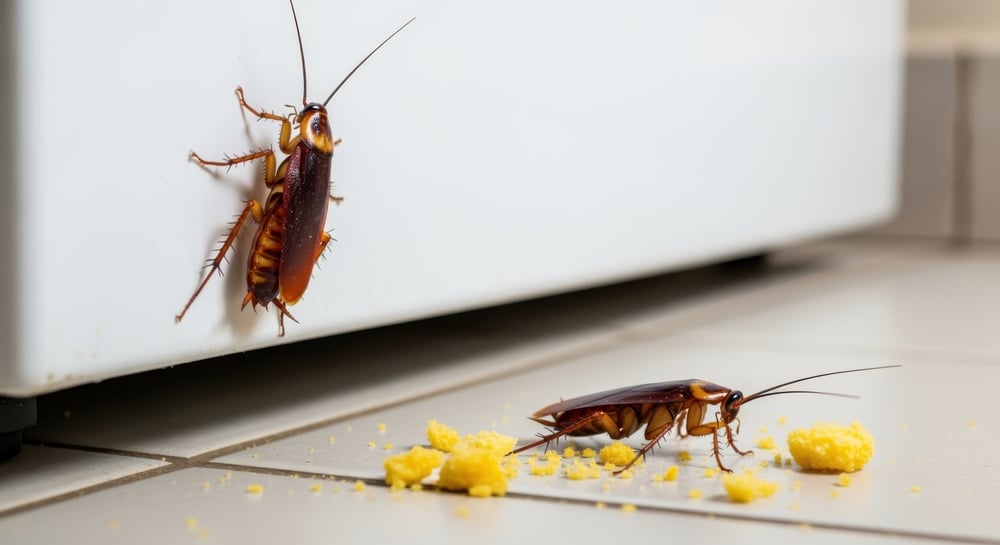
- The American cockroach poses a health risk because it carries bacteria and microbes from sewers and drains onto food and utensils, causing unpleasant odors and potentially triggering allergies and asthma, especially in children. It can also travel between apartments through pipes, making infestations a common problem in residential buildings. Infestations are particularly serious in food establishments and restaurants.
🔍 Signs of infection inside the home
- There are clear signs of an American cockroach infestation, such as seeing them at night when the light is suddenly switched on, an unpleasant odor in the kitchen or bathroom, small dark droppings on walls and in corners, scratchy spots around pipes, and hearing faint rustling behind appliances at night. These signs help in detecting an infestation early.

🛠️ Integrated Pest Management Program
- 🌱 1) Prevention and prevention of entry
- Control begins with prevention by sealing cracks around pipes, installing mesh for drainage openings, and cleaning inspection chambers regularly, in addition to drying bathrooms and kitchens, removing grease and food scraps behind appliances, and ensuring that toilet bases are sealed with silicone to prevent cockroaches from entering from below.
🧴 2) Residual spray inside the house
- The remaining spray is used on edges, under basins, behind appliances, and in damp areas. Some of the best active ingredients are deltamethrin, lambda-cyhalothrin, cypermethrin, and alpha-cypermethrin.
🧪 3) Gel inside kitchens
- The gel is an essential step because it reaches cockroach hiding places behind appliances and kitchen cabinets. Key active ingredients include fipronil, imidacloprid, and indoxacarb. Apply the gel in small dots to these hidden areas.
🌫️ 4) Processing the external source
- This is the most important step because American cockroaches often come from inspection chambers and drains, not from inside the kitchen. Treatment involves using effective substances such as permethrin, cypermethrin, and lambda-cyhalothrin to spray inspection chambers, drains, and the perimeter of the house to prevent cockroaches from entering in the first place.
🧠 Why do control efforts sometimes fail?
- Control fails when spraying is done only inside the house without treating septic tanks and inspection chambers, or when there are unsealed openings around pipes, or because the eggs are resistant to pesticides, allowing nymphs to emerge weeks after treatment.
🔍 The difference between the American and German cockroach
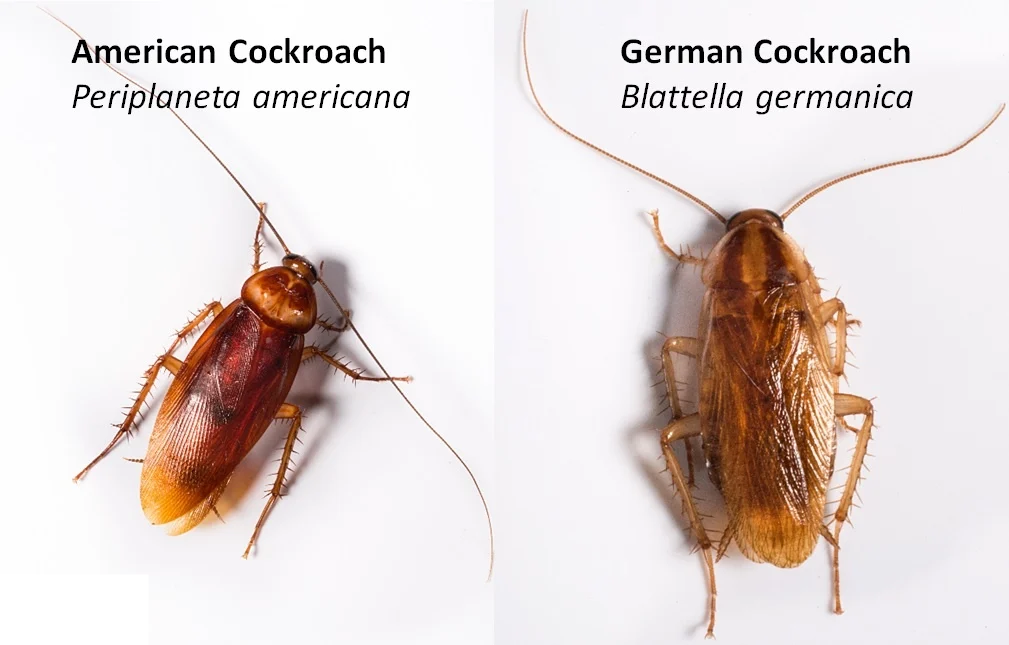
- The American cockroach is large and comes from the drain and needs external treatment with gel and internal spraying, while the German cockroach is very small and lives inside the kitchen itself and reproduces very quickly, and its control depends mainly on gel with constant cleanliness.
📌 Orchid Extract
- Successful control of American cockroaches depends on treating the external source first, then applying gel inside the kitchen, and spraying in bathrooms and damp areas, while sealing all entry points. Partial treatment or a single step will not be sufficient and will allow the infestation to return quickly.