
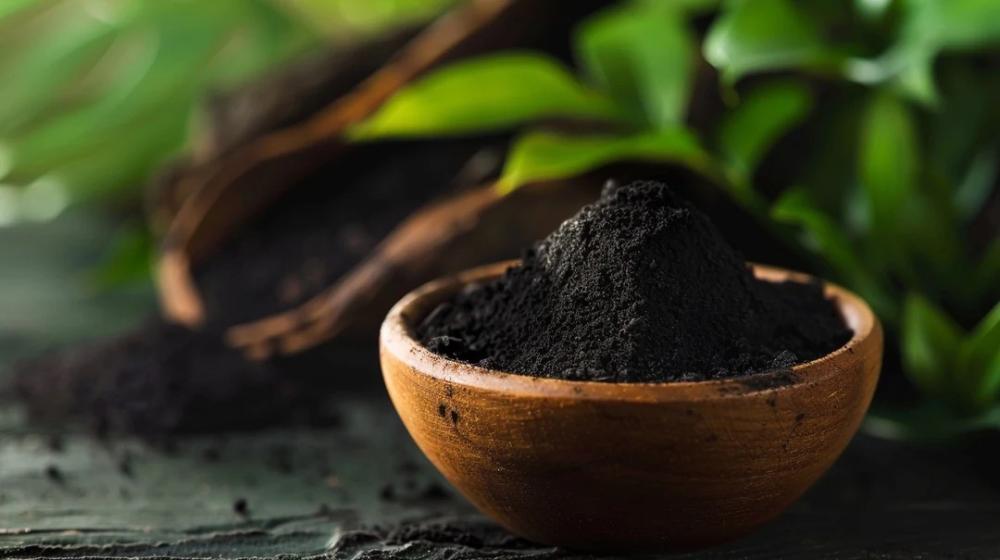

Humic acid has become one of the most widespread products in modern fertilization programs, but its popularity in the market does not mean it is necessary in all cases. Plant success depends not only on the addition of nutrients, but also on the soil's ability to retain these nutrients and make them readily available to the roots. Often, the problem is not a lack of fertilizer, but rather a poor absorption environment within the soil. This is where humic acid plays a role as a soil conditioner, aiming to improve the efficiency of the root system, rather than as a direct fertilizer that addresses an apparent deficiency.
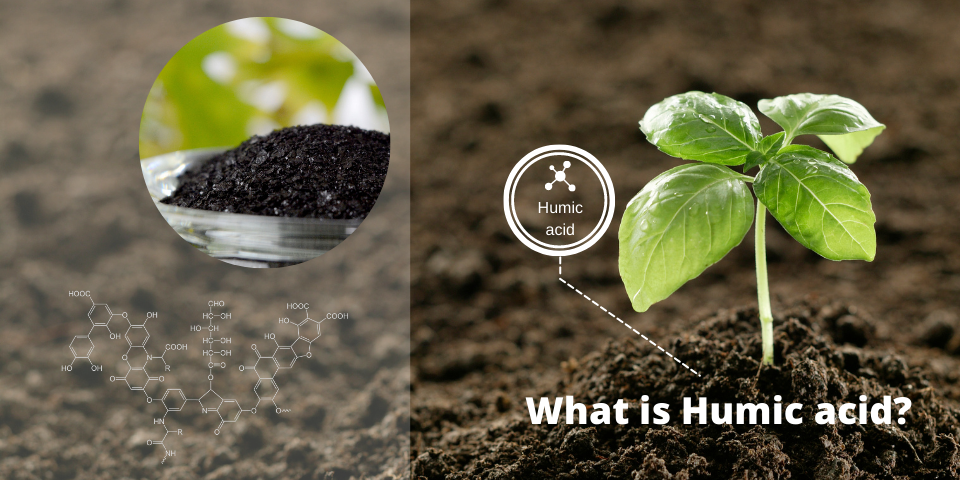
What is humic acid?
Humic acid is a natural organic compound produced from the decomposition of plant remains over long periods. It is used in agriculture to improve the physical and chemical properties of the soil. While not a direct source of macronutrients like nitrogen or phosphorus, it enhances the soil's ability to retain these elements and regulates their availability within the root zone, thus increasing the efficiency of added fertilizers and reducing losses.
How does it affect soil efficiency?
One of the most important roles of humic acid is to increase the cation exchange capacity (CEC) of the soil, which is the soil's ability to retain positively charged nutrients such as calcium, magnesium, potassium, and ammonium. In sandy soils, this capacity is low, leading to rapid nutrient loss through irrigation. When humic acid is added, the soil's ability to retain these nutrients improves, reducing leaching and making nutrient uptake more stable within the root zone. In practical terms, this means that the same amount of fertilizer provides greater efficiency because leaching is reduced and nutrient distribution is more uniform.
What is its relationship to roots?
Improving soil properties directly impacts root activity. When aeration improves and water and nutrient distribution around the root is balanced, the fine root hairs responsible for absorption proliferate. Any disruption to the root environment weakens absorption, even if nutrients are available. Therefore, while humic acid plays an indirect role in supporting roots, it is essential for building a more stable root system that can withstand heat or salinity stress.
When is it really necessary?
Humic acid is particularly important in sandy soils that rapidly lose nutrients, in soils low in organic matter, and in situations where plants show poor response despite a consistent fertilization program. In highly saline environments, humic acid does not remove salts from the soil, but it helps improve ion balance within the root zone and reduces the effects of salt stress by supporting root activity and improving soil structure. In these cases, incorporating it into the fertilization program is a logical step to improve soil efficiency in the medium term.
Does the result differ depending on the form of the humic acid (liquid - powder - granules)?
The product's form influences its application and speed of action more than its scientific principle. Liquid humic acid is often applied via irrigation or drip irrigation and is characterized by its rapid dispersal within the root zone, making it preferable for in-season treatments or when faster intervention is needed. Powdered humic acid is typically more concentrated and requires precise dissolution before use; it is used when accurately calculated doses are required within a regular fertilization program. Granulated humic acid is added directly to the soil and offers a gradual, long-term effect, making it preferable during the establishment stage or when improving soil properties before planting. Choosing the appropriate form depends not only on potability but also on agricultural management practices, the irrigation system, and the intended use.
When is it not necessary?
If the soil is balanced, rich in organic matter, and has a good capacity for retaining nutrients, there may not be a noticeable difference when using it. Similarly, soilless farming systems do not benefit from it in the same way. Therefore, the decision to use it should be based on a technical assessment of the soil condition, not simply on the product's market availability.
Can it be relied upon as a substitute for fertilizer?
Humic acid is not a substitute for fertilizer because it does not provide the plant with essential nutrients. Rather, it improves the plant's ability to utilize existing or added nutrients. Relying on humic acid alone will not cure nutrient deficiencies, but it may enhance the results of a fertilization program if the problem lies in the soil properties themselves. It is important to distinguish between humic acid used to improve soil quality and fulvic acid, which is often used to support absorption via foliar spraying, as each has a different function within a nutrient program.
Summary
Humic acid is not a magic bullet, but it is a technical tool for improving soil efficiency when truly needed. Its importance is particularly evident in sandy or low-organic-matter soils, where it helps reduce nutrient loss and improve nutrient stability within the root zone. Professional agricultural management relies not on the quantity of inputs, but on understanding the relationship between soil, roots, and nutrients. When decisions are based on a realistic analysis of the situation, the results become more stable and predictable in the long term.