
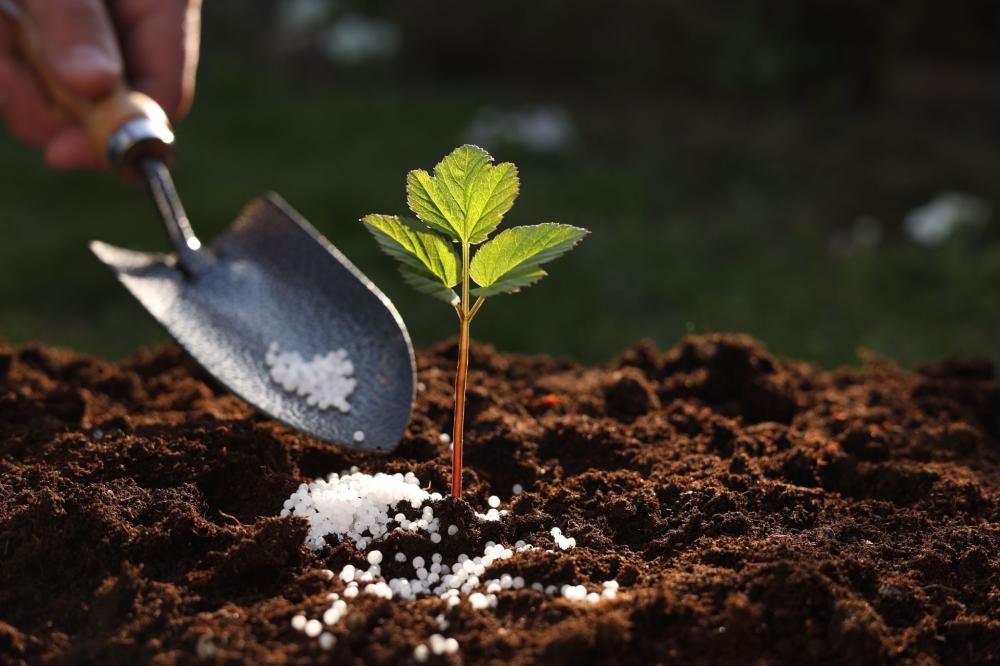

Building a healthy plant doesn't begin with the shape of the leaves or the apparent speed of growth, but rather with the roots. The roots are the foundation upon which everything else is built; if they are strong and well-branched, this will be reflected in vigorous growth, flowering, and fruit production. However, if they are weak, no amount of subsequent fertilization will compensate. Therefore, choosing the best fertilizer to strengthen the roots is a truly foundational step, not just a passing phase in the fertilization program.

Why is the root system considered the “foundation”?
Just as a building needs a solid foundation, a plant needs a strong root system. Roots are responsible for absorbing water and nutrients and regulating the plant's balance within the soil. The more extensive and efficient the roots, the better the plant's overall performance and its ability to withstand heat, drought, and environmental stress. Weak roots mean poor absorption, and therefore, overall weakness, even if nutrients are available.
Building the right foundation at the beginning saves the plant a lot of problems in the following stages.
What role does fertilizer play in building this foundation?
Fertilizer doesn't create roots from nothing, but it creates the right conditions for their growth. The element most closely associated with root formation is phosphorus, as it helps in the formation of new roots and stimulates the fine root hairs responsible for absorption. This is why fertilizers with a higher phosphorus content are emphasized during the establishment stage or after transplanting seedlings.
But fertilizer alone is not enough; it must be used at the right time and in the appropriate dose in order to perform its role effectively.
How do you choose the right formula?
Choosing the right fertilizer starts with reading the NPK numbers on the packaging. These numbers represent nitrogen, then phosphorus, then potassium. The second number indicates the phosphorus content. When this number is relatively higher than the others, it means the fertilizer is suitable for supporting roots in their initial growth stage.
Once the plant has established itself and developed strong roots, a balanced formula suitable for vegetative growth or flowering can be used. The idea is not to use the same formula throughout the season, but to choose the appropriate formula for each stage.
Is strengthening the roots a temporary phase or an ongoing process?
Intensive root support is crucial during the establishment phase, but root system care doesn't cease entirely afterward. Once the initial structure is complete, the focus shifts to maintaining soil balance and ensuring continued efficient absorption. Any disruption in irrigation or soil conditions can later affect the roots, even if the initial growth was strong.
Foundation building begins at the start, but maintaining it continues throughout the plant's life cycle.
What effect does soil type have on root development?
Soil type plays a significant role in the success of the establishment phase. Rapidly draining sandy soils require careful management of irrigation and fertilization to prevent rapid nutrient loss, while heavy clay soils can hinder root development due to poor aeration. In both cases, selecting the appropriate fertilizer must be accompanied by improving soil conditions, as an unsuitable environment can limit the effectiveness of any formulation.
What could weaken the foundation?
Over-fertilizing is one of the most common mistakes that weakens roots instead of strengthening them. Excessive fertilization can lead to salt buildup in the soil and an imbalance of nutrients, hindering absorption. Furthermore, overwatering or poor drainage can prevent root growth, even with a suitable fertilizer.
Building a strong foundation depends not on quantity, but on balance and discipline.
How do you know that the foundation needs support?
Slow growth, rapid wilting despite adequate watering, or persistent weakness without a clear cause are all signs that may indicate a problem with the roots. In this case, the solution lies in supporting the root system and improving the soil environment, rather than randomly adding nutrients.
Summary
The best fertilizer for strengthening roots is one used during the initial root-building stage, containing an appropriate phosphorus content within a balanced program, taking into account soil conditions and adhering to the correct dosages. When roots are properly developed, the plant becomes more capable of growth, production, and tolerance to environmental conditions without requiring frequent intervention. Caring for roots is a long-term investment that reflects positively on the overall health of the plant.