
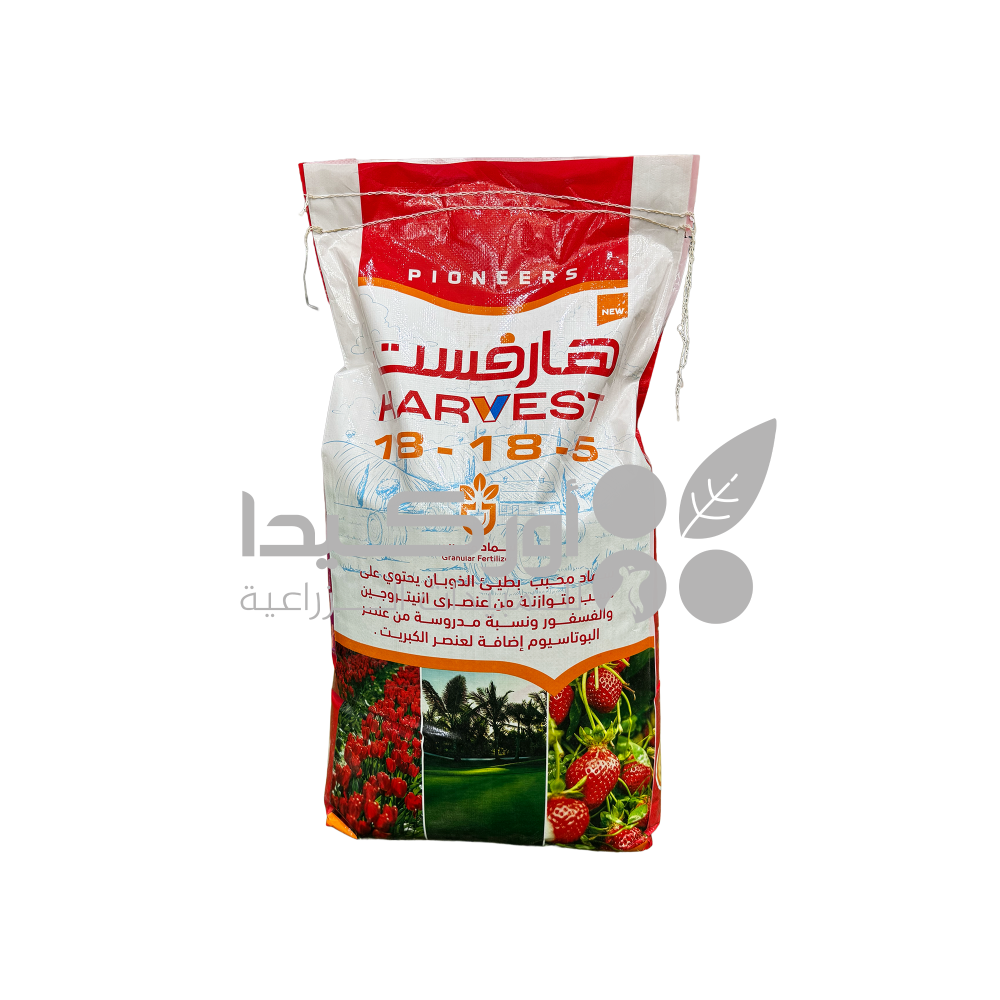
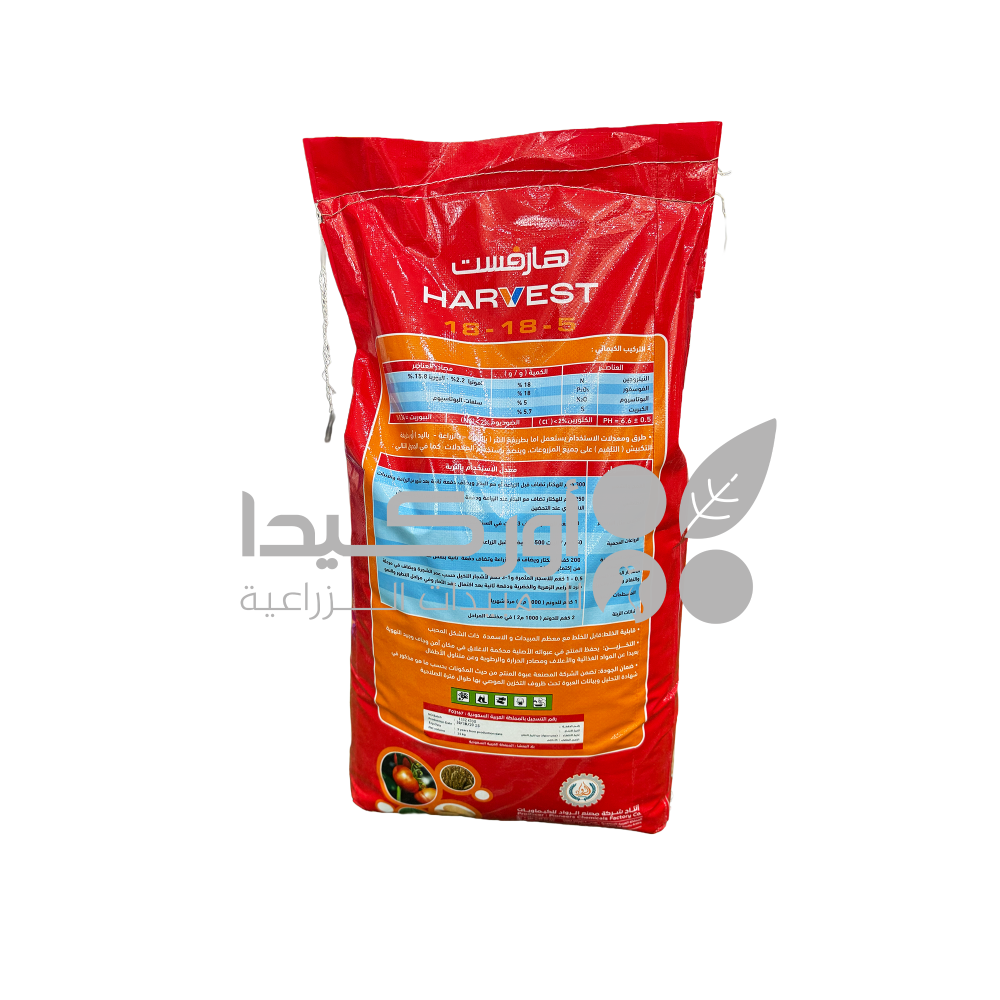

Harvest 18-18-5 is a slow-release granular fertilizer with a balanced formula of 18% nitrogen and 18% phosphorus, plus 5% potassium, enriched with sulfur. It is designed to feed plants from the early growth stages through flowering, helping build a strong root system and balanced vegetative growth without stressing the plant. Suitable for a wide range of field crops, trees and lawns.
Key Features:
- Balanced NPK 18-18-5 formula that supports vegetative and root growth at the same time.
- Slow-release for continuous plant nutrition.
- Helps strengthen roots and improve nutrient uptake.
- Supports steady flowering and fruit set.
- Contains sulfur to improve nutrient uptake and reduce alkalinity.
- Suitable for open fields and greenhouses.
Specifications:
- Trade name: Harvest
- Type: Slow-release granular fertilizer
- Composition:
- Nitrogen (N): 18%
- Phosphorus (P₂O₅): 18%
- Potassium (K₂O): 5%
- Sulfur (S): 5.7%
- pH: 6.6 ± 0.5
- Chlorine: less than 2%
- Application method: Soil application
- Form: Granules
- Country of origin: Saudi Arabia
- Pack size: 25 kg
Directions for Use:
- Vegetables and field crops:
- Apply 200–300 kg per hectare at soil preparation or in split doses during growth.
- Potatoes:
- 250 kg per hectare at planting; a second dose can be applied one month later depending on plant condition.
- Forage crops such as alfalfa:
- 100 kg per hectare after each cut.
- Fruit trees (mango, grapes, apples, date palms):
- 1–3 kg per tree depending on age, split into two applications during the growing season.
- Lawns:
- 1 kg per 1,000 m² once a month.
- Ornamental plants:
- 2 kg per 1,000 m² depending on growth vigor.
Important Notes for Growers:
- Irrigate immediately after application to improve dissolution and uptake.
- Can be mixed with most other granular fertilizers.
- Do not exceed the recommended rate to avoid excessive vegetative growth.
Orkida Tip:
- If you want strong, balanced growth from planting without stressing the plant, Harvest 18-18-5 is a practical and safe choice, especially in the early stages before switching to high-potassium fertilization.