
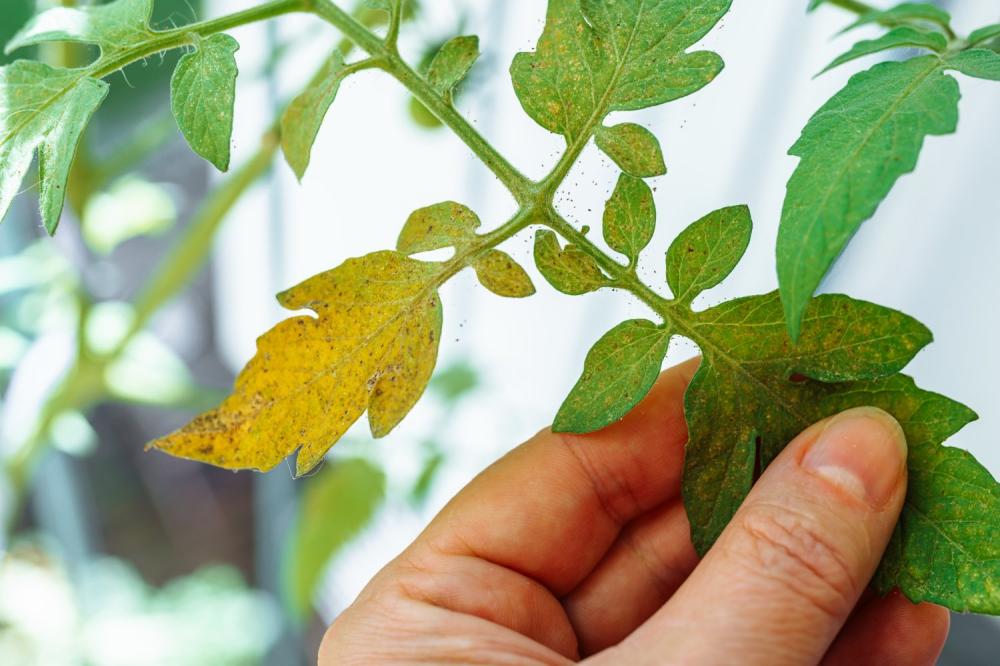

There are many tomato diseases, and most losses come from misdiagnosis: a grower sees spots or yellowing and sprays whatever is to hand, when the real cause is a virus, a nutrient deficiency or an insect. Tomatoes suffer from fungal, bacterial and viral diseases, plus physiological problems that look like disease but are not.
This guide covers the most common tomato diseases, how to tell them apart by their symptoms and the right treatment, with links to a detailed article on each.
Fungal diseases of tomato
Early blight (Alternaria)
- Symptoms: brown spots on older, lower leaves with concentric target-like rings and a yellow halo.
- When it spreads: moderate warmth, humidity and weak plants.
- Treatment: remove infected leaves and rotate suitable fungicides. More in our early blight article.
Late blight
- Symptoms: large dark, water-soaked patches spreading fast on leaves, stems and fruit, with white growth under the leaf in humid conditions.
- When it spreads: cool, wet, foggy weather; it can wipe out a crop within days.
- Treatment: early prevention and a fast systemic spray at the first sign. See our late blight article.
Grey mould
- Symptoms: soft rot on fruit and stems covered with grey dust, especially at wounds and pruning cuts.
- When it spreads: humid, poorly ventilated greenhouses.
- Treatment: improve ventilation, lower humidity and use a specialist spray. More in our grey mould article.
Powdery mildew
- Symptoms: yellow patches on the upper leaf with a light white powder; on tomatoes it often appears under the leaf.
- Treatment: preventive sulphur or a systemic fungicide. See our powdery mildew article.
Fusarium wilt
- Symptoms: wilting on one side of the plant or leaf, yellowing from the bottom up and brown staining inside the stem when cut.
- Treatment: hard to cure once infected; prevention with resistant varieties and soil treatment is key. More in our Fusarium article.
Root rot and damping-off
- Symptoms: seedlings collapse at soil level, or plants wilt with brown, rotten roots.
- Cause: overwatering and poor drainage.
- Treatment: correct irrigation and treat the soil with a suitable fungicide. See our root rot article and damping-off article.
Bacterial diseases of tomato
Bacterial canker
- Symptoms: wilting and scorched leaf edges, white spots with a halo on fruit resembling a bird's eye, and stained stem tissue.
- Treatment: remove infected plants, disinfect pruning tools and use a preventive copper spray. More in our bacterial canker article.
Viral diseases of tomato
Tomato yellow leaf curl virus (TYLCV)
- Symptoms: young leaves curl upwards with yellow edges, plants are stunted and flowering and fruit set stop.
- Vector: whitefly.
- Treatment: no pesticide cures a virus; the answer is whitefly control and removing infected plants early. See our TYLCV article and whitefly article.
Pests that cause disease-like symptoms
- Tuta absoluta (tomato leafminer): transparent mines in leaves and holes in fruit. See our Tuta absoluta article.
- Broad mite: bronzed stems and leaves and cracked fruit. More in our broad mite article.
- Red spider mite: fine yellow speckling and silk webbing under leaves. See our red spider mite article.
Physiological problems mistaken for disease
- Blossom end rot: a dry black patch at the end of the fruit, caused by calcium deficiency or irregular watering; no pesticide needed. See our potassium sulphate and calcium nitrate article.
- Fruit cracking: caused by uneven irrigation, especially heavy watering after drought.
- Sunscald: a white or yellow patch on the sun-exposed side of fruit after over-pruning.
- Yellow lower leaves: usually nitrogen or magnesium deficiency. More in our nutrient deficiency article.
How to protect tomatoes from disease
- Healthy transplants and resistant varieties from a trusted source.
- Adequate spacing and ventilation, especially in greenhouses.
- Drip irrigation, avoiding wet foliage.
- Remove infected lower leaves and virus-infected plants early.
- Control vector insects such as whitefly and thrips.
- Rotate fungicides with different modes of action to avoid resistance.
- Balanced fertilising without excess nitrogen.
Products from Orkida
- Ortiva Top 325 SC fungicide for leaf spots, blights and powdery mildew by Syngenta, 1 L
- Switch 62.5 WG for fruit rots and grey mould by Syngenta, 250 g
- Bellis 38% WG for grey mould, powdery mildew and blight by BASF, 300 g
- Previcur Energy 840 SL for root rot by Bayer, 1 L
- Agrimek Gold 8.4% for mites and leafminers by Syngenta, 100 ml
- Cuprenox 50% WP preventive copper fungicide for blights by IQV, 1 kg
Tomato disease FAQs
Why are my tomato leaves yellowing from the bottom?
Usually nitrogen or magnesium deficiency, the start of early blight if there are brown ringed spots, or Fusarium if the yellowing is on one side with wilting.
What is the difference between early and late blight?
Early blight causes ringed brown spots on older leaves and spreads slowly; late blight causes dark water-soaked patches that spread fast in cool, wet weather.
Is there a cure for tomato viruses?
No pesticide cures a virus. The solution is controlling the vector insect, removing infected plants and preventing spread.
Why is the bottom of my tomato black?
That is blossom end rot, caused by calcium deficiency or irregular watering, and it is corrected with calcium feeding and steady irrigation.