
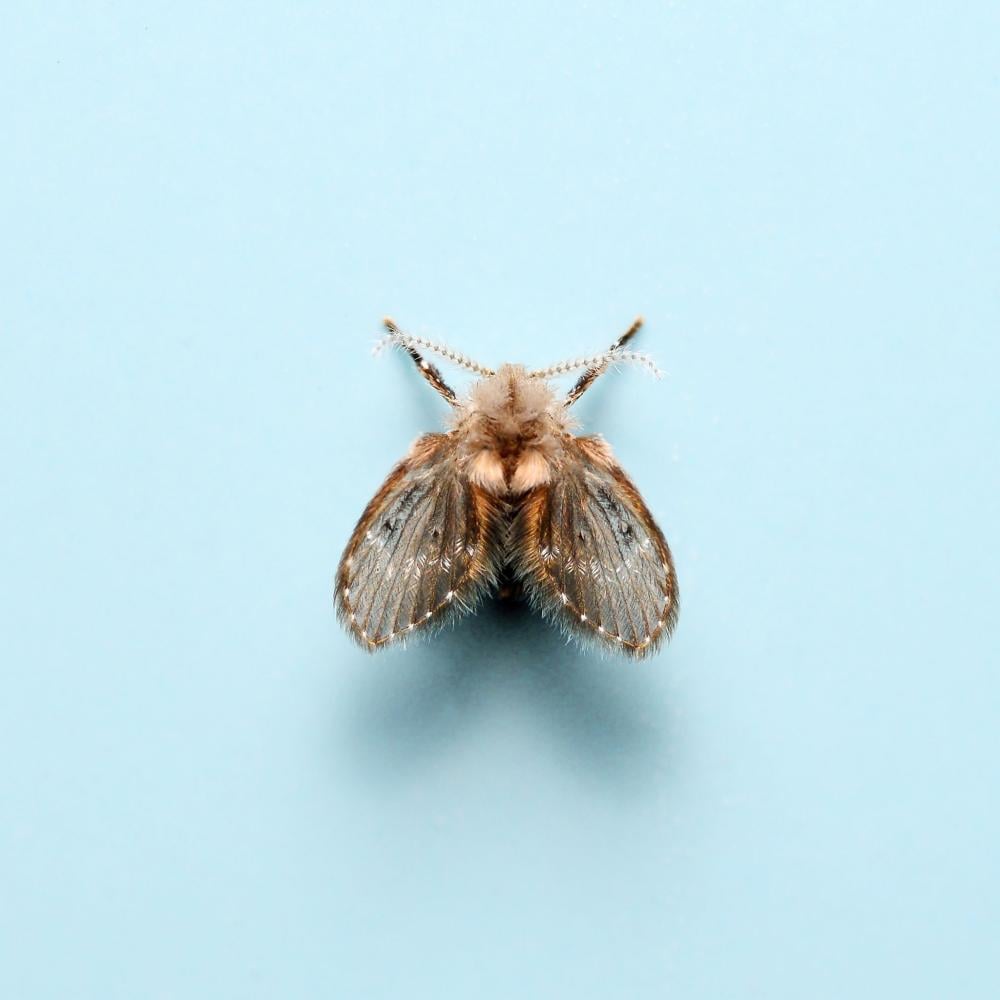

- Drain flies are small insects that appear suddenly inside homes and are often mistaken for regular flies. However, their presence is always linked to a hidden problem within the drainage system. The appearance of this type of fly is not merely accidental or seasonal; rather, it is a clear indicator of the accumulation of organic matter within the drains, providing an ideal environment for their reproduction and proliferation.
- Despite their small size, the frequent appearance of sewer flies in bathrooms and kitchens causes great annoyance and reflects a problem that needs radical treatment, not temporary spraying.

What are sewer flies?
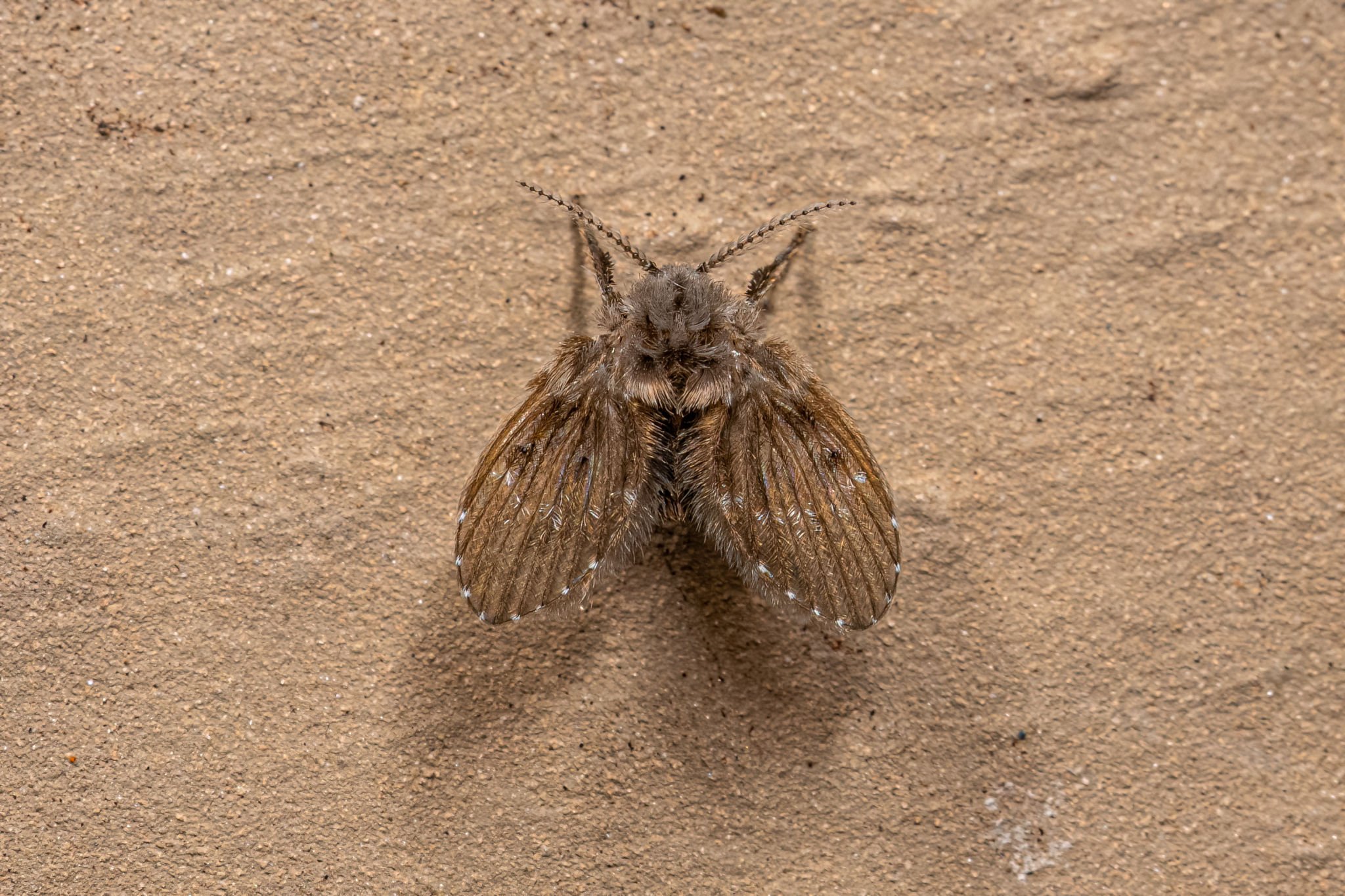
- Drain flies are a type of small fly known for their ability to live and breed inside sewer pipes and drains. They have a small body covered in light fuzz, short wings, and are relatively slow-moving compared to houseflies. They are often seen perched on walls near sinks or inside bathrooms.
- This species is not attracted to exposed food like ordinary flies, but relies mainly on decaying organic matter inside drains.
Where sewer flies are found and the reasons for their appearance
- Drain flies typically appear in:
- Water drainage openings
- Kitchen and bathroom sinks
- Floor drains
- Laundry rooms
- Any place containing stagnant water or organic debris inside pipes
- The main reason for its appearance is the accumulation of a sticky layer of grease, soap residue, hair and organic matter inside the pipe walls, which is an ideal environment for egg-laying and larval growth.
Drain fly behavior inside the house
- Drain flies are weak fliers and tend to stay very close to their point of entry. They are often seen in the same spot daily and do not travel far inside the house. They are more active in damp, poorly ventilated areas and appear in large numbers when the drain has been left unused for extended periods or when there is a partial blockage.
- Killing adult flies does not solve the problem, because the real source of infestation is inside the drain itself.
The life cycle of sewer flies (the most important information)
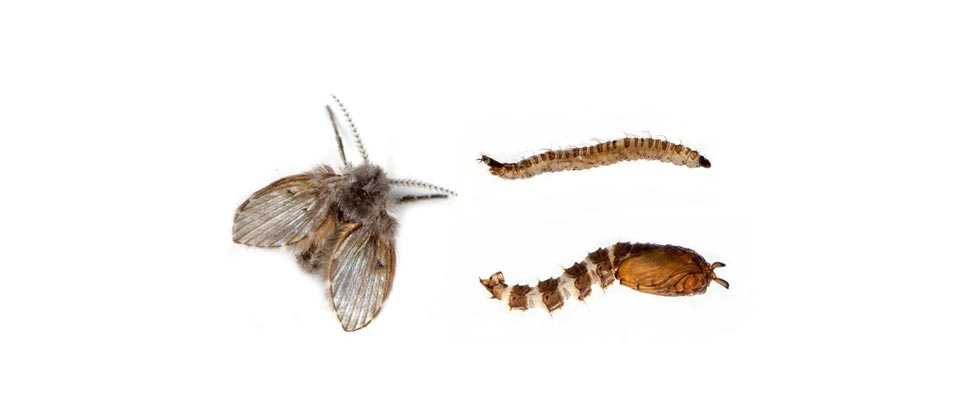
- The life cycle of sewer flies goes through four stages: egg, larva, pupa, and then adult insect.
- The female lays her eggs inside the organic layer adhering to the pipe walls, not in the flowing water itself. The eggs hatch within a few days, and the larvae begin feeding on the organic matter inside the drain.
📌 Important information:
- As long as the organic environment inside the pipes exists, the life cycle will continue uninterrupted, no matter how many visible flies are eliminated.
- The life cycle is completed within a relatively short period, which explains why flies return quickly after any ill-considered surface spraying.
Damage caused by sewer flies
- Although sewer flies are not direct carriers of serious diseases, their presence:
- It causes constant annoyance in bathrooms and kitchens
- This indicates organic contamination within drainage systems.
- It affects general hygiene and comfort
- It may contribute to the transfer of bacteria from the drainage environment to nearby surfaces.
- In residential or commercial buildings, its appearance is an indicator of poor maintenance.

Why is the sewer fly problem getting worse?
- The problem is exacerbated because treatment is often superficial, spraying only the adult flies without addressing the breeding grounds inside the pipes. As the eggs and larvae remain trapped in the sediment layer, the flies reappear within a few days, as if nothing had been done.
Integrated sewer fly control program
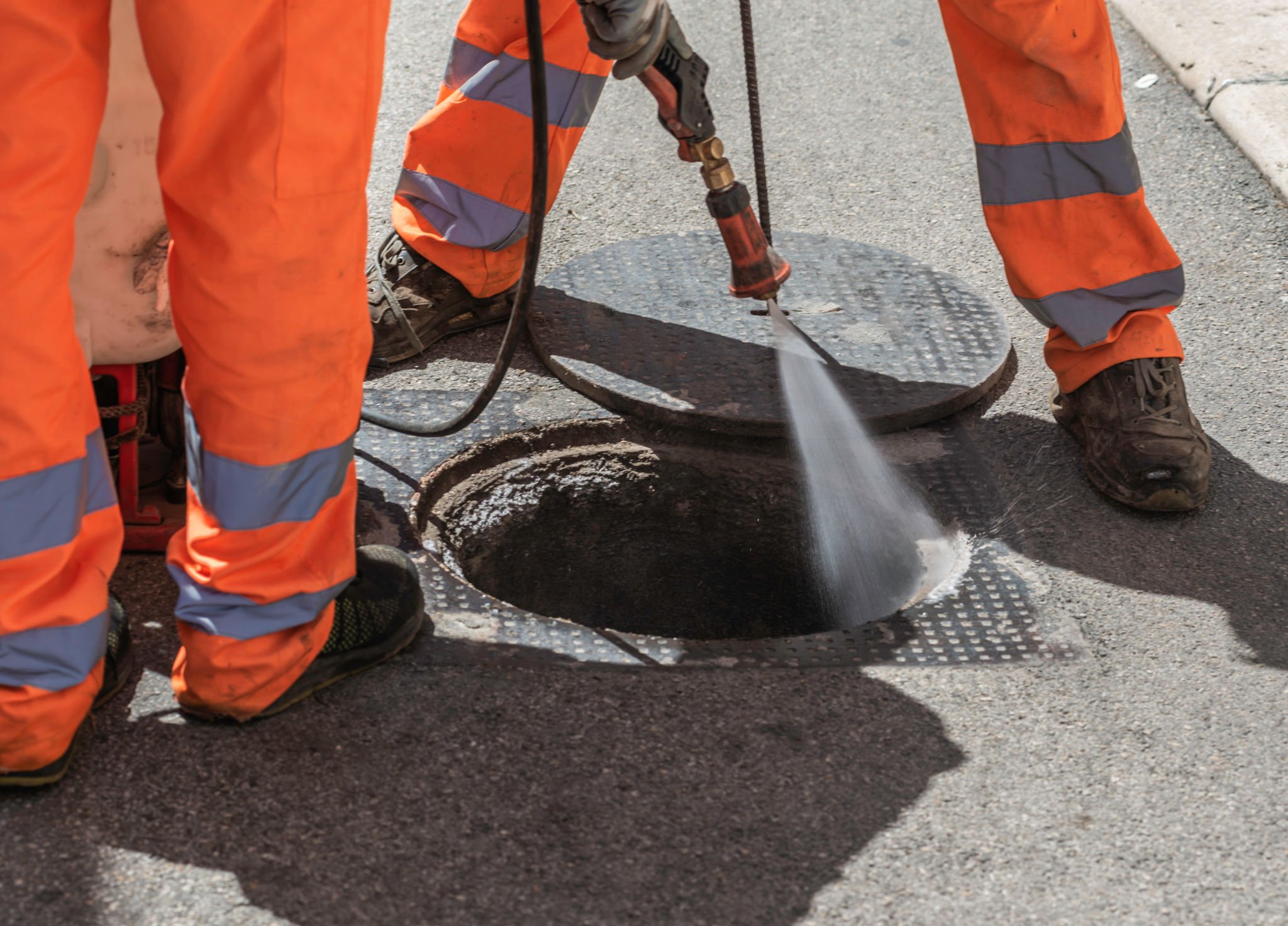
- Cleaning the drains (the real basis of the fight)
- The most important step is to remove the organic layer inside the pipes using:
- Mechanical cleaning (special brushes for drains)
- Hot water with fat-dissolving agents
- Ensure water flows smoothly and there is no stagnation.
- Without this step, any pesticide will only give a temporary result.
Larva control inside drains
- After cleaning the drains, the larvae are targeted directly using materials suitable for the drainage environment.
- The most suitable active ingredients:
- Diflubenzuron (a growth regulator that prevents the completion of metamorphosis)
- BTI bacteria – Bacillus thuringiensis israelensis (an effective biological option against fly larvae)
- These materials operate within the banking environment and target the most critical stage of the life cycle.
Controlling adult flies (secondary role)
- The topical spray is used only to reduce apparent discomfort, not as a primary solution.
- Materials suitable for limited spraying:
- Deltamethrin
- Lambda-cyhalothrin
- The spray is applied to walls near drains and fly landing spots.
Common mistakes in controlling sewer flies
- Relying solely on spraying
- Ignore drain cleaning
- Using pesticides unsuitable for the drainage environment
- The belief that the problem ended once the flies disappeared
- Do not repeat the treatment when needed.
Orchid Extract
- Drain flies aren't a fly problem; they're a drainage problem. The real solution starts inside the pipes, not in the air. Cleaning the drains, then targeting the larvae, with limited support for adult flies, is the right way to eliminate the problem at its root. Any superficial treatment will only mean the flies will return in a short time.