
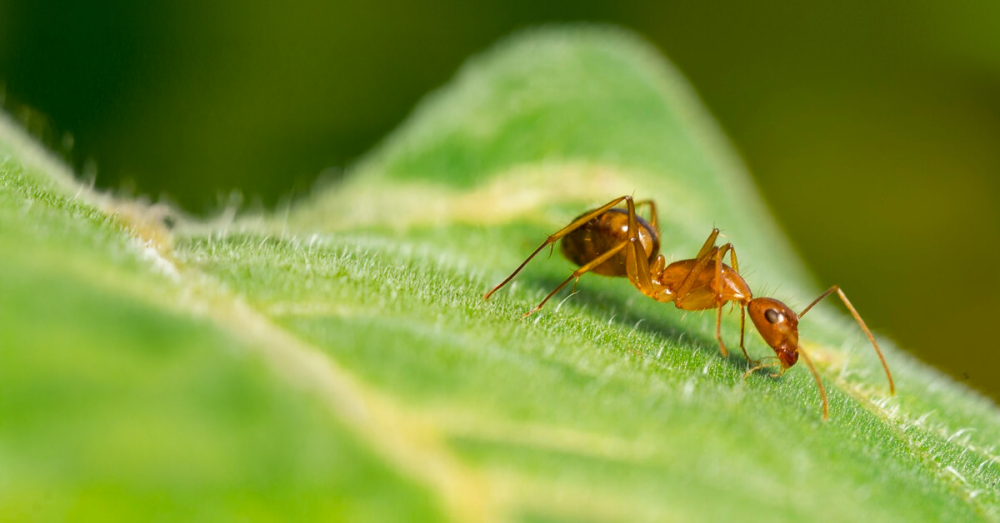

- Ants are among the most common household insects, and their importance is often underestimated due to their small size. However, their presence inside homes actually indicates the existence of a well-organized colony constantly searching for food and water. Ants don't enter homes randomly; rather, they move along specific, well-planned routes that lead them directly to food sources. This is why effective ant control relies on understanding their behavior and life cycle, not simply eliminating the visible individuals.
- In many cases, the ants disappear for a short time and then return in larger numbers, because what is eliminated is only a small part of the colony, while the queen and nests remain active elsewhere inside or outside the house.
Common types of ants found inside homes
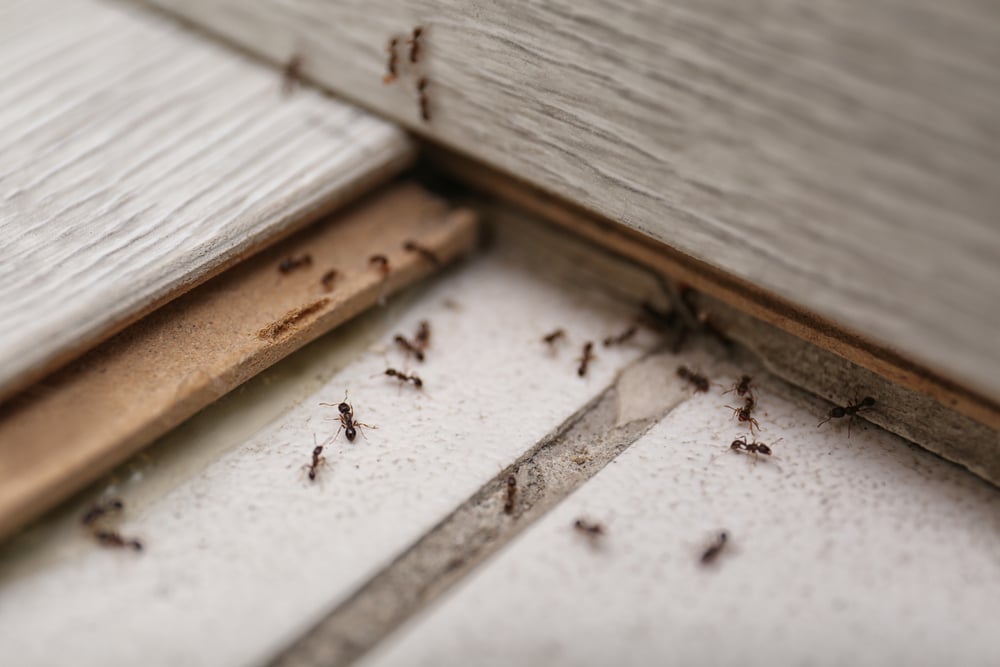
- Several types of ants may infest homes, the most common being small black ants, Pharaoh ants, and sugar ants. While these species vary in size, color, and movement speed, their basic behavior is similar: they all rely on a constant search for food and establish colonies near food sources and moisture. Identifying the ant species helps in choosing the appropriate control method, as some species respond better to baits than others.
Where ants are found and the reasons for their appearance
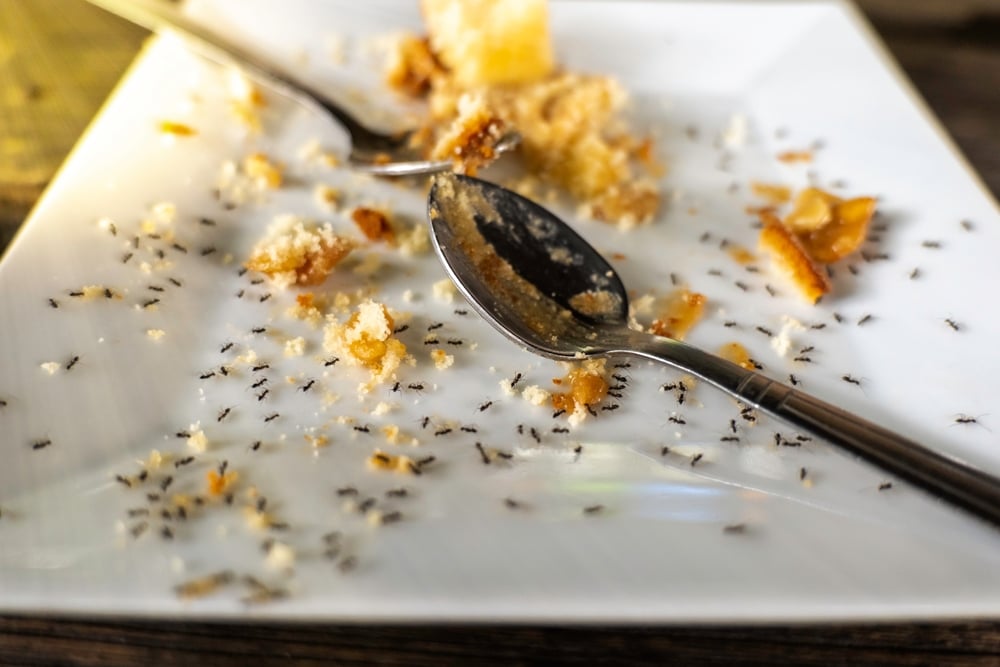
- Ants are often found in kitchens, around sinks, inside food cupboards, near windows, under doors, and around cracks in walls and floors. Their appearance is usually associated with leftover food or exposed sugars, water leaks, persistent dampness, and small openings that allow them entry. Even very small amounts of crumbs or sugar can attract ants and establish a permanent trail inside the house in a short time.
Ant behavior inside the house
- Ants are social insects that live in organized colonies consisting of a queen, workers, and sometimes males. The workers are the ones that appear inside the nest and move in clear, regular paths to transport food back to the nest. Ants rely on chemical scents (pheromones) to navigate, which is why we observe them moving in successive lines. Eliminating the visible ants does not solve the problem, as the workers are quickly replenished, while the queen continues to lay eggs inside the nest.
ant life cycle
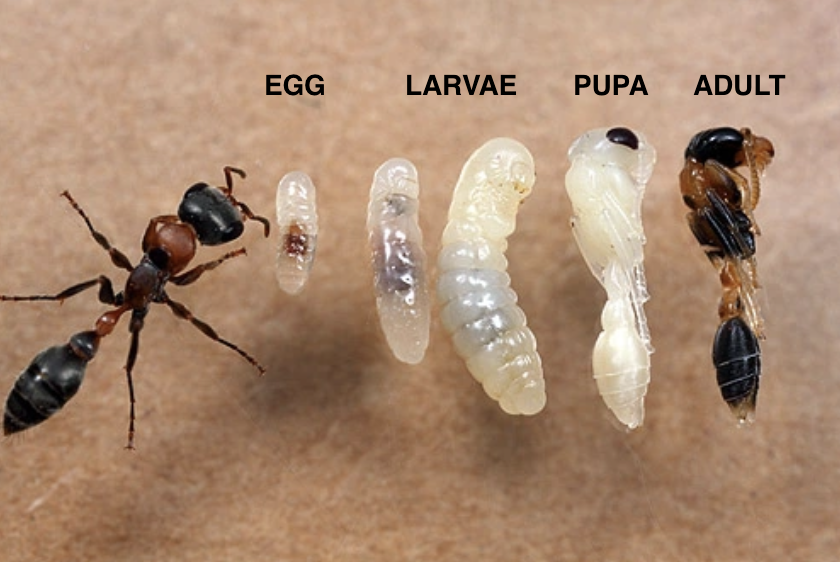
- The life cycle of an ant consists of four successive stages: egg, larva, pupa, and finally, adult. The queen lays large numbers of eggs continuously and can live for several years, enabling the colony to persist for extended periods. The eggs hatch into larvae and then pupae. Once fully grown, the worker ants emerge to forage for food and expand the colony's territory within the nest.
- 📌 Important information: As long as the queen is alive inside the nest, the infestation will continue no matter how many large numbers of visible ants are eliminated.
Damage caused by ants inside homes
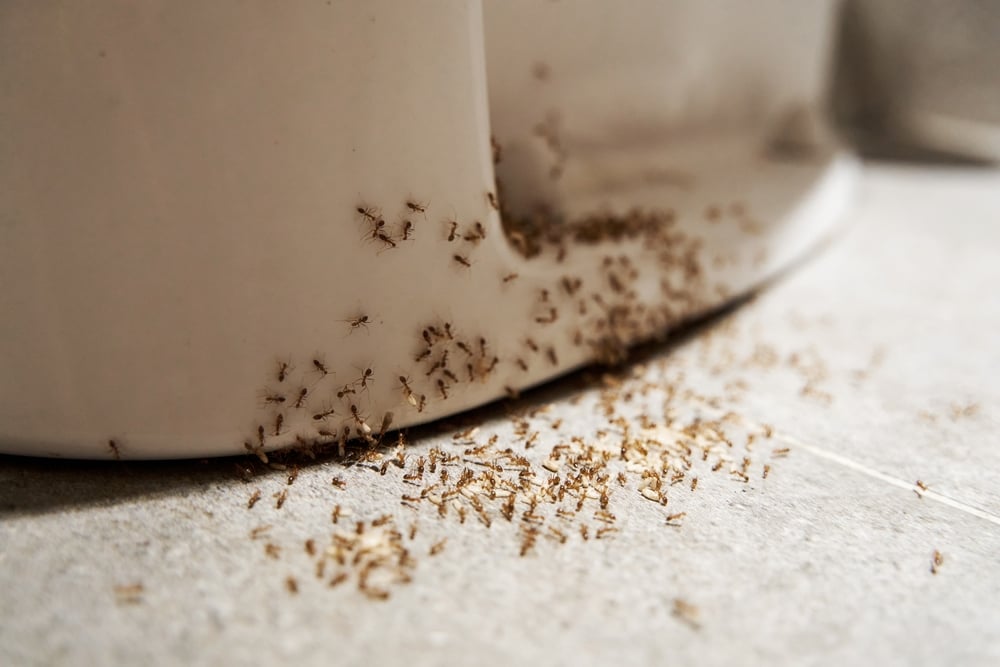
- Although ants don't cause direct harm like some other insects, their presence in the home contaminates food and preparation surfaces, causing constant annoyance, especially in kitchens, and they spread rapidly from room to room. In some cases, they may cause mild bites or minor allergic reactions, but their presence in kitchens and food establishments is considered an unacceptable health hazard.
Why does the ant problem worsen so quickly?
- The danger of ants lies in the meticulous organization of the colony, not in the number of individuals visible. A single colony can contain thousands of individuals, and with an active queen, any losses are quickly replenished. Using spray pesticides or manually killing ants often only alters their movements, without eliminating the nest or the queen, allowing the problem to recur within a few days and repeatedly.
Signs of an active ant colony
- The obvious signs of an active infestation include the appearance of fixed ant trails that are repeated daily, ants returning to the same place after cleaning, their presence near sources of sugar or water, an increase in numbers over a short period, and their movement from one room to another within the house.
Integrated ant control program
- Prevention and reduction of attracting factors
- Effective control begins with removing food sources by thoroughly cleaning surfaces, storing food in airtight containers, drying sinks, repairing water leaks, and sealing cracks around doors and windows. This step is essential to reduce ant attraction and prevent them from remaining inside the home.
- Baits (the basis of ant control)
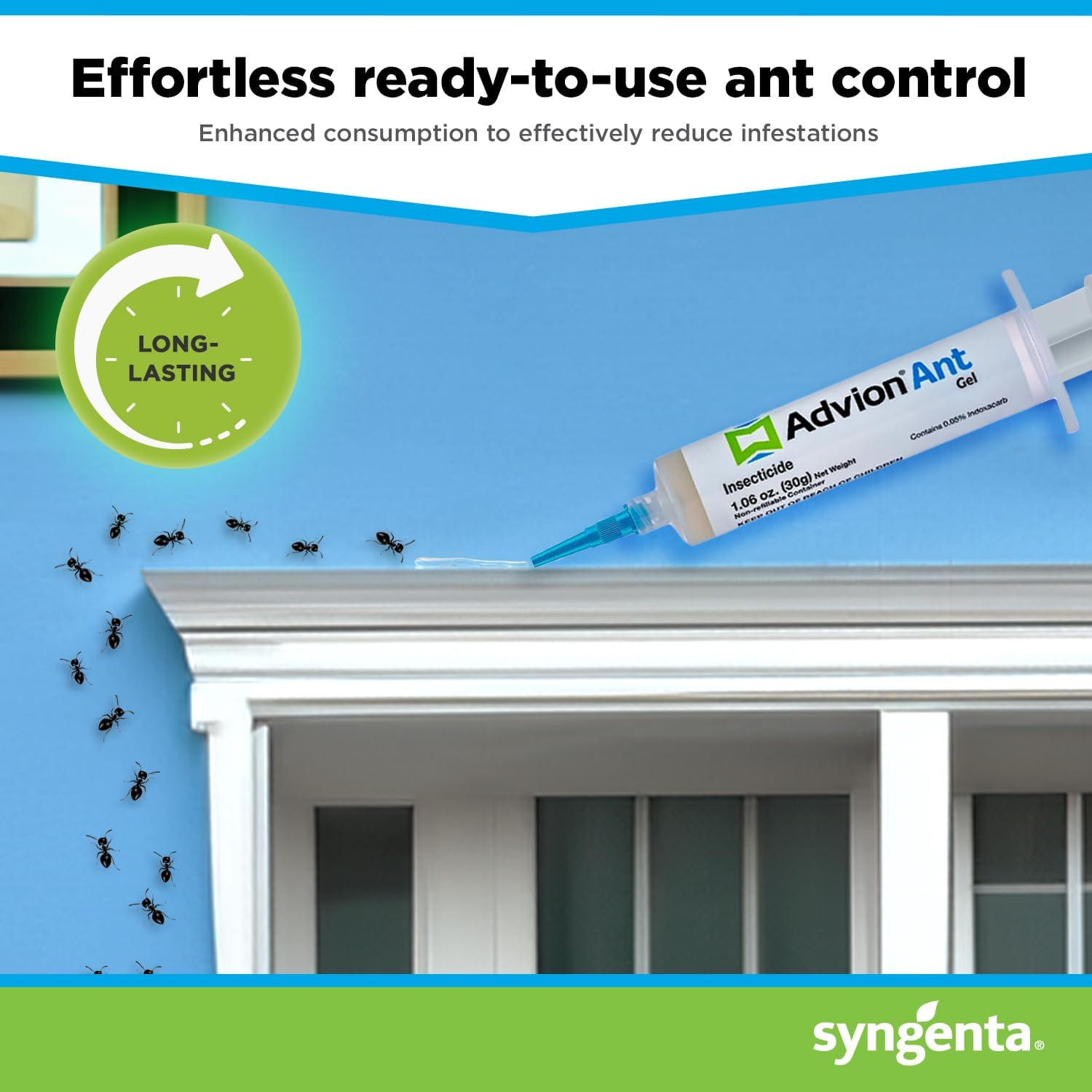
- Baits are the most effective method of ant control because they work by delivering the active ingredient into the nest. Worker ants carry the bait to the queen and the rest of the colony, gradually eliminating them from within.
The most important active ingredients used in ant baits:
- Fipronil
- Imidacloprid
- Indoxacarb
- 📌 Spraying ants before using baits should be avoided, as spraying prevents workers from carrying the bait to the nest.
Surface spraying (supporting only)
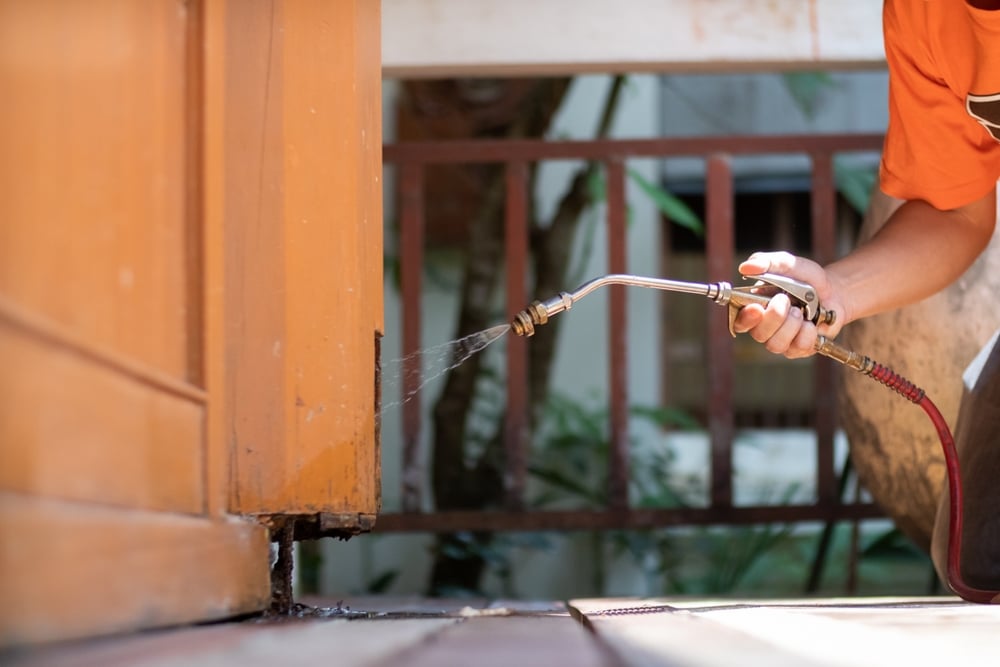
- Spraying is used to a limited extent on entry points and external cracks to reduce visible movement, but it is not a fundamental solution to the problem.
Why do ant control sometimes fail?
- Control fails when relying on spraying only, or killing visible ants without targeting the colony, or changing the type of bait too quickly before it takes effect, or not having enough patience, in addition to leaving food sources exposed inside the house.
Orchid Extract
- The ant problem is not solved by eliminating the visible individuals, but by eliminating the colony and the queen. Baits are the cornerstone of control, supported by cleanliness and sealing entry points. Any superficial treatment provides only temporary results and leads to the ants' return within a short time.