
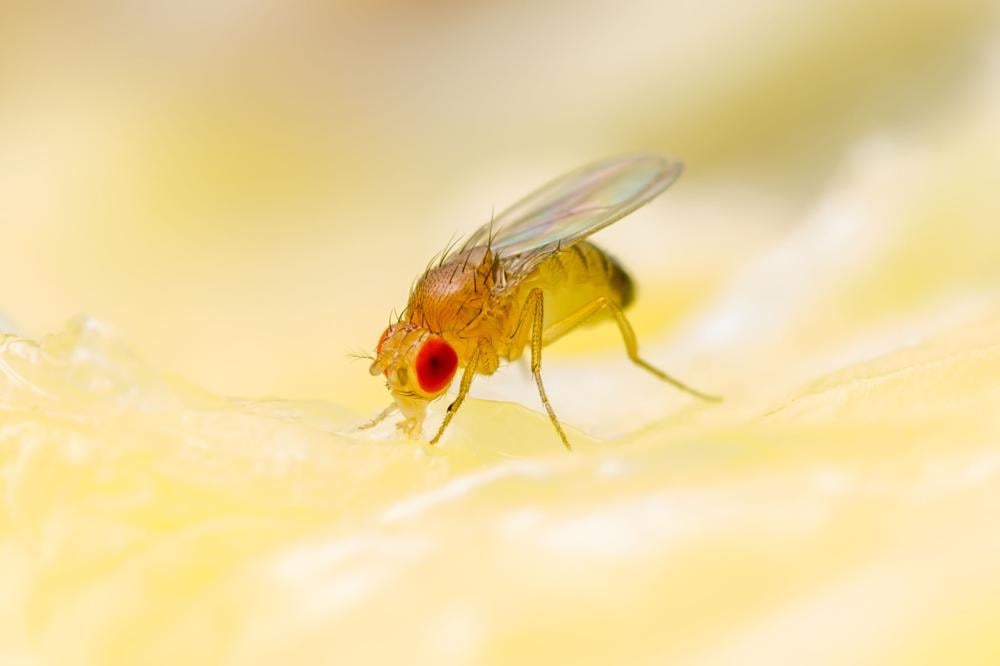

- The fruit fly, scientifically known as Drosophila melanogaster, is a small insect notorious for its rapid reproduction and troublesome presence in homes and kitchens, especially during warmer months. This insect is primarily attracted to ripe or rotting fruit and decaying organic matter, making it a source of contamination and annoyance. Due to its ability to spread quickly, effectively controlling it requires understanding its life cycle and the reasons for its presence, as well as following specific steps to eliminate it and maintain home hygiene and food safety.
- The fruit fly is one of the most dangerous economic pests that infect fruit during the coloring stage and before harvest. Its danger lies in the fact that the infection begins from inside the fruit without clear symptoms at first, then the quality of the fruit deteriorates rapidly and becomes unsuitable for marketing or export.
- It spreads strongly in warm weather and causes significant losses in mangoes, citrus fruits, guavas, pomegranates, peaches and apricots, therefore it is considered one of the pests that are subject to strict agricultural quarantine control.
Information about the fruit fly
- The fruit fly is a small insect that possesses several characteristics that enable it to spread and reproduce rapidly:
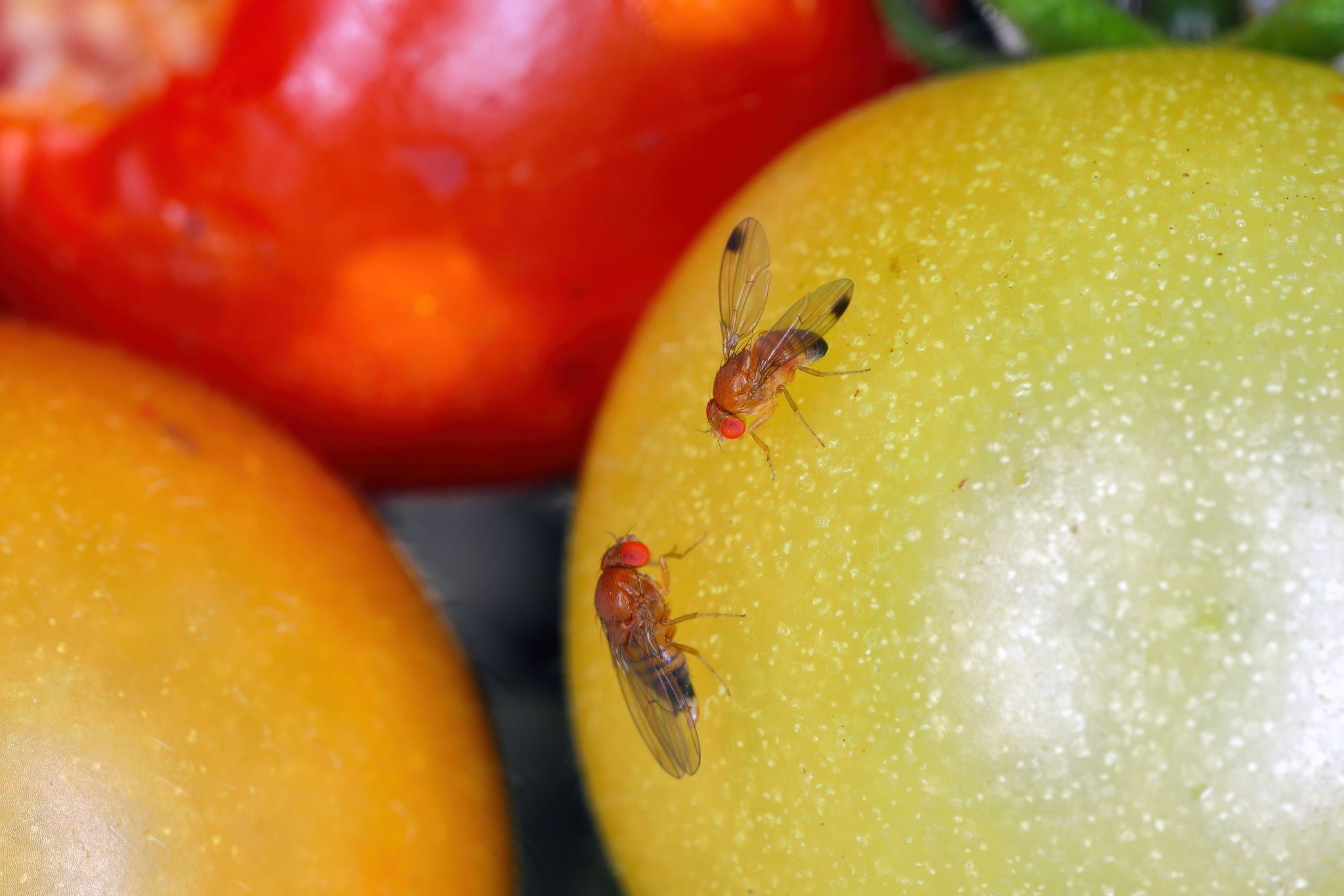
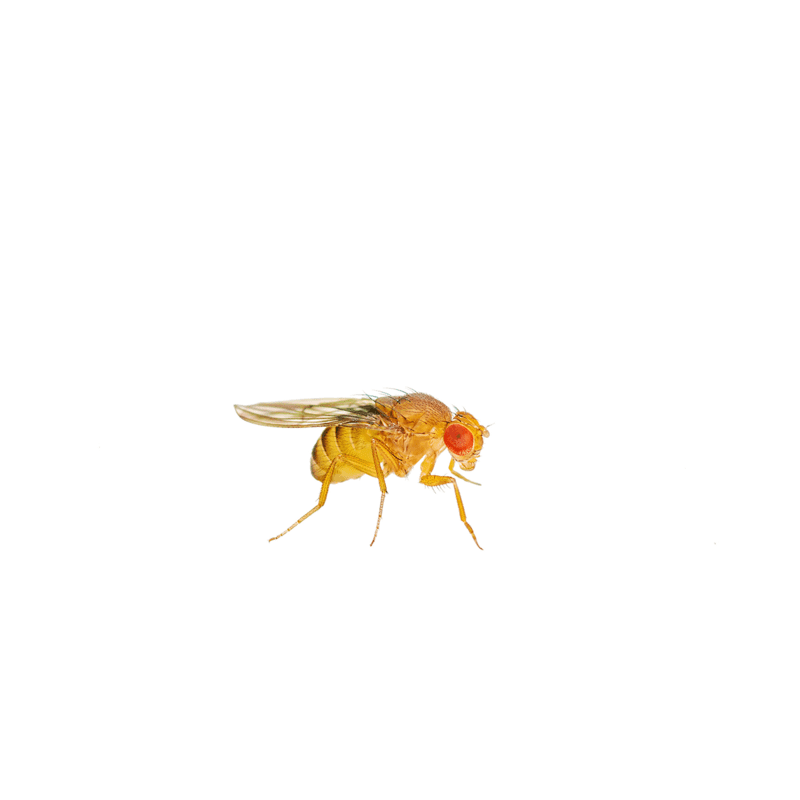
- Shape : Oval and small in size, with the insect's length ranging from 3 to 4 mm.
- Color : Light brown or yellow with prominent red eyes.
- Activity : Active during the day and moves quickly, making them easy to spot.
- Nutrition : The fruit fly relies on rotting fruits and organic matter as its primary food source, where it finds a suitable environment for reproduction.
fruit fly life cycle
- The fruit fly has a short and rapid life cycle, which causes its numbers to increase rapidly:
- Eggs : The female lays about 500 eggs during her lifetime, usually on rotting fruit or organic matter. The eggs hatch in two to four days.
- Larvae : The larvae feed on the pulp of rotting fruit for 5 to 7 days, which accelerates the process of fruit rotting.
- Pupae : The larvae turn into pupae in the soil or on nearby surfaces, and remain inactive for two to three days.
- The adult insect : The adult fly emerges from the chrysal pupa and begins to reproduce within a few hours, rapidly restarting the life cycle.
Fruit fly damage
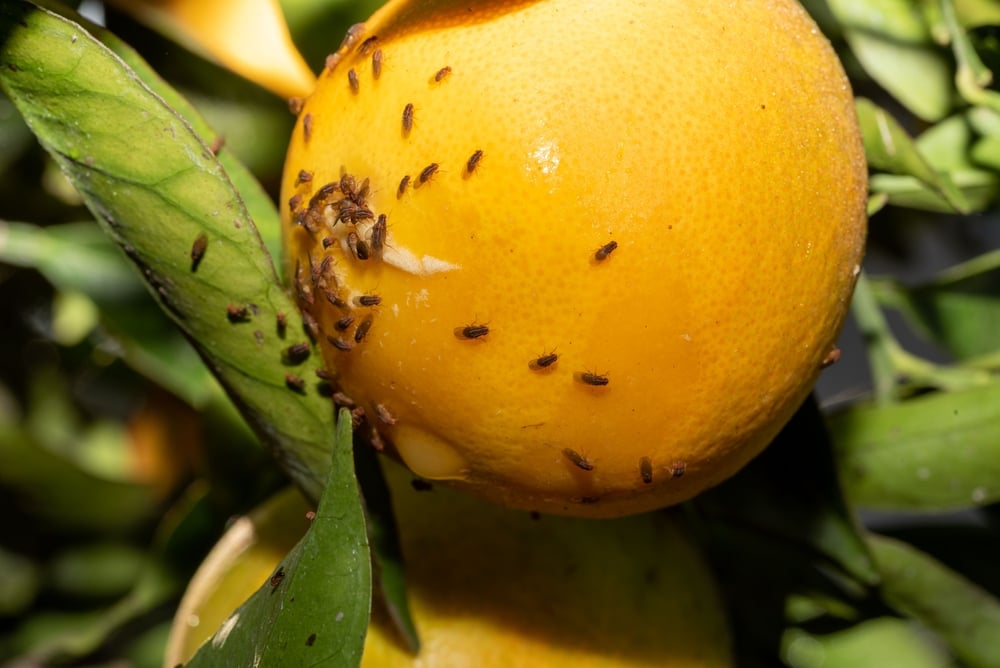
- Despite its small size, the fruit fly causes a lot of damage:
- Food contamination : Bacteria such as salmonella are transferred from rotting places to exposed food.
- Damage to fruits and vegetables : leads to the rotting of household crops, causing financial losses.
- Nuisance : They cause an annoying presence inside the house due to their large number and rapid reproduction.
Prevention and control methods 🛠️
- 🌱 First: Agricultural (preventive) control
- Collect damaged and fallen fruit daily.
- Destroying the fruit by burning or deep burial.
- Cleaning up crop residues after the season ends.
- Plowing the surface of the soil to uncover the pupae and expose them to the sun.
- Regulate irrigation and reduce high humidity.
- Do not leave ripe fruit on the trees after the harvest time.
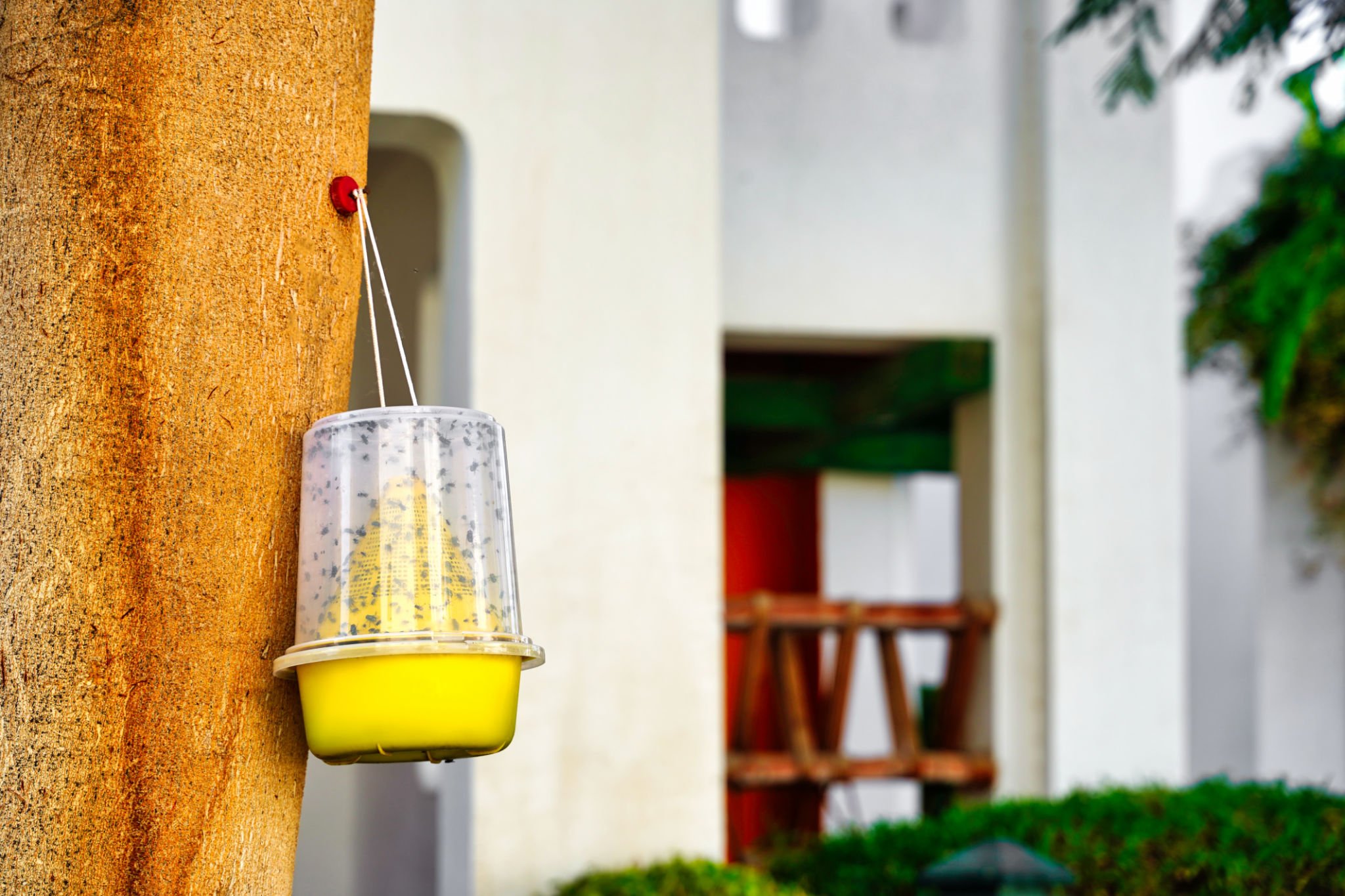
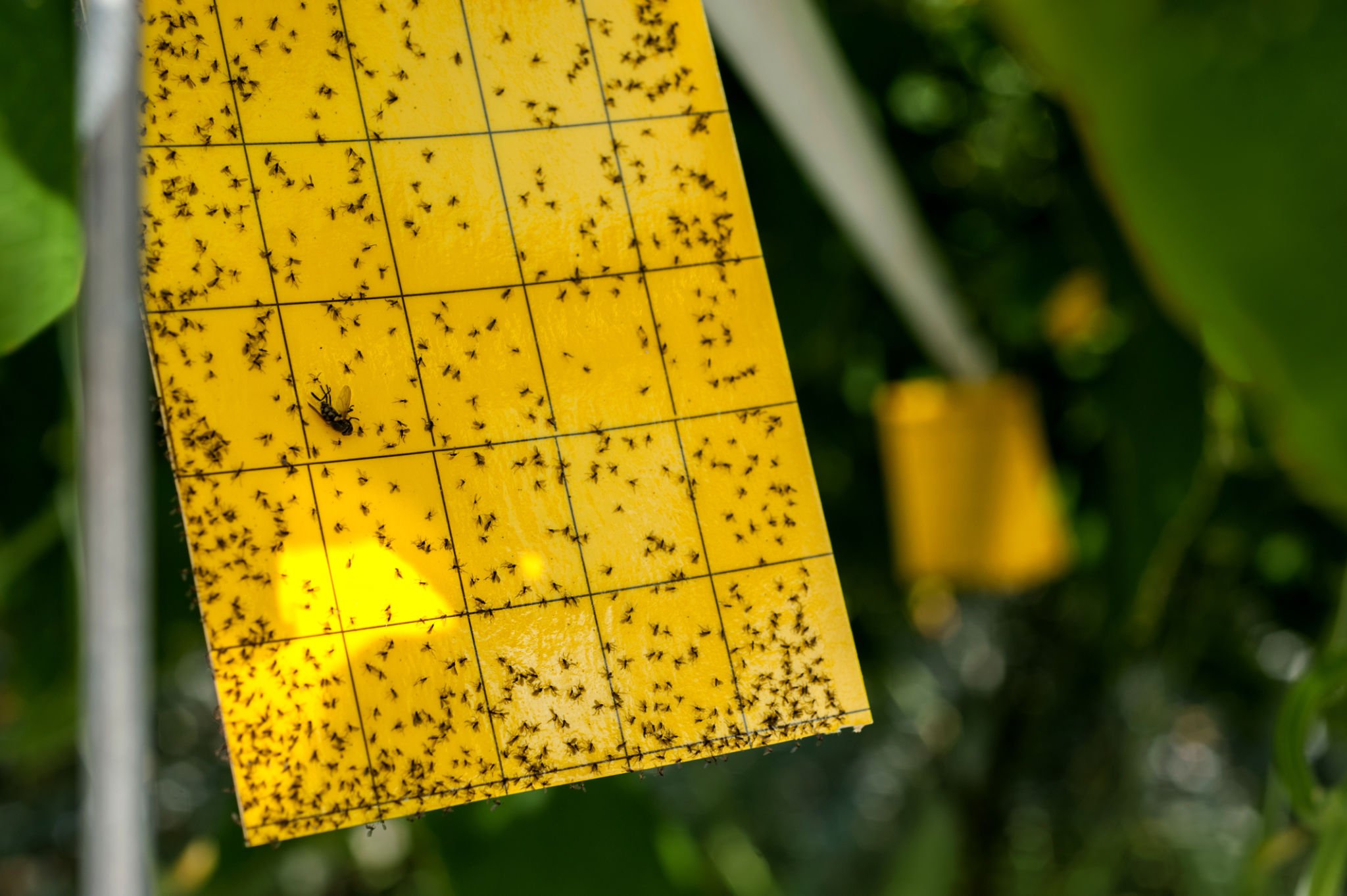
🪤 Second: Traps and Attractive Bait
- Installing pheromone traps to monitor insect density.
- Using protein-based attractants with a spot spraying system.
- It is recommended to place 1 trap for every 10–20 trees, depending on the severity of the infestation.
💊 Third: Chemical control (in a technically correct manner)
- ✅ Partial spraying with the attractant bait is always relied upon, rather than full spraying, to reduce the environmental impact and increase efficiency:
- 🔹 Spinosad is used with protein bait for partial spraying.
- ➜ Effective in eliminating the adult insect and relatively safe for natural enemies.
- 🔹 Deltamethrin, Lambda-cyhalothrin, or Bifenthrin
- It is used with the attractant bait when the severity of the injury is high.
- ➜ A fast and powerful effect on the adult fly.
⏱️ Spraying frequency: Every 7–10 days depending on the severity of the infestation.
⏰ When should pest control begin and when is it too late?
- ✅ Best time for control: from the fruit-setting stage.
- ⚠️ Late control: When the larvae enter the fruit → loss is almost certain.
- ❌ Common mistakes farmers make
- Spraying the pesticide without using an attractant bait → Poor effectiveness.
- Leaving infected fruit on the ground → multiplies the infection several times.
- Spraying at midday → The bait evaporates and does not attract the insect.
- Relying on spraying only without traps → partial or complete failure of control.
🦠 Fourth: Biological control
- Using natural parasites that attack larvae and pupae.
- Maintaining ecological balance and reducing indiscriminate spraying.
- Supporting the presence of natural biological enemies within the farm.
Tips for getting rid of fruit flies
- Clean the kitchen regularly: Discard overripe or rotten fruits and vegetables immediately. Wash kitchen surfaces and utensils daily.
- Storing food properly: Keep fruits and vegetables in the refrigerator or in airtight containers. Make sure garbage is tightly covered and emptied regularly.
- Using natural traps: Make a trap using apple cider vinegar and a little dish soap inside a container covered with perforated plastic wrap.
- Cleaning drains: Pour boiling water or use pipe cleaners to remove accumulated organic matter.
- Use pesticides when necessary: If the problem persists, specialized pesticides such as effective fly control products can be used to ensure they are eliminated permanently.
🌱 Orchid's advice for farmers
- The fruit fly does not attack all fruits at once, but prefers fruits that have begun to change color or have a soft skin, so control must continue even after the first partial harvest.
- Integrated pest management (preventive measures + traps + baits + partial spraying) is the safest and most successful way to protect the crop.
Summary
- Fruit flies may seem like a minor problem, but they can become a real nuisance if left untreated. By understanding their life cycle and the reasons for their spread, you can implement effective measures to eliminate them and keep your home clean and fly-free. If the problem persists, don't hesitate to consult a pest control professional for expert solutions.