
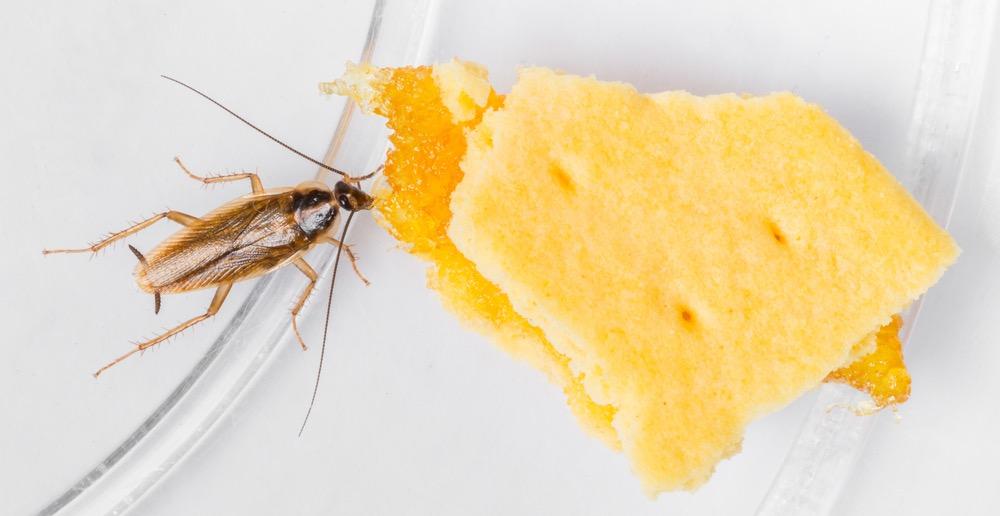

- The German cockroach is one of the most common cockroach species associated with kitchens and food preparation areas. It is characterized by its small size, rapid reproduction rate, and remarkable ability to hide in tight spaces and electrical appliances. Unlike other species, this type lives and reproduces within the kitchen itself, so its appearance is not accidental but rather a direct indication of an active infestation requiring careful intervention, not haphazard treatment.
- In many cases, seeing one German cockroach means there are larger numbers hiding in unseen places, which explains how quickly the problem can escalate if not dealt with properly.

Where German cockroaches are found and the reasons for their appearance
- German cockroaches are widespread in kitchens and food preparation areas, and are often concentrated behind refrigerators, ovens, and dishwashers, inside kitchen cabinets, under sinks, inside small electrical appliances, and between the fine gaps of drawers and hinges.
- Their appearance is directly linked to a constant supply of food, high temperature and humidity, inadequate cleaning in hidden areas, and the accumulation of cardboard boxes or utensils in the kitchen. A very small amount of food scraps or grease is enough to start a full infestation cycle.
German cockroach behavior in kitchens
- The German cockroach is a nocturnal insect, active in the dark and hiding as soon as the light is turned on. It travels short distances because its food source is close to the nest, and it prefers to live in groups in small, warm places. This behavior makes it less susceptible to indiscriminate spraying, which explains why many traditional control methods that don't target the nests themselves fail.

German cockroach life cycle
- The German cockroach's life cycle consists of three rapid, interconnected stages, which is the primary reason for its danger. The female carries the egg sac (ootheca) with her until it hatches, providing excellent protection for the eggs from pesticides. A single egg sac contains approximately 30 to 40 eggs , and the incubation period typically lasts between 20 and 30 days, depending on the temperature.
- During her lifetime, a female can produce 4 to 8 egg sacs , which translates to 120 to 300 new cockroaches from a single female. After hatching, the nymphs undergo a growth stage lasting approximately 40 to 60 days before reaching adulthood, at which point the reproductive cycle begins anew.
- In the warm kitchen environment, the entire life cycle can be completed in just 2 to 3 months , which explains why cockroach numbers double in a very short period when proper control is not implemented.

Why is the German cockroach problem getting worse so quickly?
- The danger of German cockroaches lies in their combination of a large number of eggs, a short life cycle, and the fact that they live inside the kitchen without needing to go out in search of food. Therefore, any delay in control, or the use of an inappropriate method, can allow a minor infestation to turn into a major problem in just a few weeks.
The dangers of German cockroaches to health and food
- German cockroaches pose a direct health risk due to their ability to transmit bacteria and microbes to food and food preparation surfaces. They are also linked to an increase in allergies and asthma, particularly among children. In restaurants and food establishments, their presence is a serious indicator of workplace contamination and can lead to health violations and significant operational losses.
Signs of infection inside the kitchen
- Among the most prominent signs of infestation are the appearance of small cockroaches at night when the lights are turned on, the presence of fine droppings resembling black peppercorns inside drawers and corners, the emission of an unpleasant odor inside kitchen cabinets, and the observation of an increase in numbers within a short period, which is clear evidence of the activity of the reproduction cycle inside the place.

🛠️ Integrated German Cockroach Control Program
🌱 Prevention and reduction of attraction factors
- Control begins with eliminating sources of food and moisture by thoroughly cleaning the kitchen, especially behind appliances, drying sinks daily, disposing of unused boxes and utensils, and sealing cracks and gaps inside cabinets and drawers. Reducing clutter in the kitchen is a crucial step for the success of any pest control program.
🧪 Gel (the foundation of the fight)
- Gel is the most important and effective method against German cockroaches because it reaches directly into nests inside narrow cracks. Successful control depends on choosing the right gel and applying it in the right places, avoiding direct spraying.
The main active ingredients in the gel:
- Fipronil, Imidacloprid, Indoxacarb.
- The gel is placed in small dots behind appliances, inside hinges, and under sinks, without washing it off or spraying it with water.
🧴 Surface spraying (supportive, not primary)
- The remaining spray is used sparingly on the outer edges of the kitchen and outside gel areas, with the aim of reducing nymph movement and not completely eliminating the infestation.
- Active ingredients suitable for topical spraying:
- Deltamethrin, Lambda-cyhalothrin, Alpha-cypermethrin.
The difference between German cockroaches and American cockroaches
- The German cockroach is small in size, lives inside the kitchen and reproduces very quickly, and its control depends mainly on gel and meticulous hygiene.
- The American cockroach, however, is larger in size, originates from external drainage, and requires external treatment in addition to spraying and gel inside the house.
Orchid Extract
- The danger of German cockroaches lies not in their size, but in their rapid reproduction rate. Successful control depends on early intervention, using gel as a primary method, along with organizing the kitchen and reducing food sources and humidity. Any incomplete treatment allows the infestation to recur quickly.