
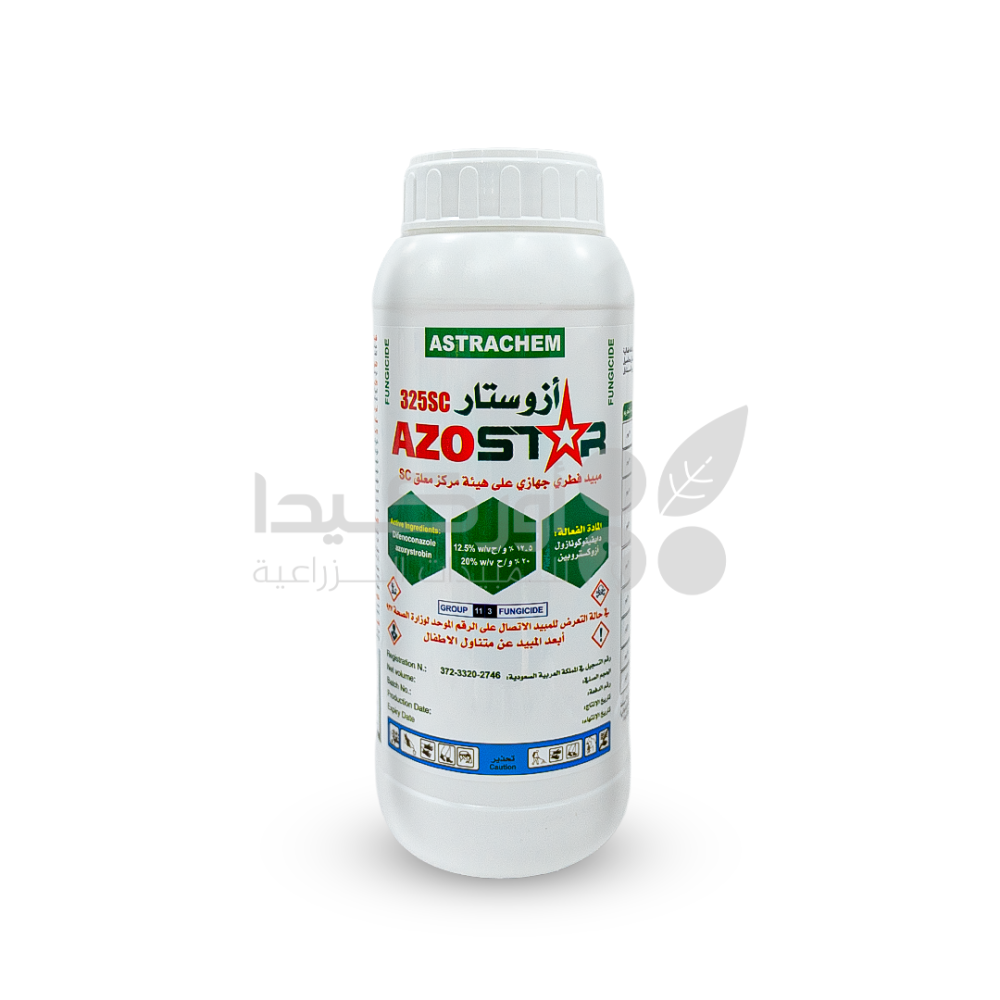

- Azostear 325 SC is a systemic fungicide, both preventative and curative, containing two active ingredients: azoxystrobin (20%) and difenoconazole (12.5%), in the form of a suspension concentrate. This fungicide combines two powerful effects to control a wide range of fungal diseases affecting agricultural crops, such as blight, powdery and downy mildew, leaf spot, and gray mold. Azostear works by inhibiting respiration in fungal cells and preventing cell wall formation, leading to spore growth cessation and ultimately fungal death. It is characterized by its rapid penetration into plant tissues, providing long-lasting preventative and curative protection.
Product features:
- An effective dual-action formula containing two powerful ingredients that complement each other in eliminating fungi.
- A comprehensive systemic effect ensures protection of newly formed tissues from infection.
- It works preventively to stop new infections and curatively to eliminate existing infections.
- It is stable in different weather conditions and provides a long protection period.
- It improves plant vitality and helps increase crop quality and productivity.
- Suitable for use within Integrated Disease Management (IPM) programs.
Technical specifications:
- Trade name: Azustar 325 SC
- Type: Systemic fungicide (preventive and curative)
- Composition: Suspended Center (SC)
- Active ingredients:
- Azoxystrobin 20%
- Difenoconazole 12.5%
- Chemical group: Stroplorine + Trizol (Group 11 + 3)
- Scent: Light to no smell
- Country of origin: Saudi Arabia
- Manufacturer: Astrachem
- Capacity: 1 liter
How to use:
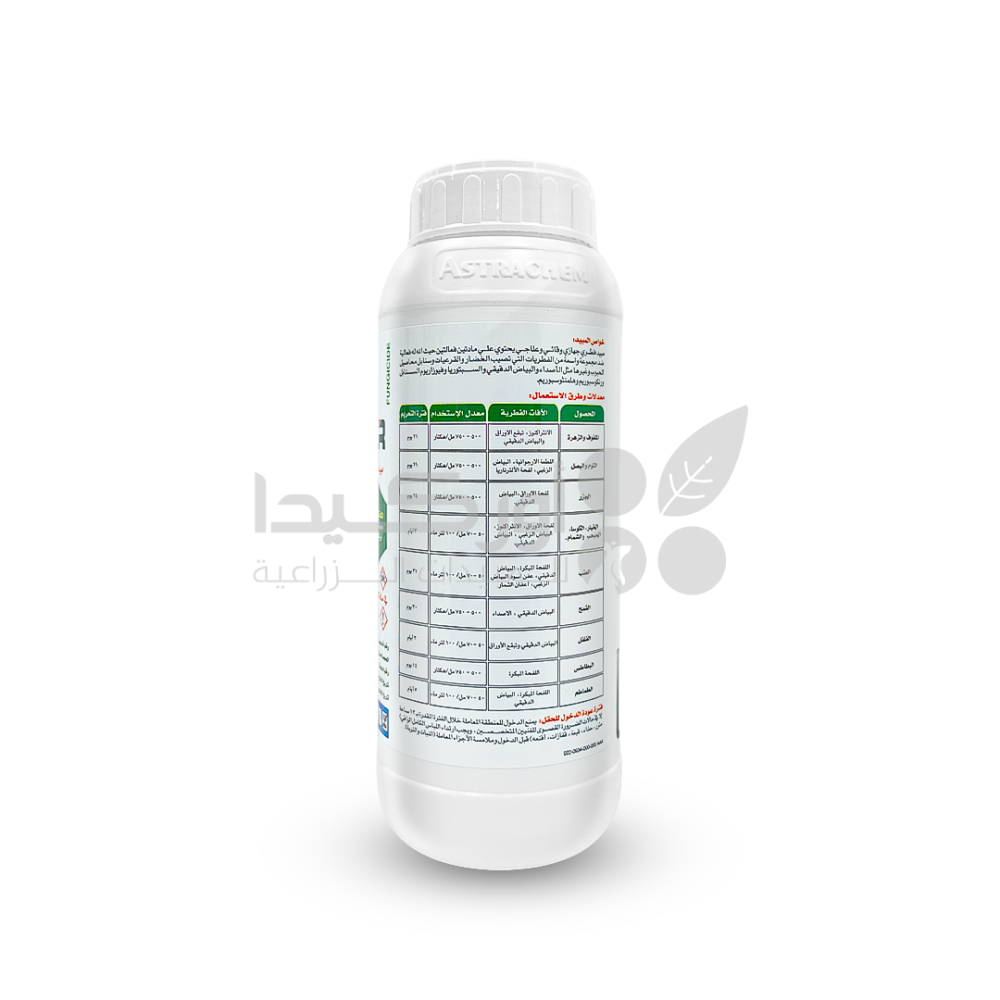
- Tomatoes, cucumbers and eggplants: to combat blight and powdery mildew at a rate of 500-750 ml per 100 liters of water.
- Grapes, melons, and onions: To combat downy mildew and gray mold at a rate of 500-700 ml per 100 liters of water.
- Potatoes, beans, and chickpeas: to combat early blight and leaf spot at a rate of 500-750 ml per 100 liters of water.
- Spraying is repeated every 10-14 days depending on the severity of the infestation and the recommendation of the agricultural engineer.
Prohibition period:
- Harvesting is prohibited until 7 to 14 days have passed since the last treatment, depending on the type of crop.
Diseases it combats:
- powdery mildew
- downy white
- early blight
- rust
- Various leaf spots
- Other fungal diseases vary depending on the crop type.
Precautions for use:
- Do not mix with alkaline pesticides or copper compounds.
- It is preferable to spray in the early morning or after sunset to reduce evaporation and increase effectiveness.
- The pesticide should be stored in a dry, shaded place, out of reach of children and animals.
- Gloves and a mask should be worn during preparation and spraying.
- The sprayer should be thoroughly washed with soap and water after use.
Additional benefits:
- It effectively eliminates fungal diseases that affect leaves and fruits.
- It gives the plant strength and vitality and enhances its natural resistance to disease.
- It preserves the quality of the fruit and increases crop productivity.
- It is considered one of the reliable pesticides in modern control programs.