
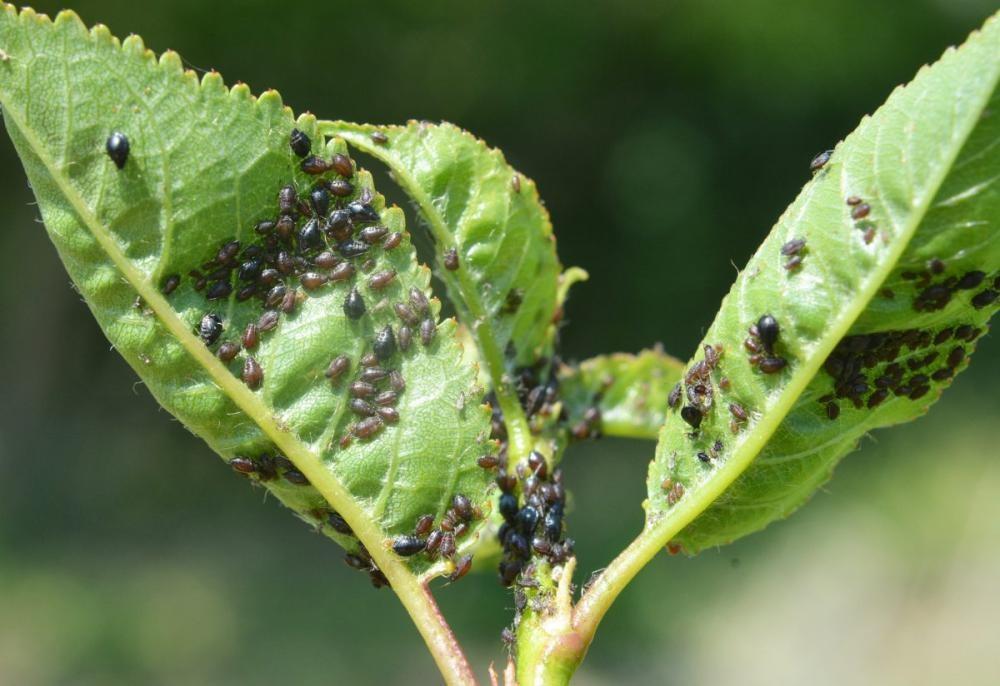

You see the leaves of your lemon tree, bougainvillea or rose covered in a black, soot-like film. You wipe it with your finger, some of it slides off, and sticky patches remain. Your first thought is a serious fungal disease that calls for a fungicide. But the truth is that this black growth is sooty mold, which does not actually infect the plant itself.
Sooty mold lives on the leaf surface and feeds on something else: the honeydew excreted by sap-sucking insects living on the leaves. If you treat the fungus without the insect, it returns within weeks. The key is to find the source, and that is what we will do here.
The phenomenon: A black, soot-like film on leaves and fruit. It is a fungus growing on the sugary excretions of insects.
The cause: The honeydew excreted by aphids, scale insects and whiteflies is the fungus's food.
The damage: It blocks light from reaching the leaf, which reduces photosynthesis and spoils the appearance of fruit, although it does not directly penetrate plant tissue.
The common mistake: Washing off the fungus alone without treating the insect brings it back within days.
The rule: Treat the honeydew-producing insect first. Once it is gone, the fungus gradually disappears with rain or washing.
What Exactly Is Sooty Mold?
It is a group of microscopic black fungi that grow on sugars that fall onto surfaces. They do not penetrate the leaf, but they cover it the way dust covers a window.
- It does not infect plant tissue: It is a surface dweller, so the leaf underneath stays green and healthy.
- It blocks light: The black layer keeps sunlight from reaching the leaf, so photosynthesis drops, which can lead to weak growth, yellowing and early leaf drop.
- It appears on any surface: You may find it on fruit, garden chairs and your car parked under the tree, because honeydew falls on all of them.
- It disappears once the cause is gone: When the honeydew stops, the black layer dries out over time and flakes off with wind, rain and irrigation, so you do not need a fungicide to kill the fungus itself.
- Fruit stays edible: Fruit covered in sooty mold can be eaten after washing, but its appearance lowers its market value.
Honeydew: The Root of the Problem
Sap-sucking insects take in large amounts of sugary sap to get a little protein, and pass the excess as a sticky, sweet liquid we call honeydew. This honeydew is the food the fungus is waiting for.
- Aphids: The most common cause of sooty mold on roses, vegetables and fruit trees; they gather on tender new growth.
- Whiteflies: They excrete honeydew from nymphs attached to the underside of the leaf, so the mold covers the upper surface of the leaf beneath them.
- Mealybugs: They hide under cottony masses and leave visible honeydew on branches and leaves.
- Scale insects: The soft species excrete abundant honeydew and cling to branches, looking like small brown grains.
- Psyllids: Small jumping insects that excrete honeydew on citrus and some other trees.
- Leafhoppers: They also contribute to honeydew in some crops. See leafhoppers.
Where Does It Usually Appear?
Sooty mold follows the insect wherever it goes, but some plants are more exposed because they attract sap-sucking insects or are grown in conditions that suit them.
- Citrus: Lemon and orange are among the trees most often carrying sooty mold, because of scale insects, mealybugs and aphids.
- Ornamentals: Bougainvillea, roses, jasmine and ficus show the black layer clearly.
- Greenhouses: Tomatoes, cucumbers and peppers under whitefly pressure, where the mold covers the lower leaves.
- Shade trees: Their honeydew drips onto walkways and benches, contaminating the surfaces beneath.
Ants: The Partner Many People Overlook
If you see lines of ants climbing the tree, there are sap-sucking insects above being protected. Ants feed on the honeydew and defend the insects that produce it against their natural enemies.
- They protect the honeydew producers: They drive off the predators and parasites that would otherwise reduce aphid and scale numbers.
- They spread them: Ants may carry the insects to new growth and widen the infestation.
- The solution: Keep ants from climbing with sticky barriers around the trunk, and prune branches that touch walls and fences.
How Do You Really Get Rid of It?
The order of work matters: stop the insect, then clean, then monitor. Cleaning before controlling the insect is wasted effort because the honeydew will return.
- Inspect new growth and the undersides of leaves to identify the insect: small green ones (aphids), white flying ones (whiteflies), cottony masses (mealybugs), or attached bumps (scale insects).
- Cut off the most infested branches and dispose of them; this lowers insect numbers quickly.
- Use a strong stream of water to knock aphids and whiteflies off the leaves, which helps especially in light infestations.
- Apply the control suited to the insect: mineral oil or insecticidal soap for vulnerable stages, and a systemic insecticide for moderate to severe infestations.
- Stop ants with a sticky barrier around the trunk.
- Two weeks after the insects decline, wash the leaves with water and a little mild soap, and the remaining mold will gradually flake off.
- Monitor with yellow sticky traps and a weekly check of new growth before numbers return.
Natural Enemies: An Ally Worth Protecting
In balanced gardens, beneficial insects do all the work: they reduce aphids, mealybugs and whiteflies before much honeydew forms. Our job is not to kill them along with the pest.
- Ladybugs: They eat aphids and mealybugs, and their larvae are extremely voracious.
- Lacewings and hoverfly larvae: They consume large numbers of aphids.
- Parasitic wasps: They lay eggs inside scale insects and whiteflies and kill them from within.
- How we protect them: We choose oils and soaps over broad-spectrum pesticides, spray as narrowly as possible, and avoid spraying when they are active.
Reasons the Mold Returns After Washing
Growers often wash the leaves thoroughly and then see the black return. Behind that, usually, is one of the following reasons.
- The insect is still alive: Washing without control gives you only two weeks of clean leaves.
- Excess nitrogen fertilization: It pushes lots of tender growth, which aphids and scale insects favor.
- Ants: They bring the producers back to the tree after their numbers drop.
- Neglecting the lower parts: The insect lives under the leaves and honeydew falls on what is below, so you find mold on one leaf while the source is on a leaf above it.
- Crowded foliage: Good pruning opens up the tree and reduces places for insects to hide.
Do You Need a Fungicide at All?
This is the question we hear most from tree owners and greenhouse growers, and the short answer is: usually not. The fungus is not the problem but its result.
- A fungicide does not stop the honeydew: As long as honeydew continues, the fungus grows back.
- Sooty mold goes away on its own: After insects decline and rain or washing comes, the black layer flakes off and falls away gradually.
- The exception: If a real fungal disease such as powdery mildew is mixed in, treat that disease with its appropriate fungicide alongside insect control.
A Simple Seasonal Program
Preventing sooty mold takes small habits repeated through the year, far cheaper than fighting a black layer that has settled across the whole tree.
- Winter: A mineral oil spray on deciduous trees targets scale insects in their dormant stage.
- Spring: A weekly check of new growth, and yellow sticky traps hung in greenhouses.
- Summer: Watch for ants, prune crowded branches, and avoid excess nitrogen fertilizer.
- Autumn: A final review of fruit trees before storage, and a tally of insect numbers.
What We Rely On at Orkida
We treat sooty mold with insecticides, not fungicides. These are the products we rely on, depending on the insect responsible.
- Bonoil 965 EC: A paraffinic mineral oil that coats the insect's body and blocks its breathing pores, so it works on scale insects and aphids, especially in their sedentary stages. We cover the whole tree including the undersides, we do not spray during flowering, and we do not mix it with sulfur or spray within three weeks before or after sulfur.
- Actara 25 WG: A systemic thiamethoxam that moves inside the plant, reaching insects hiding under the leaves, and works on whiteflies, aphids and mealybugs. We use it for moderate to severe infestations.
- Colt 20% WG: Pyrifluquinazone from a different chemical group that stops the feeding of aphids, whiteflies and mealybugs, and goes into rotation with Actara. We start it at the first sign of infestation, since it is not a knockdown product.
- Biobest Yellow Sticky Trap: Catches whiteflies and flying aphids and reveals their return in greenhouses and fields. We hang it after control so we know whether the source has come back.
One expert tip: follow the dose on the label and the pre-harvest interval, and rotate between chemical groups.
Frequently Asked Questions
Does sooty mold kill the tree?
Not directly, but a severe infestation blocks light and weakens growth. The sap-sucking insects behind it are the greater danger to the tree.
Do I need a fungicide?
Usually not. If you kill the insect, the honeydew disappears and the mold flakes off with rain and washing. A fungicide treats the result, not the cause.
How do I clean the black off the leaves?
With running water, or lukewarm water with a little mild soap. Do this after getting rid of the insect, not before.
Is fruit covered in sooty mold safe?
Yes, it can be eaten after washing it well, since the fungus lives only on the surface. But it is best to control the insect to protect the quality of the season.
Why does sooty mold appear on my car or furniture under the tree?
Because honeydew drips from the tree onto everything beneath it, and the fungus grows on it. Getting rid of the insect stops it.
When is the best time to control it?
At the first appearance of insects on new growth in spring and autumn, before much honeydew forms. Spraying in the morning or before sunset is better than in the hot midday sun.
What is the difference between it and powdery mildew?
Powdery mildew is a real disease that infects the plant and appears as a grayish-white powder, and it needs a fungicide. Sooty mold is black and mostly sticky and wipes off, and it follows an insect. See powdery mildew if in doubt.
Does mineral oil harm the plant?
Not if used at the right time: early in the morning or before sunset, away from flowering, and on plants that are not thirsty or stressed. We do not use it in intense heat, and we do not follow it with sulfur.
Should I prune the blackened branches?
Prune only branches with a dense insect cluster that cannot be reached with good spraying. Branches covered only in black should be cleaned, not cut.
Does it come back after control?
It returns if the insect or ants return. So we check weekly after control and keep the sticky barrier on the trunk.