
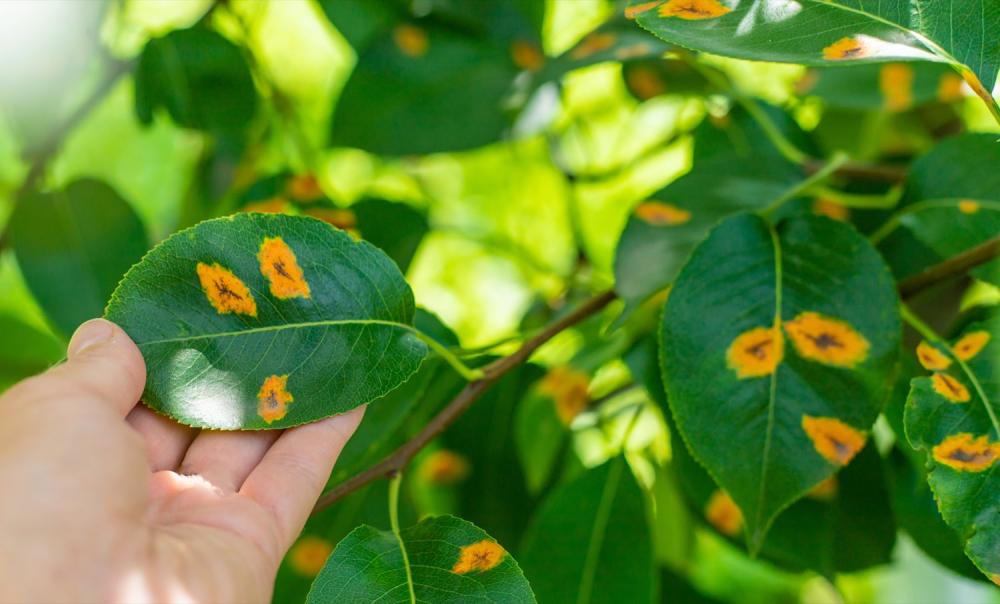

Lemon tree diseases, and citrus problems in general, are among the most common questions we receive: yellow leaves, fruit drop, gum on the trunk or curled leaves. The cause may be a fungal or bacterial disease, an insect or a nutrient deficiency, and the right treatment starts with the right diagnosis.
This guide explains the most common lemon tree diseases, how to recognise each problem, and how to treat and prevent it, with links to detailed articles.
Gummosis and foot rot (Phytophthora)
One of the most serious lemon diseases, especially in overwatered farms and gardens.
- Symptoms: brown or amber gum oozing from the base of the trunk, cracked and dying bark, yellowing and falling leaves and general decline.
- Cause: a soil-borne pathogen favoured by overwatering and water touching the trunk.
Prevention and treatment:
- Keep irrigation water away from the trunk and do not let it pool there.
- Scrape off infected bark and paint it with a fungicide or copper paste.
- Spray or drench a suitable systemic fungicide for root rot and gummosis.
Root rot
- Symptoms: wilting and general yellowing, dieback of branches from the top and brown, rotten roots whose bark slips off easily.
- Cause: overwatering, poor drainage and heavy clay soil.
- Treatment: correct irrigation, improve drainage and treat the soil with a suitable fungicide. More in our root rot article.
Citrus bacterial canker
- Symptoms: raised, corky brown lesions on leaves, fruit and twigs, surrounded by a yellow halo and visible on both sides of the leaf.
- When it spreads: rain, wind and wounds, made worse by citrus leafminer tunnels.
Prevention and treatment:
- Remove infected parts, burn them and disinfect pruning tools.
- Spray copper preventively, especially on new flushes.
- Control the leafminer, as it opens the way for the bacteria.
Anthracnose
- Symptoms: brown to black spots on leaves and fruit, twig dieback and young fruit drop.
- Treatment: prune dead twigs, improve ventilation and spray a suitable fungicide.
Sooty mould
- Symptoms: a black, soot-like layer on leaves and fruit that reduces photosynthesis and spoils fruit appearance.
- Real cause: sap-sucking insects that excrete honeydew, such as aphids, scale insects, mealybugs, whitefly and psyllids.
- Treatment: control the insect first, and the mould fades over time. See our sooty mould article.
Insect-transmitted diseases
- Citrus greening (HLB): small, misshapen fruit that stays green at the tip, asymmetric blotchy mottling on leaves and tree decline. It is spread by the citrus psyllid. See our citrus psyllid article.
- Tristeza (quick decline): yellowing and decline of the tree, spread by aphids. See our aphid article.
These diseases cannot be cured with pesticides; the answer is controlling the vector insect, planting healthy nursery stock and removing badly infected trees.
Lemon pests that cause disease-like symptoms
- Citrus leafminer: silvery, winding tunnels in young leaves and leaf curling. See our leafminer article.
- Scale insects: small scales stuck to twigs, leaves and fruit, and a weakened tree. See our scale insects article.
- Mealybugs: white cottony clusters in branch forks and on fruit. See our mealybug article.
- Red spider mite: fine yellow speckling and bronzed leaves and fruit. See our red spider mite article.
Non-disease problems in lemon trees
- Yellow young leaves with green veins: usually iron deficiency, very common in alkaline soil. See our nutrient deficiency article.
- Yellow older leaves: nitrogen or magnesium deficiency.
- Flower and young fruit drop: partly natural, and worse with drought, heat and uneven watering.
- Fruit splitting: from irregular watering and low potassium and calcium.
Tips for preventing lemon tree diseases
- Regular irrigation without waterlogging, keeping water off the trunk.
- Prune dead and crossing branches to improve airflow and light.
- Disinfect pruning tools and seal large cuts.
- Spray copper preventively in humid seasons and on new flushes.
- Control sap-sucking insects early, before they spread disease.
- Balanced fertilising with micronutrients, especially iron and zinc.
Products from Orkida
- Ortiva Top 325 SC fungicide for leaf spots and blights by Syngenta, 1 L
- Agrimek Gold 8.4% for mites and leafminers by Syngenta, 100 ml
- Previcur Energy 840 SL for root rot by Bayer, 1 L
- Cuprenox 50% WP preventive copper fungicide by IQV, 1 kg
- Sangral chelated iron 6% for iron deficiency, 1 kg
- Valet 80% fosetyl-aluminium systemic fungicide by VAPCO, 1 kg
Lemon tree disease FAQs
Why are my lemon tree leaves turning yellow?
If the young leaves are yellow with green veins it is usually iron deficiency; if the older leaves are yellow it is usually nitrogen or magnesium; and yellowing with wilting and gum on the trunk may be gummosis or root rot.
How do I treat gum oozing from a lemon tree?
Scrape off the infected bark and paint it with a fungicide, keep irrigation water away from the trunk and use a systemic fungicide suited to gummosis and root rot.
Why are my lemon leaves curling?
Usually the citrus leafminer if there are silvery tunnels, or aphids if there are small insects under young leaves.
Why is my lemon tree dropping fruit?
Some drop is natural, but it increases with drought, heat, uneven watering and poor nutrition, or with diseases such as anthracnose.