
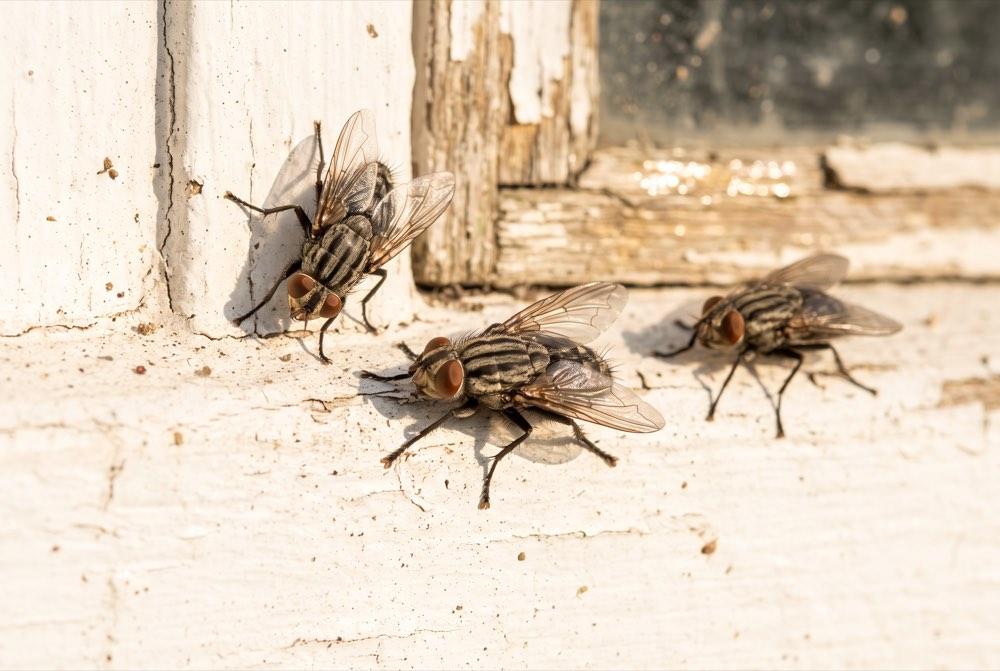

What is dinotefuran? An insecticide from the newer generation of neonicotinoids. Its two main traits: it is very fast, and it dissolves readily in water. It is well known in fly control, especially for flies that no longer respond to pyrethroids.
How does it work?
It binds to the insect's nerve receptors and keeps them firing non-stop, so the insect is paralysed and dies.
- It works by contact and ingestion.
- Results show quickly on flies.
- A different family from pyrethroids, so resistance to those does not affect it.
Why does it suit flies?
Flies on farms, in animal houses and around food premises are sprayed with pyrethroids a lot, and over time they resist them. Dinotefuran comes in by another route:
- It kills resistant flies.
- It is applied where flies rest: walls, posts, window edges, around bins.
- The fly lands and feeds on the surface and takes up the dose.
Its forms
| Form | Where it is used |
|---|---|
| Suspension concentrate | Diluted and sprayed or painted on fly resting surfaces |
| Dusting powder | Inside cracks and voids for crawling insects |
| Granular baits | Scattered or placed in trays around fly areas |
How to use it for flies
- Watch where flies rest most, especially warm, bright spots.
- Treat those spots only, not every wall.
- Keep it away from food, feed and water.
- Rate from the label.
- Deal with the source too: waste, manure, standing water. Without that, flies return.
Rotate; do not rely on it alone
Even with dinotefuran, flies can develop resistance if it is used alone season after season.
- Alternate with an active from another family.
- Use a larvicide at breeding sites.
- Traps and hygiene take the pressure off the insecticide.
Key points
- Highly toxic to bees: do not spray flowering plants or near hives.
- Water soluble: do not spray near waterways or open wells.
- Dust is for cracks, not exposed surfaces or bedding.
Products from Orkida
Dinotefuran FAQs
Does dinotefuran kill resistant flies?
Yes, pyrethroid-resistant flies are affected because it belongs to a different family.
How long does it last on a surface?
Weeks in spots protected from sun and washing. The label states the period and when to re-treat.
Is it the same as imidacloprid?
Same family, but dinotefuran is faster and more water soluble.