
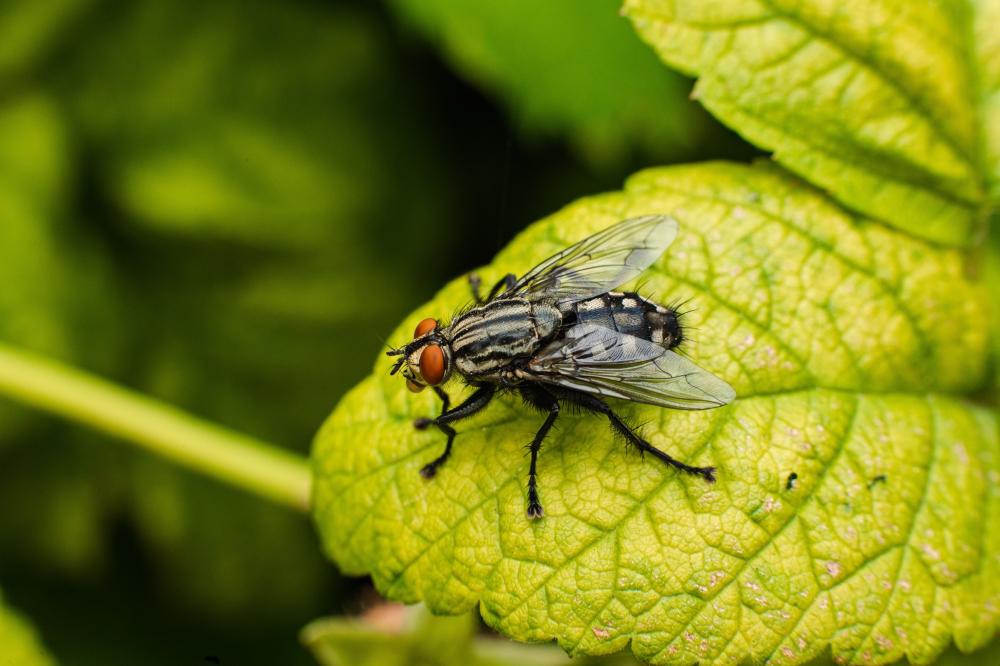

You open the window and flies come in, you clean the kitchen and they return hours later, you try scents and incense and nothing changes. This is the experience of everyone searching for a "fly repellent" thinking a smell will end the problem for good. The truth is flies do not leave a place with food and a breeding site, and repellents alone give only temporary relief. The solution that holds combines four steps: removing the attraction, keeping flies out, trapping those that entered, and treating breeding sites. In this guide we explain why flies gather at your place, which repellents work and which do not, and how to set a staged plan for your home, farm or facility.
Why do flies gather in your home or facility?
Flies go for three things: food scraps, moisture and decaying organic matter. Any place that combines them becomes a magnet and a breeding site.
- Garbage: open or unwashed bins.
- Waste and drains: an important source of house flies and drain flies.
- Leftover fruit: attracts small fruit flies.
- Animals and farms: manure and wet feed are ideal breeding grounds.
Do fly repellents really work?
Household scents such as cloves, mint or vinegar may reduce flies briefly, but they do not solve the problem: they neither kill flies nor stop breeding. More lasting solutions are:
- Remove the source: clean garbage and waste regularly.
- Block flies: window screens, door curtains and closed doors.
- Trap them: glue traps and attractant traps.
- Reduce numbers: suitable insecticides for open areas and farms.
Practical steps to keep flies away
1. Start with cleanliness
Close garbage bins, wash them regularly, take waste out daily and do not leave food uncovered.
2. Close the way in
Install window screens, keep doors closed and fix leaks that leave moisture around the house.
3. Trap existing flies
Glue traps suit indoor spaces, while water-based attractant traps suit open areas and farms. See our article on the fly trap for more.
4. Treat breeding sites
If flies come from manure, standing water or waste that is hard to remove, use insect growth regulators that stop larvae from becoming adult flies.
Which fly do you have?
- House fly: relatively large, gathers around food and garbage.
- Fruit fly: small, appears around fruit and sweet drinks.
- Drain fly: small and dark, comes out of drains and manholes.
- Farm flies: breed in manure and feed.
Fly Life Cycle and Why Numbers Multiply Fast
A female fly lays hundreds of eggs in moist organic matter, which hatch within hours into larvae that feed, then pupate and emerge as adults, completing the cycle in a few days in warm weather. So you may think you eliminated flies, then they return in large numbers days later, because larvae and pupae were unaffected by whatever killed the adult. This is why treating breeding sites is the decisive element in any plan.
Where to Look for the Fly Source
- Bottom and sides of waste bins, and leaking garbage bags.
- Drains, manholes, kitchen and bathroom sinks.
- Under the fridge and appliances where food residue and moisture collect.
- Pet areas and food bowls.
- On farms: manure, wet feed and standing water.
If you find no source inside, look outside, as it may be at neighbors or a nearby public bin.
Common Mistakes in Dealing with Flies
- Spraying visible flies without treating the breeding source.
- Relying on scents and incense alone.
- Leaving gaps in screens or doors unsealed.
- Placing traps in a quiet spot away from the flies' path.
- Not following up after two weeks, so the next generation returns.
Which Plan Suits Each Place?
Home: waste hygiene, screened entrances and sticky traps. Kitchens and restaurants: daily drain cleaning, covered food and air curtains at doors. Farms and barns: manure treatment, insect growth regulators and water-based attractant traps. If you are unsure of the fly type or source, visit one of our branches with a photo or sample and we will guide you to the right product.
Products at Orkida
- Pyroxy Larv 10% EC: an insect growth regulator that stops larvae from becoming adult flies at breeding sites.
- Wilfol 50 ULV: to reduce flying insects in open areas.
- Eco Fly: a fly attractant for traps.
- Force Catch NANO FLY ZONE: a water trap for catching flies.
- All fly control products: glue traps, insecticides and attractants in one place.
Frequently asked questions
Why do flies come back after cleaning?
Usually because the breeding source was not treated, such as drains, bins or nearby manure.
Are traps enough on their own?
Traps reduce numbers but work best with cleanliness and closed entry points.
When do flies increase?
In warm, humid weather and after the rainy season.
Why are there so many flies in my home, and what does it indicate?
A lot of flies usually points to a nearby breeding source: uncovered rubbish, food waste, animal droppings, or damp and leaking water. Find the source first, because killing visible flies alone does not stop the numbers.
What attracts flies the most?
Food scraps, sweets and ripe fruit, open rubbish, pet bowls, dirty drains, and warm damp places.
What smell do flies hate?
They avoid strong scents such as mint, basil, clove and lavender. The effect is temporary and does not fix the source, so use them only as a helper.
Does incense repel flies from the house?
Smoke may drive them away briefly, but it does not stop their return or treat the breeding place, and it can irritate people in closed rooms. The real fix is cleanliness, sealing entry points and traps.
How can I repel flies without insecticide?
Clean food and rubbish areas daily, fit fine mesh on windows, use glue or light traps, cover food, and empty drains and standing water.
Why do flies gather on a person even if they are clean?
They are drawn to sweat, salt, body warmth, moist eyes and mouth, and skin oils, not necessarily because the person is dirty.
Where do flies go at night?
They rest on ceilings, walls, wires and hanging objects in cooler, darker spots, then become active again in the morning.
What is the most dangerous type of fly?
In our region the house fly and filth flies are the most worrying, as they carry germs from rubbish and drains to food and surfaces, so keeping them off food matters most.
How do I get rid of flies for good?
There is no single permanent fix. You need a full plan: remove the breeding source, seal entry points, trap the remainder, treat surfaces when needed with a suitable product, then monitor for weeks.
Summary
The real fly repellent is removing food and breeding sites, then blocking flies with screens, then trapping them. For traps, attractants or insecticides for open areas, visit the Orkida store.