
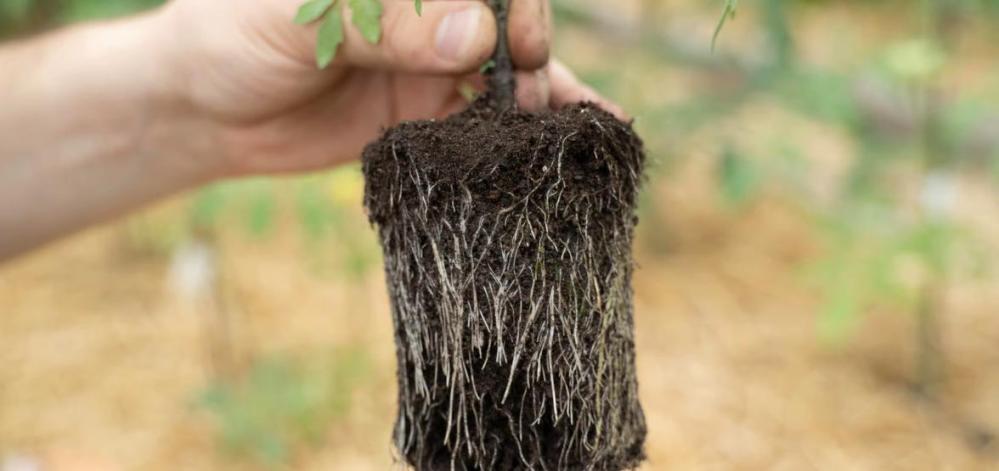

Fluopyram is an active ingredient from Bayer that started out as a fungicide in 2009 and has since become one of the strongest tools against root-knot nematodes. Its advantage is that it works at a very small dose and stops nematodes moving, rather than relying on high toxicity like older nematicides.
This article explains what fluopyram is, how it works inside the nematode, what it controls well and what it does not, the approved doses, how it compares with other nematicides, and how to rotate correctly.
Active ingredient profile
- Name: fluopyram.
- Group: SDH enzyme inhibitors, acting on mitochondrial complex II.
- Nematicide class (IRAC): group N-3.
- Fungicide class (FRAC): group 7.
- Main use: root-knot nematodes, with added protection against powdery mildew.
- Application: through drip irrigation or soil treatment.
- Available product: Velum Prime 400 SC (fluopyram 400 g/L).
How does fluopyram work?
Every cell needs energy, which is produced in the mitochondria by a chain of enzymes. Fluopyram blocks the SDH enzyme, a key link in that chain. The result:
- Energy inside the nematode drops quickly.
- The nematode becomes paralysed and cannot reach or enter the root.
- It cannot feed or reproduce, so no new galls form on the roots.
Importantly, fluopyram is selective: studies found it strongly inhibits SDH in nematodes, but not in mammals, house flies or earthworms at the concentrations tested.
What does it control?
Root-knot nematodes (the strongest target)
These are the nematodes most sensitive to fluopyram. In a study published in 2022, half of root-knot nematode juveniles were paralysed at just 0.36 parts per million, and at 5 parts per million more than 90% never moved again.
Cyst nematodes (weaker)
Cyst nematodes (Heterodera) are much less sensitive. The same study found they needed about 5 parts per million to paralyse half of them, and many recovered once the concentration fell. The reason is a small difference in the structure of their enzyme.
The practical takeaway: if your problem is galls on tomato, cucumber or watermelon roots, fluopyram is one of the best options. If you are dealing with cyst nematodes, you need a programme that includes other actives.
Powdery mildew
When applied to the soil, the plant takes it up and gains protection against powdery mildew on tomato, pepper, cucumber and courgette for 30 to 60 days. It is a bonus, not a reason to use it on its own.
Approved doses
According to the Velum Prime label (fluopyram 400 g/L):
Greenhouse vegetables
Tomato, aubergine, pepper, cucumber, courgette, melon, watermelon and pumpkin:
- Dose: 37.5 to 62.5 ml per 1,000 m².
- First application: 1 to 3 days before or after transplanting.
- Second application: 15 to 30 days later.
- Maximum: twice a year.
Open-field vegetables
- Dose: 62.5 ml per 1,000 m².
- Timing: 1 to 3 days before or after transplanting.
- Maximum: once a year.
Strawberry in greenhouses and tunnels
- Dose: 62.5 ml per 1,000 m².
- Second application: 15 to 60 days after the first.
Notes on the dose
- The lower dose (37.5 ml) is only for light or moderate infestations.
- Water: 200 to 600 litres per 1,000 m².
- The yearly maximum in greenhouses is 500 g of active ingredient per hectare, which equals 125 ml of Velum Prime per 1,000 m².
The step-by-step drip method and a worked example are in Velum Prime: Bayer's Nematicide and How to Apply It Through Irrigation.
Fluopyram compared with other nematicides
Fluopyram (group N-3)
Shuts down energy production inside nematode cells, so they are paralysed and cannot reach the root. Strongest against root-knot nematodes. Found in Velum Prime.
Abamectin (group N-2)
Paralyses nematode nerves and muscles on contact in the root zone. Found in Nemax 20 SC, and the best rotation partner for fluopyram.
Fosthiazate (group N-1B)
An organophosphate that inhibits a nerve enzyme, with systemic action. Found in Thiafos, Nema Gold and Nema Sol granules.
Imicyafos (group N-1B)
An organophosphate from the same group as fosthiazate, used for soil treatment. Found in Nemakick.
How to rotate correctly
Rotate between groups, not between brand names:
- Fluopyram (N-3) → follow with abamectin (N-2) or fosthiazate or imicyafos (N-1B).
- Fosthiazate and imicyafos are in the same group (N-1B), so switching between them is not a real rotation.
- Do not use fluopyram more than twice a year on the same ground.
Tips for the best result
- Apply around transplanting, before nematodes enter the young roots.
- Moisten the soil before application, because dry soil does not distribute the active.
- Split the water: half the water without product, then the product with 40%, and the last 10% as clean water.
- Do not over-irrigate for three days afterwards to the point of run-off.
- Test on a few cucumber or pepper plants before treating the whole greenhouse, as they may be sensitive.
Products from Orkida
- Velum Prime 400 SC, 1 litre: fluopyram 400 g/L from Bayer for root-knot nematodes through irrigation water.
- Nemax 20 SC, 1 litre: abamectin 2% for rotating with fluopyram from a different group.
- Nemakick 30% SL, 500 ml: imicyafos 30% for soil treatment.
- Thiafos 500 EC, 1 litre: fosthiazate 50% for soil nematodes.
- Nema Gold 750 EC, 1 litre: fosthiazate 75%, a systemic nematicide.
- Nema Sol 10 GR, 1 kg: fosthiazate 10% granules mixed into the soil.
Frequently Asked Questions
Is fluopyram a fungicide or a nematicide?
Both. It started as a fungicide, then was found to be very strong against nematodes at small doses. In Velum Prime the main target is nematodes, and protection against powdery mildew is a bonus.
Does fluopyram kill nematodes or just paralyse them?
With root-knot nematodes it kills at small concentrations. With cyst nematodes the effect is mostly temporary paralysis, which is why you need other actives alongside it.
How long does it protect the roots?
It protects the roots during the most important period after transplanting, which is why the label allows a second application 15 to 30 days later in greenhouses.
Can I mix it with fertilizer in the drip system?
It is better to apply it on its own using the split method (50% water, 40% with the product, 10% flush), so it reaches the root zone at the right concentration.