
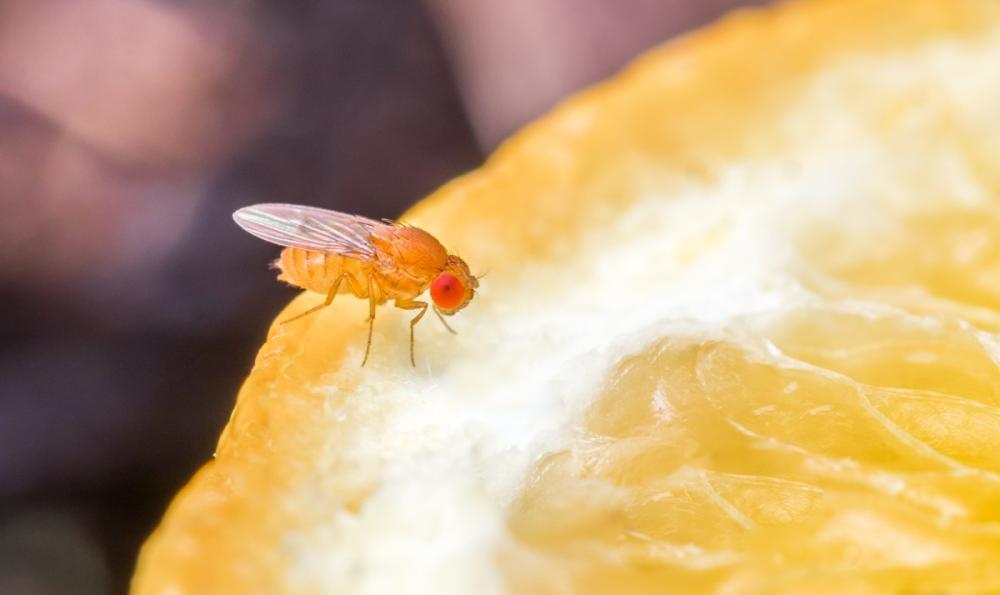

The housefly does not sting or damage furniture, but it is one of the insects that bother and worry people most, and for a good reason: it moves within minutes from a trash bag or animal waste to the plate of food on your table.
If you kill flies every day and find the same number the next day, the problem is not the insecticide you use, but the place where the flies are born. This article explains where flies come from, why they are a real health risk, and how to stop them at the source.
The source: The housefly breeds in trash, waste and decomposing organic matter, and from there it enters the home.
The danger: It carries bacteria and disease-causing agents on its legs and body, contaminating food and surfaces.
The cycle: It goes from egg to adult fly in a few days in warm weather, so its numbers rise quickly in summer.
The common mistake: Spraying only the adults and leaving the breeding spot, such as an uncovered trash container, so they return after two days.
The rule: Cut off the breeding source with cleanliness and covered waste, use screens and sticky traps, then treat the place where they keep appearing.
One Week Is Enough for a New Generation
The housefly, scientific name Musca domestica, passes through four stages: egg, then larva (the familiar white maggot), then pupa, then adult. Speed is the secret of the problem:
- Eggs: A female lays roughly 500 eggs in her lifetime, in batches of between 75 and 150 eggs each.
- Hatching: The eggs hatch in about one day.
- The full cycle: In hot weather the cycle from egg to adult fly takes only 7 to 10 days, while it may stretch to two months in the cold.
- Adult lifespan: The adult fly usually lives from two to four weeks, and starts laying eggs a few days after emerging.
In practice, this means a trash bag forgotten for a week in the yard in summer can release hundreds of flies. And every fly you kill on the window is matched by far more larvae and pupae growing quietly in a place you cannot see.
Where Do Flies Breed? Look Here First
Larvae need moist, fermenting organic matter. In homes and shops, these are the best-known places, in order of how common they are:
- Trash barrels and bins: Especially the bottom, where liquids and food scraps collect. Many people change the bag but do not wash the barrel itself, so the larvae keep living at the bottom.
- Wet soil around trash containers: From their wash water or leaking juices from the bags.
- Animal waste: Cat and dog waste in the yard, and poultry, sheep and horse manure in barns. Fresh chicken manure is one of the best environments for fly breeding.
- Food scraps in the garden: The home compost pile, fallen fruit, and bags of cut grass left to ferment.
- Inside the kitchen: Food scraps under appliances, a leaking sink drain, or a forgotten bag of bread and vegetables.
If flies gather in a particular part of the house, the source is often close to it. And if you find no source inside the house, look in the yard, around the neighbors and in the street bins.
The reason is that an adult fly can fly several kilometers from where it bred, although it mostly stays close if it finds food.
An important note: if the flies you have are very small and hover around fruit, they are most likely fruit flies, and if they are small, gray, resemble a moth and rest on bathroom walls, they are drain flies. Each type has a different source and a different treatment. See the fruit fly article.
Why Is the Fly a Health Risk?
The fly does not spread disease by a bite like the mosquito, but mechanically: germs stick to the dense hairs on its body and legs, then transfer to any surface it lands on.
Worse is the way it eats: a fly cannot chew solid food, so it releases saliva and digestive fluid onto the food to dissolve it and then sucks it up, and it often leaves its droppings on the food itself.
Scientific references indicate that the housefly can carry more than 100 types of disease-causing agents, the most notable of which are:
- Salmonella and Shigella: Bacteria that cause food poisoning and dysentery.
- Typhoid and cholera: The bacteria of these two diseases.
- Intestinal parasites: Cysts of parasites such as amoeba and Giardia.
- Intestinal worms: Eggs of worms such as Ascaris.
- Eye infections: Some of their causes, especially in children.
That is why fly control in restaurants, food factories and hospitals is treated as part of food safety, not just comfort. At home, food left uncovered for a long time with flies on it, especially in the heat, is better not served to children.
The Right Plan: The Source First, Then the Flying Fly
The recommendations of integrated pest management (IPM) programs are clear: insecticides reduce fly numbers temporarily, but they do not solve the problem as long as the breeding place exists. Eliminating the larvae at their source matters far more than chasing the adult fly.
Step 1: Cleanliness That Cuts the Life Cycle
This step alone solves a large part of the problem, because it deprives the larvae of the place where they grow.
- Taking out the trash: Empty the kitchen bin daily, and take the trash out of the house at least once or twice a week, and more often in summer.
- Bags and barrels: Use tightly tied bags and barrels with lids that close well.
- Washing the barrel: Wash the barrel itself every week or two and let it dry, because a wet bottom is the real nursery for larvae.
- Empty cans: Rinse juice, milk and food cans before throwing them away.
- Animal waste: Collect pet waste daily, and clean barns of manure at least weekly.
- Container location: Place the outdoor trash container as far as possible from the kitchen door and windows, because its smell leads flies inside.
Step 2: Prevent Entry and Trap Adults Without Contaminating Food
After dealing with the source, you still need to keep flies from entering, and get rid of those that came in using methods that do not contaminate food.
- Screens and doors: Intact screens on windows, and exterior doors that are closed and not left open.
- Shops and commercial kitchens: An air curtain over the door that pushes air outward, or plastic strip curtains.
- Sticky strips: A simple, safe solution indoors, hung near windows and doors and where flies gather.
- Electric zappers: Not placed above food preparation areas, because the zap shatters the fly's body and scatters its parts.
- Light traps with sticky boards: The best option in kitchens, hung at medium height and out of sight of flies outside so they do not draw them in.
Step 3: Baits and Insecticides in the Right Place
Baits work well in places where flies gather outside the home: around trash containers, in barns, in restaurant yards and food warehouses. But they do not work if the flies find uncovered trash to feed on instead.
In large breeding places such as barns and waste collection sites, a growth regulator is added to kill larvae before they become flies.
Fly Resistance to Insecticides: Why Did the Insecticide "Stop Killing"?
The housefly is one of the fastest insects to develop resistance, because it has so many generations a year. Wide resistance has been recorded to the organophosphate, carbamate and pyrethroid groups, and even to some baits.
The solution is not increasing the dose, but rotating between active ingredients from different groups according to the IRAC classification, for example:
- Indoxacarb: Group 22.
- Cyantraniliprole: Group 28.
- Imidacloprid: Group 4A.
- Triflumuron: A growth regulator from Group 15 for larvae.
Using the same active ingredient season after season is the shortest road to flies that do not die.
Suitable Products by Location
With flies, we choose between poison-free solutions indoors, baits from two different groups outdoors that we rotate between, and a growth regulator for large breeding places:
- Orkida Economy Package for Housefly Control at Home: It combines Fly Killer bait with 4 Catch Master sticky strips. A simple solution for the home: the bait is placed in a thin layer in a dish out of reach of children, and the strips are hung near windows and doors.
- Catch Master Sticky Strips for Flying Insects: Poison-free, suitable for the kitchen, living rooms and even damp places, and also useful for finding out where flies are concentrated.
- Advion Fly Bait by Syngenta: Ready-to-use granules with indoxacarb 0.5%, scattered around trash containers and in barns and poultry farm walkways or inside bait stations, at the dose on the label. Useful against flies that no longer respond to other active ingredients.
- Xyrox Fly Bait by Syngenta: Ready-to-use granules with cyantraniliprole from a different group, suitable inside and outside facilities on dry surfaces and where flies gather, at the dose on the label. Good for rotating with Advion Fly to delay resistance.
- Starycide 480 SC by Envu (formerly Bayer): A growth regulator with triflumuron that stops larvae from forming their new skin so they die before they fly. It is sprayed on breeding places such as manure and waste collection areas, at the dose on the label. It does not kill adult flies, so it is used together with baits.
For more on household and agricultural pests, browse the pest library.
Frequently Asked Questions
Why do flies suddenly multiply in the house?
Usually a new breeding source appeared a week to ten days earlier: trash that was taken out late, a small animal that died in the yard or inside an air conditioner vent, or forgotten bags of food. Look for the source before any spraying.
Does a hanging bag of water repel flies?
It is a widespread idea, but the tests on it conflict and there is no strong evidence that it works. Cleanliness, closing the entries and sticky strips are far more dependable.
Should I throw away food a fly has landed on?
A fly standing for a second on hot food does not necessarily mean serious contamination, but food that stayed uncovered for a long time with flies gathering on it, especially meat and cooked food in the heat, is safer not to serve, particularly to children and the elderly.
Can I spray insecticide in the kitchen?
Do not spray insecticide on food preparation surfaces or near uncovered food. Inside the kitchen, rely on sticky strips and light traps with sticky boards, and keep baits and spraying outside and around breeding sources.
Follow the dose written on the label and the safety interval before animals or people enter the treated place.
How long does a housefly live?
The adult fly usually lives two to four weeks, but what matters more is that a whole new generation can appear every 7 to 10 days in hot weather.
How do I get rid of flies in a poultry or sheep barn?
Start by removing the manure regularly and drying it, because wet manure is the biggest breeding source. Then use a growth regulator on breeding places, and granular baits in walkways and on high surfaces out of reach of the animals, rotating between active ingredients from time to time.