
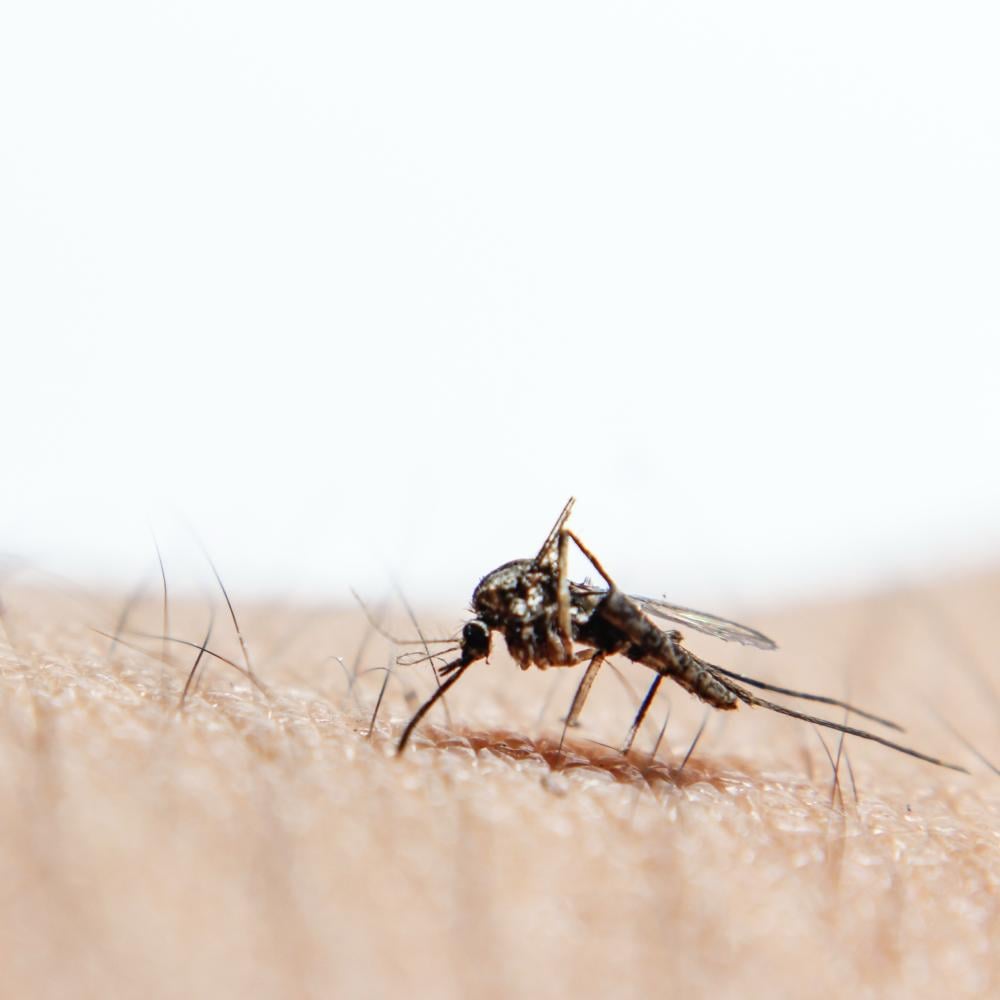

You hear buzzing at night, find a daytime bite on your leg, and your neighbor says he has a different type. This is not imagination: the word "mosquito" covers types that differ in appearance, activity time and breeding place, and each type has a control method that suits it. Mosquitoes are the most irritating insects in homes, farms and facilities and the most dangerous to public health, so knowing the type is the first step to choosing the correct control method. In this guide we explain the difference between mosquito and "namous," the mosquito life cycle and its weakness in water, the main regional types, Aedes, Culex and Anopheles, and how to identify and control each quickly.
Are "mosquito" and "naamous" the same thing?
Yes. "Naamous" is the common Saudi word for mosquitoes, and both refer to the same insect family, Culicidae. Only females bite, because they need blood to develop their eggs; males feed on plant nectar.
The mosquito life cycle: it all starts with water
All mosquitoes go through four stages: egg, larva, pupa and adult. The first three live in water, which is the biggest weakness to target:
- Larvae and pupae are confined to one place, so they are easy to treat before they become flying mosquitoes.
- Adults spread everywhere and are hard to control if the water source stays.
The most important mosquito types
Aedes mosquitoes (yellow fever mosquito)
- Look: small and dark, with distinctive white stripes on the legs and body.
- Activity: bites during the day, peaking in early morning and before sunset.
- Breeding: clean standing water in small containers such as plant saucers, buckets, old tires and uncovered water tanks.
- Risk: carries dengue, chikungunya, Zika and yellow fever.
Culex mosquitoes (house and sewage mosquito)
- Look: brown with no clear white stripes; rests with its body parallel to the surface.
- Activity: bites in the evening and at night, and is the one you hear buzzing in bedrooms.
- Breeding: polluted standing water such as drains, sewage manholes, ponds and collection basins.
- Risk: carries West Nile virus, and some species carry Rift Valley fever. It is the most bothersome type in cities.
Anopheles mosquitoes
- Look: rests with the abdomen tilted upward, the easiest sign for telling it apart.
- Activity: mostly from dusk to dawn.
- Breeding: still fresh water with little pollution, such as shallow valley pools and irrigation ponds.
- Risk: the main carrier of malaria; cases in Saudi Arabia are concentrated in the southwest.
How to tell them apart quickly
- White stripes on the legs and daytime bites: usually Aedes.
- A brown insect bothering you at night in the room: usually Culex.
- Body angled upward when resting on a wall: Anopheles.
- The water also tells you: clean containers point to Aedes, polluted water points to Culex.
How to control each type
Control works when three steps are combined:
- First, prevent breeding. Empty small containers, cover tanks, fix leaks and drain standing water.
- Second, treat water that cannot be emptied. Use biological larvicides or insect growth regulators, which kill larvae before they become flying mosquitoes.
- Third, reduce adults. Use ULV fogging in large areas and traps indoors. See our article on the mosquito trap for details.
Culex needs special attention at drainage sources, while Aedes requires careful inspection of small containers in gardens and on roofs.
What After Identifying the Type?
If you learn that the daytime biter is Aedes, focus on small clean containers around the house: plant saucers, old tires, buckets and the AC tray. If the nuisance is at night in the room it is probably Culex, so focus on drains, manholes and intact screens. For Anopheles focus on shallow standing fresh water. In all cases apply the cut, prevent and treat steps in our five-step guide to getting rid of mosquitoes.
The Breeding Place Reveals the Type
Ask yourself: where is standing water around my house? If it is clean in small containers, Aedes is a candidate; if polluted in drains and basins, Culex. This simple question saves you spraying in places where the insect does not even breed.
Traps: A Helper, Not a Replacement
Light traps reduce adult numbers inside a space, but they do not treat breeding places and do not catch all types with equal efficiency. Read the mosquito trap guide to learn their types, placement and maintenance.
Seasonal Prevention
Start preparing before summer and right after rain, when many small pools form. Watch water collections on farms, facilities and construction projects, as their impact extends to neighboring districts, and community control works better than individual control.
Products at Orkida
- Becker Aquabac 200 G by Becker: a biological larvicide for water that cannot be emptied.
- Pyroxy Larv 10% EC: an insect growth regulator that stops larvae from becoming adults.
- Aqua Bali Super 20 EW: for treating flying insects over wide areas.
- IGEBA NEBULO device: a fogging device for large areas and facilities.
Why control matters
Mosquitoes cause more human deaths than any other animal through the diseases they carry, including malaria, dengue and West Nile fever. Spraying helps when needed, but it is not enough alone, because mosquitoes can develop resistance to repeated insecticide use. Modern programs therefore reduce breeding sites first, then target larvae, then reduce adults when needed.
Frequently asked questions
Why do mosquitoes bite me more than others?
Carbon dioxide we exhale, body heat and skin odor all play a part, so bites vary between people in the same place.
Is indoor spraying enough?
No. Unless water sources around the home are treated, mosquitoes return quickly.
When should I start control?
Before summer and right after rains, the best time to stop breeding.
Summary
Identify the type by color, biting time and breeding site, then start with the water source, since larvae are far easier to control than flying mosquitoes. For larvicides or fogging equipment, visit the Orkida store.