
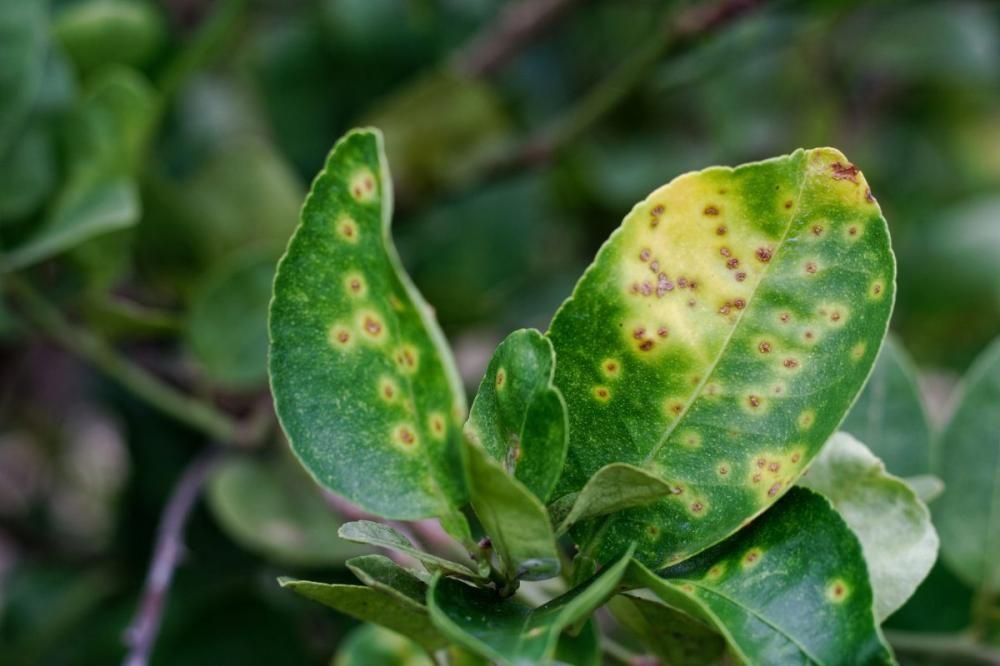

Two weeks after transplanting, you turn over the lower tomato leaves and find them covered in small round spots with gray centers and dark brown borders. You assume it is leftover spray residue or insect damage. Ten days later the leaves turn yellow and drop from the bottom of the plant upward, leaving the fruit exposed to the sun. This is fungal leaf spot, and in vegetables its best-known forms are Septoria and Cercospora leaf spot.
The danger is not a single spot. It is that the disease consumes the green leaf area that feeds the fruit, then opens the door to sunscald. The good news is that this is a disease managed by timing and sanitation more than by heavy spraying.
Disease: Fungal leaf spot (Septoria and Cercospora): circular spots on the leaves with a pale center and a dark edge, starting on the lower leaves.
Spread: Spores spread by splashing water, rain and overhead irrigation, and they survive on infected plant debris from one season to the next.
Conditions: High humidity, long periods of leaf wetness and overly dense plantings speed up the disease and make it more severe.
Common mistake: Leaving infected lower leaves on the plant, since they are the source of infection for the leaves above.
Rule: Remove infected leaves, water from below, improve ventilation, and start treatment at the first spots, not after the disease has spread.
What makes leaf spots spread so quickly?
The causal fungi do not need wounds to get in. They need water droplets to carry them from leaf to leaf, and any activity that wets the leaves or shakes the plants gives them a chance.
- Rain splash and overhead irrigation: Spores travel in water droplets splashed from the soil and lower leaves onto the leaves above.
- Humidity and warmth: Warm, humid weather with long morning dew is the ideal environment for spore germination.
- Working among wet plants: Hands, equipment and insects carry spores from an infected plant to a healthy one.
- Debris from the previous season: The fungus survives on plant residue and on some weeds in the nightshade family, and new infections start from there.
Septoria: small spots with black dots
This disease is caused by the fungus Septoria lycopersici, the most common foliar disease of tomato. It usually appears after fruit set on the lower leaves, then moves upward.
- Spot size: Small and round, less than about three millimeters across, with a gray or pale brown center.
- Telltale sign: The spot border is dark brown, and the center holds tiny black dots, which are the fungal fruiting bodies that produce spores. Use a hand lens to see them.
- Leaf yellowing: As spots multiply they merge, and the whole leaf turns yellow, then dries and drops.
- Fruit: Rarely infected, but exposure to the sun after the leaves drop harms fruit quality.
- Hosts: Mainly tomato and some nightshade-family weeds, which carry the fungus over between seasons.
Cercospora: when leafy vegetables and peppers are involved
Cercospora is a name for a group of fungi that infect different crops. On tomato it is less common than Septoria, but it is a regular visitor on pepper, eggplant, beet, carrot and others.
- Appearance: Round to oval spots with a pale gray or papery center and a brown or purple ring, sometimes surrounded by a yellow halo.
- Development: Neighboring spots merge into large patches, then the tissue dries out.
- Older leaves first: It starts on the lower, older leaves and then moves to the newer ones.
- Rain and sprinkler irrigation: These help spores spread, especially in leafy vegetable fields.
What about peppers, eggplant and leafy vegetables?
The fungi differ by crop, but the story is the same: wet leaves, old foliage and plant debris. Recognizing the name leads you to the right timing for control.
- Pepper: Cercospora leaf spot produces spots with gray centers and dark borders, and leaves may drop, exposing the fruit to the sun.
- Eggplant: It shares diseases with tomato, and the same measures work.
- Beet, carrot and spinach: Here Cercospora is a primary disease in which the spots enlarge and merge, weakening the foliage.
- Cucumber and zucchini: They suffer from other leaf spots but benefit from the same cultural practices: drip irrigation, ventilation and rotation.
How do you tell it apart from similar diseases?
An accurate diagnosis saves you from wrong sprays. Three diseases resemble fungal leaf spot, and some of them are not treated with the same fungicides.
- Early blight: Its spots are larger and darker, with concentric rings like a target, and it also infects stems and fruit. Details are in the early blight article.
- Bacterial spot: Angular, greasy-looking spots with no black dots in the center, needing a copper program. See bacterial canker.
- Late blight: Large, water-soaked spots with white fuzz under the leaf in cool, humid weather. See late blight.
- Anthracnose: It affects fruit and leaves, with sunken spots on ripe fruit. See anthracnose.
Control plan: start with cultural practices, not the fungicide
The most successful programs we have seen combine lower leaf wetness with protective coverage at the right time. A fungicide alone, even a good one, cannot make up for overhead irrigation that wets the leaves every day.
- Clear out the previous crop's residue before planting, and remove nightshade weeds around the field.
- Rotate crops, and do not plant tomato or pepper in the same ground for at least two seasons.
- Irrigate by drip and avoid overhead spraying. If overhead irrigation is unavoidable, do it early in the morning so the foliage dries quickly.
- Stake the plants and lift them off the ground, and prune the lower leaves that touch the soil, since they are the first to be infected.
- Mulch the soil to reduce the splash of water and spores from the ground onto the leaves.
- Do not enter the field or greenhouse while the plants are wet, and sterilize pruning shears and tools between rows.
- Start protective spraying at the first spots on the lower leaves, continue at regular intervals, and rotate fungicide groups.
Read the weather before you read the leaves
The fungus moves with the weather, not with the calendar. Learning to read the conditions that come before the disease saves you many unnecessary sprays and puts each spray at the right time.
- Dewy nights: Dew that stays on the leaf until mid-morning is enough to germinate spores, even without rain.
- Warm, humid spells: Infection follows within days, so spray before them, not after.
- Sprinkler irrigation: It creates rainy conditions in any weather, so if you cannot replace it, run it early in the morning.
- Closed greenhouses: Poor ventilation means vapor condensing on the leaves at night, so open the sides early and reduce plant density.
Fertilization and resistance: how are they related to leaf spots?
A plant with balanced nutrition tolerates disease better, but excess nitrogen fertilizer creates a dense, humid canopy that holds moisture and encourages the fungus.
- Excess nitrogen: It drives soft, dense growth and reduces airflow between leaves.
- Potassium and calcium deficiency: It weakens cell walls, making them easier to infect.
- Regular irrigation: Drought followed by flooding stresses the plant and makes it weaker against disease.
How do you know the program worked?
Do not judge by the old leaves, because their spots remain no matter how good the spraying was. The real verdict is in the new leaves that appeared after the spray.
- Mark an infected leaf: Tie a colored thread around the stem at the highest leaf with spots, and watch whether the disease goes past it.
- Compare the upper leaves after two weeks: If they stay clean, the program is working. If new spots appear, review coverage and timing.
- Record spray dates and groups: This helps you rotate correctly and find the cause of any failure.
Which fungicides work?
Foliar fungicides do not restore old spots to health. Their role is to protect new leaves and stop the disease from advancing. The key is to combine a multi-site protectant with a systemic fungicide and not repeat the same group.
- Coppers: Protectants that cover the leaf surface and also help against bacterial spot, so they suit the start of the season and humid weather.
- Strobilurins: Such as azoxystrobin and pyraclostrobin, which move within the tissue and give protective and early curative activity.
- Triazoles: Such as difenoconazole, which are systemic and help stop the progress of infection.
- Rotation: Do not repeat the same group in consecutive sprays. Place each one within a varied program.
What we rely on at Orkida
We arrange the program in three stages: protective copper at the start, then a dual-action fungicide at first appearance, then a systemic fungicide to stop progress when needed. These are the products we build on.
- Kdos: Copper hydroxide at 53.8% (about 35% metallic copper). We start with it as a protective spray before symptoms appear and repeat it every ten to fourteen days. We do not mix it with insecticides or foliar fertilizers before a compatibility test.
- Ortiva Top 325 SC: Azoxystrobin with difenoconazole, covering Alternaria and Cercospora leaf spots and early blight. We choose it at the first spots on the leaves because its two active ingredients work in different ways.
- Score 250 EC: Difenoconazole, a systemic with protective and curative action, which includes Septoria leaf spot in tomato. We place it in the second spray of the rotation and cover the leaf on both sides.
- Bellis 38% WG: Boscalid with pyraclostrobin, covering leaf spots and both blights in tomato and potato. We rely on it when several foliar diseases occur in the field and you want a single broad-spectrum fungicide.
We close with one piece of expert advice: follow the dose on the label and the pre-harvest interval, and rotate between chemical groups every season.
Frequently asked questions
Should I cut off the infected leaves?
Yes. Remove heavily infected lower leaves and put them in a bag away from the field, and avoid working among the plants while they are wet. Do not leave cut leaves on the ground.
Do these spots cause fruit rot?
Septoria rarely infects fruit, but losing leaves exposes the fruit to the sun, so it burns and size and quality suffer. Cercospora varies by crop.
When should I start protective spraying?
From the first appearance of spots on the lower leaves, and from the start of fruiting in warm, humid weather. Starting early is far cheaper than trying to stop a disease that has spread over the whole plant.
Does the fungus live in the soil?
It lives on plant debris and on host weeds, not in the soil alone. That is why cleaning the field and rotating crops break its cycle.
Is the disease carried by seed?
Seed and transplants can sometimes carry the fungus, so buy transplants and seed from reliable sources and inspect transplants before planting.
Why does the disease come back after spraying?
Usually because leaf wetness continues, the next spray was late, or the spray did not cover the underside of the leaf. Address the cultural cause along with the fungicide, because the fungicide alone is not enough.
Can I plant tomato after tomato in the same greenhouse?
You can, but the fungus persists in the previous season's debris. Remove all residue, sterilize surfaces, tools and pipes, and run an early protection program from the first weeks after transplanting.
Does plastic mulch reduce the disease?
Yes, because it prevents water droplets and soil from splashing onto the lower leaves, which are the first to be infected. It also reduces weed growth around the rows.