
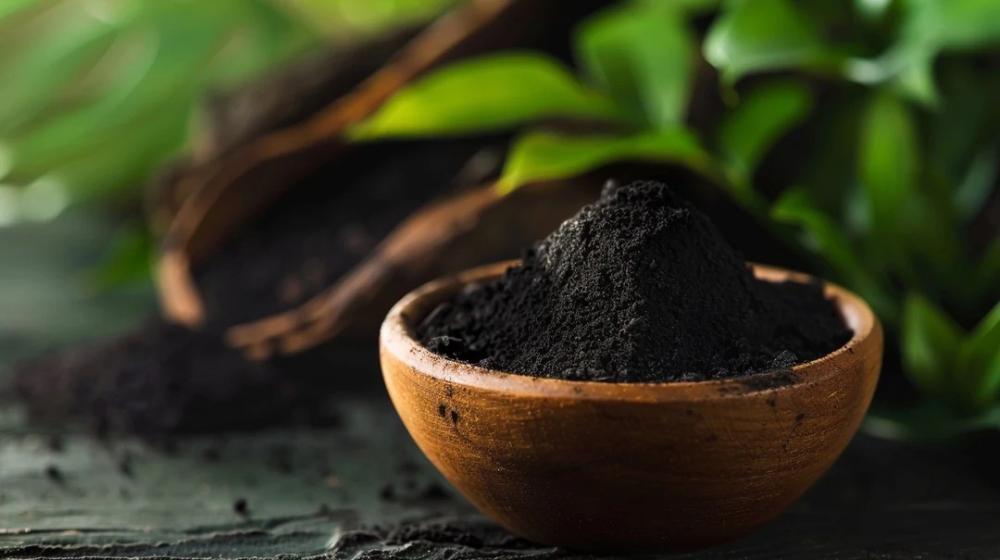

Humic acid has become one of the most widely used products in modern fertilization programs, but its popularity in the market does not mean it is necessary in every case. A plant's success depends not only on adding nutrients, but on the soil's own efficiency in holding those nutrients and making them available to the roots in a stable way. Very often the problem is not a shortage of fertilizer, but a weak absorption environment in the soil. This is where humic acid comes in, as a soil conditioner that raises the efficiency of the system the root works in, not as a direct fertilizer that cures a visible deficiency.
Definition: Humic acid is an organic substance formed from the decomposition of plant material, and it is used to improve the root environment, not as a main fertilizer.
Effect: It helps the soil hold nutrients and water and improves root uptake, and its benefit shows more in poor and sandy soils.
When: It is truly necessary in soils low in organic matter, saline soils, or when roots are weak, and it is not in a rich soil with good structure.
The common mistake: Relying on it as a substitute for balanced fertilization, since it does not feed the plant the major nutrients.
The rule: Start with a soil analysis and define the need, then add it within an integrated program instead of using it automatically.
What Is Humic Acid?
Humic acid is a natural organic substance produced by the decomposition of plant residues over long periods, and it is used in agriculture to improve the physical and chemical properties of the soil. It is not a direct source of major nutrients such as nitrogen or phosphorus, but it improves the soil's ability to hold these nutrients and regulates their availability in the root zone, which raises the efficiency of the added fertilizer and reduces losses.
How Does It Affect Soil Efficiency?
One of the most important roles of humic acid is raising the cation exchange capacity (CEC) of the soil, which is the soil's ability to hold positively charged nutrients such as calcium, magnesium, potassium and ammonium. In sandy soil this capacity is low, leading to quick loss of nutrients with irrigation water. When humic acid is added, the soil's ability to hold these nutrients improves, so less is lost to leaching and feeding becomes more stable in the root zone. In practice, this means the same amount of fertilizer gives higher efficiency because less is lost and nutrients are distributed more evenly.
What Is Its Relationship to the Roots?
Improving soil properties is reflected directly in root activity. When aeration improves and the distribution of water and nutrients around the root is balanced, the fine root hairs responsible for actual uptake spread more. Any imbalance in the environment around the root weakens uptake even when nutrients are available. So humic acid's role in supporting roots is indirect, but essential in building a root system that is more stable and better able to tolerate heat or salt stress.
When Is It Really Necessary?
Humic acid becomes more important in sandy soils that lose nutrients quickly, in soils low in organic matter, and in cases where the plant responds poorly even though the fertilization program is regular. In high-salinity environments, humic acid does not remove salts from the soil, but it helps improve ion balance in the root zone and reduce the effect of salt stress by supporting root activity and improving soil structure. In these cases, adding it to the program is a logical step to improve soil efficiency over the medium term.
Does the Result Differ by Form (Liquid, Powder, Granular)?
The form of the product affects the method of use and the speed of effect more than it affects the scientific principle itself. Liquid humic acid is usually applied through irrigation or drip and spreads quickly in the root zone, so it is preferred for in-season treatments or when a faster intervention is needed. Powder humic acid is usually more concentrated and needs careful dissolving before use, and it is used when precisely calculated doses are needed within a regular fertilization program. Granular humic acid is added directly to the soil and has a gradual, long-term effect, so it is preferred at the establishment stage or when improving soil properties before planting. Choosing the right form is not only about strength, but about farm management, the irrigation system and the goal of use.
And When Is It Not Necessary?
If the soil is balanced, rich in organic matter and good at holding nutrients, a clear difference may not appear when it is used. Likewise, growing systems that do not rely on real soil do not benefit from it in the same form. So the decision to use it should be based on a technical assessment of the condition of the land, not on the mere popularity of the product in the market.
Can It Replace Fertilizer?
Humic acid does not replace fertilizer because it does not supply the plant with the basic nutrients. It improves the efficiency of using the nutrients that are present or added. Relying on it alone will not correct a nutrient deficiency, but it may strengthen the results of a fertilization program if the problem lies in the soil's properties. It is also important to distinguish between humic acid, used to improve the soil, and fulvic acid, which is often used to support uptake through foliar spraying, since each has a different function within the nutrition program.
Humic Acid Products from Global Companies Available at Orkida
- Humintech Perl Humus Pro Granular Humic Acid: Granular humic acid to improve the soil and roots, 20 kg pack.
- Humintech Powhumus Soluble Humic Acid: Humic acid to treat soil salinity and activate the roots, 1 kg pack.
- Humintech Powhumus Pro Soluble Humic Acid Powder: Soluble powder humic acid for large areas, 20 kg pack.
- Rovensa Humistar WG Humic Acid: Fast-dissolving humic acid powder to improve the soil and activate the roots, 5 kg pack.
You can find all the options in the Humic & Fulvic Acids section. Follow the usage rate written on the label according to the soil type and the crop.
Conclusion
Humic acid is not a magic solution, but it is a technical tool for raising soil efficiency when there is a real need for it. Its importance shows clearly in sandy soils or soils low in organic matter, where it helps reduce nutrient loss and improve the stability of feeding in the root zone. Professional farm management does not rely on a large number of inputs, but on understanding the relationship between the soil, the root and the nutrient, and when the decision is based on a realistic analysis of the situation, results become more stable and more predictable over the long term.
Frequently Asked Questions About Humic Acid
What is humic acid good for in the soil?
It improves soil structure and its ability to hold water and nutrients, and helps roots absorb food more efficiently.
Does it replace fertilizers?
No. It is a soil conditioner and stimulant, not a complete substitute for fertilizers. It works best with a balanced fertilization program.
How do I use it?
It is added with irrigation water or sprayed on the leaves depending on the product type, at the dose written on the label. Start with a low concentration and watch the plant.
Is it suitable for all soil types?
It is usually helpful in sandy soils and soils poor in organic matter, and its effect shows in saline or alkaline soils with continued use.