

Seeing tiny insects on the bathroom wall, specks moving across books and papers, or small flies above the sink? Most of these are what people call damp insects, because they only thrive in humid places. The good news is that most of them do not bite, and the real solution starts with the moisture itself, not the insecticide.
This guide covers the most common small insects in the home, how to identify them by appearance and location, and what to do about each one.
Why do damp insects appear at home?
- Water leaks under sinks or behind walls.
- Poor ventilation in bathrooms, kitchens and storerooms.
- Mould and fungi on walls and paper, which many of these insects feed on.
- Organic build-up in drains and basins.
That is why spraying while the damp remains only brings them back days later.
Types of small household insects and how to identify them
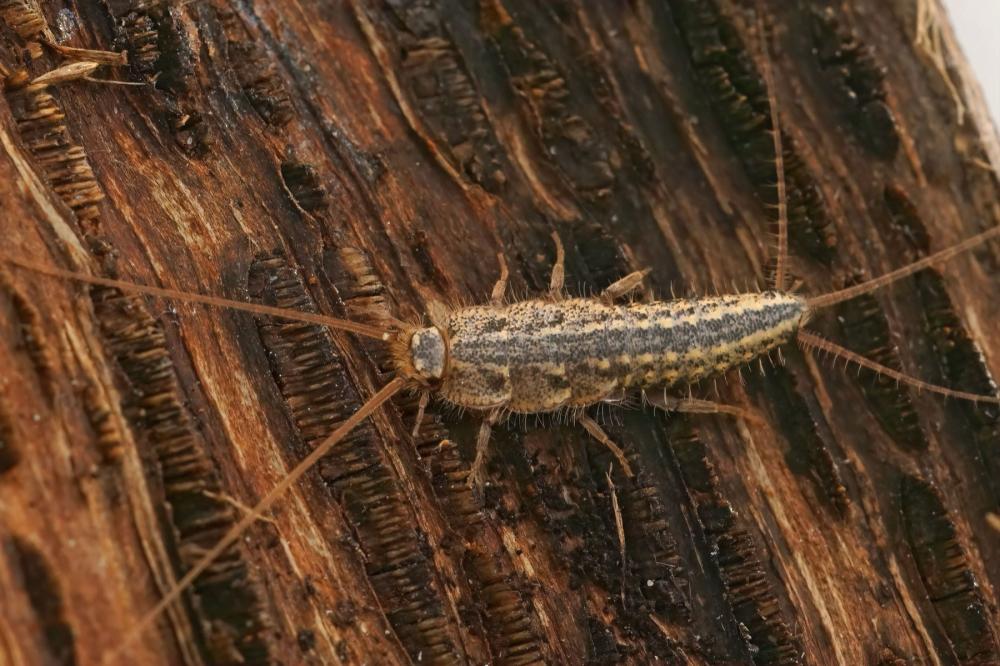
Silverfish
- Appearance: shiny silver, about 1 cm long, wingless, with three tail bristles.
- Where: bathrooms, storerooms, among books and boxes.
- Harm: damages paper, books and fabrics.
- More in our silverfish article.
Booklice
- Appearance: very small (1 to 2 mm), white or pale brown, moving quickly over paper and walls.
- Where: old books, wallpaper and places with light mould.
- Harm: they do not bite, but they signal high humidity.
- More in our booklice article.
Drain flies
- Appearance: small grey flies with fuzzy, moth-like wings, resting on bathroom walls.
- Where: drains, sinks and floor gullies.
- Cause: the slimy film inside drains, where the larvae develop.
- More in our drain flies article.
Fruit flies
- Appearance: small light-brown flies with red eyes.
- Where: around ripe fruit, rubbish bins and the kitchen.
- More in our fruit flies in the kitchen article.
Springtails
- Appearance: tiny grey or white insects that jump when touched.
- Where: over-watered plant pots, bathrooms and damp tile edges.
- Harm: harmless to people; their presence signals high humidity or over-watering.
Small cockroaches
If the insect is brown, runs fast and is over 1 cm long, it is probably a young German cockroach, not a damp insect. See our German cockroach article.
Quick guide: identify the insect by where you see it
- On the bathroom wall, flying a little: drain flies.
- Running fast and silver: silverfish.
- Tiny specks moving on books: booklice.
- Jumping in plant pots: springtails.
- Flying around fruit: fruit flies.
How to get rid of damp insects
- Fix the water source: leaks under sinks and behind walls first.
- Improve ventilation: run the bathroom fan, open windows, and use a dehumidifier in closed spaces.
- Clean the drains: with a brush and a drain cleaner to remove the slimy film.
- Water less: let indoor plant soil dry between waterings.
- Remove old boxes and papers: from damp areas.
- Use glue traps: to find where activity is concentrated and reduce numbers.
- Treat with insecticide when needed: spot-spray cracks and corners, or dust dry voids, rather than spraying at random.
Are damp insects dangerous?
Most do not bite or spread known diseases, but:
- Some damage paper, books and fabrics.
- Their scales and droppings can worsen allergies in some people.
- Their presence signals moisture that can lead to mould in the home.
Products from Orkida
Damp insect FAQs
Why do tiny insects appear in the bathroom?
The bathroom is the dampest room in the house, with drains and organic residue the insects feed on.
Do damp insects bite?
Most do not. If you have bites on your body, the cause is usually bed bugs or fleas.
Is insecticide enough to get rid of them?
No. Fix the moisture and leaks first; insecticide helps after that.
How do I stop them coming back?
Keep areas dry and ventilated, clean drains regularly, and do not pile boxes and papers in damp places.