
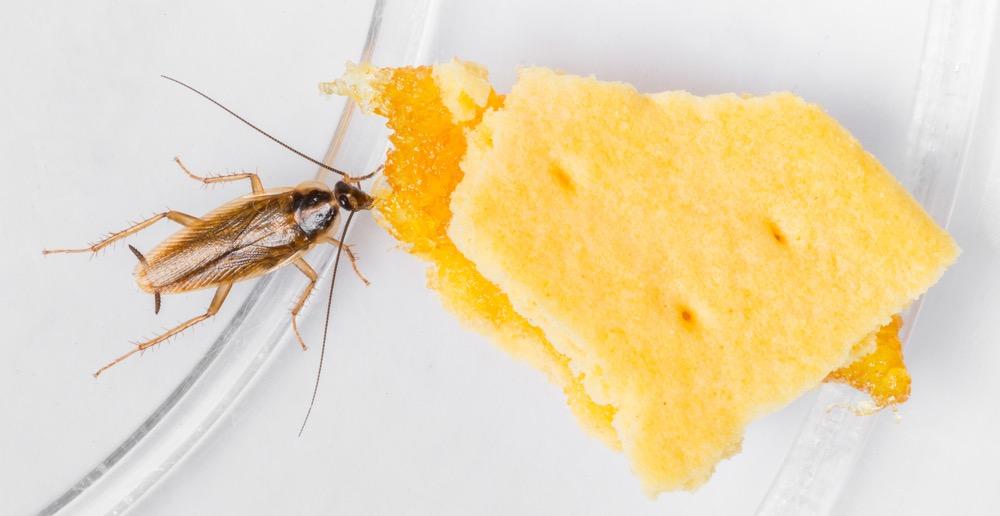

You spent an hour cleaning the kitchen, and after midnight you switch on the light and dozens of small cockroaches run behind the oven. This is the scene of the German cockroach, which does not come from outside like the American one but lives and breeds inside the kitchen itself behind appliances, in hinges and warm cracks. Seeing one usually means dozens are hiding, and the cycle completes in two to three months. That is why random solutions fail and a planned gel with careful hygiene and follow-up succeeds. In this guide we explain how to identify it, where it hides, why numbers multiply, and how to set a step-by-step programme for homes and restaurants.
In many cases, seeing a single German cockroach means that larger numbers are hiding in places you cannot see, which explains how quickly the problem gets worse if it is not handled properly.
Appearance: A small light-brown cockroach with two dark stripes on the thorax, and the most common cockroach species in kitchens.
Breeding: The female carries her egg capsule with her, and numbers multiply within a few months if left uncontrolled.
Locations: Behind appliances, inside cupboards, around pipes, and in warm, damp cracks.
Sign: Seeing it during the day indicates a large infestation, along with droppings that look like coffee grounds and a foul smell.
Rule: Gel in hidden places together with cleaning up food and water sources is the foundation, followed by monitoring for weeks.
Where German Cockroaches Are Found and Why They Appear
German cockroaches are found in kitchens and food preparation areas, and they are usually concentrated behind refrigerators, ovens, and dishwashers, inside kitchen cabinets, under sinks, inside small electrical appliances, and in the fine gaps of drawers and hinges.
Their appearance is directly linked to a constant food supply, high temperature and humidity, poor cleaning in hidden areas, and stacked cardboard boxes or tools inside the kitchen. A very small amount of food scraps or grease is enough to start a full infestation cycle.
German Cockroach Behavior in Kitchens
The German cockroach is a nocturnal insect that is active in the dark and hides as soon as the light is switched on. It travels short distances because its food source is close to the nest, and it prefers to live in groups in narrow, warm places. This behavior makes it less affected by random spraying and explains why many traditional control attempts fail when they do not target the nests themselves.
German Cockroach Life Cycle
The German cockroach life cycle has three fast and interconnected stages, which is the main reason for its danger. The female carries the egg sac (the ootheca) with her until it hatches, which gives the eggs a high level of protection from insecticides. A single egg sac contains a large number of eggs, and the hatching period usually takes between 20 and 30 days depending on temperature.
During her life, the female can produce several egg sacs, equal to large numbers of new cockroaches from a single female. After hatching, the nymphs go through a growth stage that takes about 40 to 60 days before reaching adulthood, and then the breeding cycle starts again.
In the warm kitchen environment, the full life cycle can be completed in just 2 to 3 months, which explains how cockroach numbers multiply in a very short period when there is no correct control.
Why Does the German Cockroach Problem Get Worse So Quickly?
The danger of German cockroaches lies in the combination of a large number of eggs, a short life cycle, and living inside the kitchen itself without needing to leave to look for food. Any delay in control, or use of an unsuitable method, therefore lets a minor infestation turn into a major problem within just a few weeks.
Health and Food Damage from German Cockroaches
German cockroaches pose a direct health risk because they carry bacteria and microbes to food and preparation surfaces, and they are linked to more cases of allergies and asthma, especially in children. In restaurants and food facilities, their presence is a serious sign of a contaminated work environment and may lead to health violations and large operating losses.
Signs of Infestation in the Kitchen
The most prominent signs of infestation are small cockroaches appearing at night when the light is switched on, fine droppings that look like black pepper grains inside drawers and corners, an unwanted smell coming from inside kitchen cabinets, and noticing a rise in numbers within a short period, which is a clear sign of an active breeding cycle in the place.
Integrated Control Program for German Cockroaches
Prevention and Reducing Attractants
Control starts with removing food and moisture sources by cleaning the kitchen thoroughly, especially behind appliances, drying sinks daily, getting rid of cardboard boxes and unused tools, and sealing cracks and gaps inside cabinets and drawers. Reducing clutter in the kitchen is an essential step for the success of any control program.
Gel (the Foundation of Control)
Gel is the most important and most effective method against German cockroaches, because it reaches the nests directly inside narrow cracks. The success of control depends on choosing the right gel and placing it at the right points, away from direct spraying.
Key Active Ingredients in Gel:
- Fipronil, Imidacloprid, Indoxacarb.
- The gel is placed in small dots behind appliances, inside hinges, and under sinks, without washing it or spraying it with water.
Cockroach Gel Available at Orkida
- Advion Gel 30 g: The best-selling cockroach gel in the Orkida store.
- Maxforce Forte Gel 30 g: A ready-to-use gel for cockroach control inside kitchens.
- Maxforce Activ Gel 30 g: An additional option for rotating between gel types and reducing the chance of resistance.
- Professional German Cockroach Control Package: For widespread infestations in the kitchen and in more than one place.
- Economy German Cockroach Control Package: For an infestation in its early stage.
You can find all the types in the Cockroach Gel category.
Surface Spraying (Supportive, Not Primary)
- Residual spraying is used in a limited way on the outer edges of the kitchen and outside the gel areas, to reduce nymph movement and not to completely eliminate the infestation.
- Active ingredients suitable for spot spraying:
- Deltamethrin, Lambda-cyhalothrin, Alpha-cypermethrin.
The Difference Between German and American Cockroaches
- The German cockroach is small, lives inside the kitchen, and breeds at a high rate, and its control relies mainly on gel and meticulous cleanliness.
- The American cockroach, on the other hand, is larger, comes from outdoor drainage, and needs outdoor treatment in addition to spraying and gel inside the home.
Orkida Summary
The danger of German cockroaches lies not in their size but in their very fast breeding. Successful control depends on early intervention, using gel as the primary element, together with organizing the kitchen and reducing food and moisture sources. Any incomplete treatment lets the infestation return within a short time.
How to Place Gel Correctly in the Kitchen
Many small dots work better than a large amount in one spot. Place dots behind the fridge and oven, in lower cabinet corners, around hinges, under sinks, and near power outlets where it is warm. Avoid surfaces you clean daily because washing removes the gel, and do not spray insecticide near the gel so the cockroach is not repelled. If infestation recurs, rotate gel type after a while to reduce the chance of resistance.
Restaurants and Food Facilities
In a commercial kitchen combine gel with deep cleaning of drains and equipment and fixed follow-up dates, with monitoring sticky traps behind appliances checked weekly. A rise in cockroaches in the first days after starting gel is normal, as they leave hiding places and eat the bait. Visit one of our branches with a photo or sample and we will guide you to the right product.
Frequently Asked Questions About German Cockroaches
How do I identify the German cockroach?
It is small and light brown, with two dark stripes behind the head, and it is common in kitchens and bathrooms near water and warm appliances.
Why do they multiply so fast?
Because the female carries the egg capsule with her and it hatches quickly, so numbers multiply within weeks if food and warmth are available.
Is gel better than spraying?
For German cockroaches, gel is usually more suitable because they carry it back to the nest and spread its effect to others, while random spraying may scatter them without eliminating them.
How do I prevent them from coming back?
Clean up crumbs and grease daily, keep food covered, fix water leaks, remove stacked cardboard, and seal cracks around pipes.