

Flies are not one insect. Several types live in homes, and each has its own breeding place and its own way of getting in. That is why you can clean the whole kitchen and the flies stay: their source is somewhere else. Knowing the type is the first correct step toward getting rid of them.
How to Tell Fly Types Apart Quickly
- Size and color: medium grey, shiny blue or green, tiny with red eyes, or small and fuzzy like a moth.
- Where you see them: near food and trash, around fruit, or on bathroom walls and drains.
- How they move: fast flight with a loud buzz, slow hovering, or quick zig-zag running instead of flying.
The Most Common Flies Inside Homes
House Fly
Grey, with dark stripes on the back of the thorax. It appears near doors, windows, trash bins and food. It breeds in garbage, rotting organic matter and animal waste. It lands on filth and then on your food, carrying germs from one to the other.
Blue and Green Bottle Flies
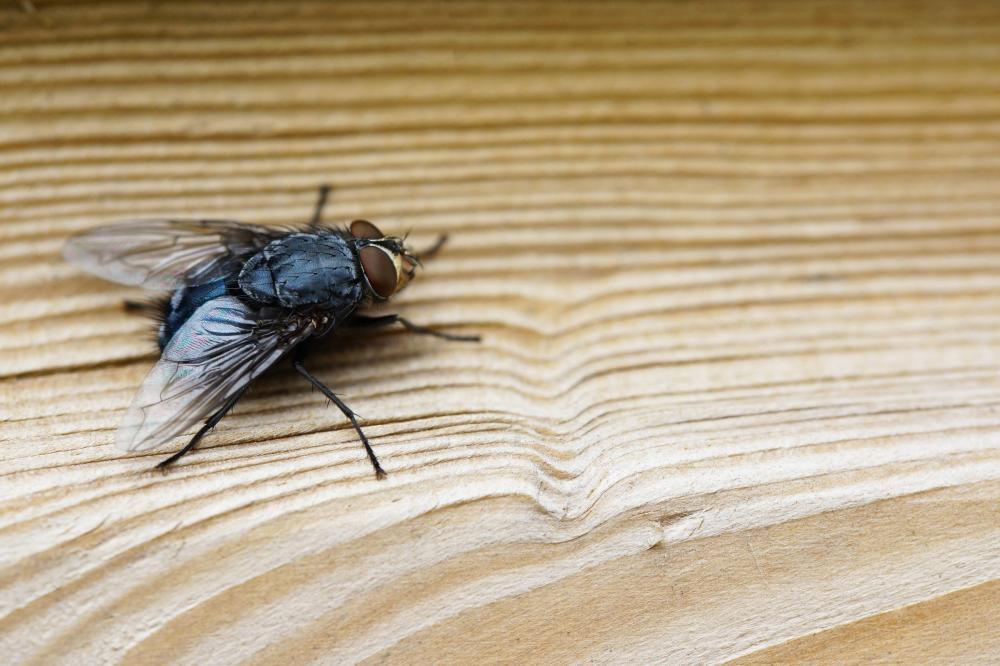
Metallic and shiny, with a loud buzz. They are attracted to the smell of meat, fish and garbage. Many of them indoors means something rotting is hidden, such as forgotten meat or a dead rodent behind furniture or above a false ceiling.
Flesh Fly
Larger than a house fly, with a grey checkered pattern on the abdomen. It lays larvae directly on decaying material. Seeing it near the house usually points to uncovered waste or animal remains nearby.
Fruit Fly (Vinegar Fly)
Small with red eyes, hovering around ripe fruit, juice and drink containers. It usually arrives with fruit from the market. For details, read Fruit Flies in the Kitchen: Where They Come From and How to Get Rid of Them.
Drain Fly (Bathroom Fly)
Small with fuzzy wings, looking like a tiny moth, resting on bathroom and kitchen walls near drains. It breeds in the slimy film inside drains and rarely used floor drains.
Phorid Fly (Humpbacked Fly)
Small with a humped back, preferring fast zig-zag running on floors and surfaces over flying. It breeds in drains, organic residue and under tiles where there is a leak. Many of them is a sign of a drainage or moisture problem that needs fixing.
Stable Fly
It looks like a house fly but bites and feeds on blood. It is common near stables, farms and animals, and can enter nearby homes.
Where Flies Come From and Why They Suddenly Increase
A fly passes through four stages: egg, larva (a small maggot), pupa, then adult. In hot weather this cycle completes very quickly. The flies you see flying are only a small part of the real population; the rest are larvae and pupae hidden in a damp or rotting place nearby.
- House and bottle flies: trash containers, waste, food and animal residue.
- Fruit flies: ripe or forgotten fruit and unwashed empty drink containers.
- Drain and phorid flies: drains, floor traps and leaks under flooring.
How to Get Rid of Flies According to the Source
- Cut the source first: seal trash tightly and take it out daily, cover food, and rinse drink containers before throwing them away.
- Scrub drains with a brush, not water alone, because the slimy film is the breeding place.
- Fit window screens and keep doors closed as much as possible.
- Use traps to reduce adults after the source is cut. See fly traps and fly repellents.
- Treat larvae where they breed with a product suited to the source, because killing flying flies alone does not stop the cycle.
When You Need a Professional Product
If flies return after cleaning, there is usually a breeding place that has not been treated, such as a barn, a drain or an outdoor waste container. Professional products aimed at larvae and adult flies help here, always following the label instructions. The Orkida team recommends the right product for the fly type and location, and you are welcome to visit the branch for advice.
Products from Orkida
- Delta Fly 25 SC — For outdoor treatment of places where adult flies gather
- Pyroxy Larv 10% EC — Aimed at fly larvae in their breeding place
- Force Catch NANO FLY ZONE — To reduce adult flies indoors
- Lumnia COMPACT — A device that attracts flying insects and reduces their numbers
Quick Questions About Flies
Do flies spread disease?
Yes. A fly carries germs on its legs and body and moves them to food and surfaces, so cover food and keep fly numbers down inside the home.
Why do flies come back after I kill them?
Because the breeding place is still there. A new generation emerges from hidden larvae and pupae, so treat the source, not just the flying flies.
What is the difference between a house fly and a fruit fly?
A house fly is larger and grey and follows garbage and food in general. A fruit fly is tiny with red eyes and follows ripe fruit and sweet liquids.
Are drain flies dangerous?
They are more annoying than dangerous, but they point to a dirty drain. Clean it well and fix the cause of the moisture.