
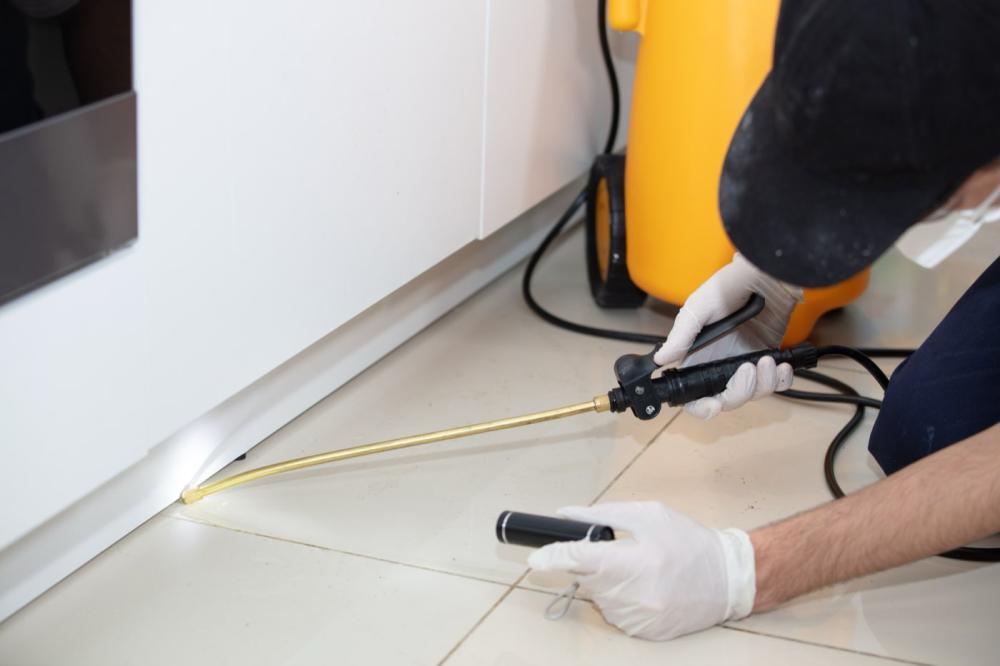

Spraying pesticides at home is something you can do yourself with strong results, as long as you choose the right product, spray the right places and use the right technique. When people say "the spray didn't work", the problem is usually how it was sprayed, not the product.
This article walks you through it step by step: what to prepare, where to spray for each pest, how to mix the product, how long to stay out of the house and when to spray again.
Before you spray: identify the pest
Every pest has its own hiding places and its own approach, and random spraying wastes product without reaching the insect:
- Cockroaches: hide in kitchens and bathrooms and behind appliances; gel baits work best alongside spraying.
- Bed bugs: live in beds, sofas and cracks near where people sleep, and need two or three treatments two weeks apart.
- Ants: walk in trails from the nest to food; baits are stronger than sprays for ants.
- Fleas: in carpets, sofas and pet sleeping areas.
- Flying insects: flies and mosquitoes; spray the surfaces they land on, not just the air.
If you are not sure which pest you have, see Household Insect Types before buying a product.
Preparing the home
- Clean the house and remove uncovered food, dishes and toys from the floor.
- Cover or remove food containers, pet food and fish tanks.
- Move furniture slightly away from the walls so you can reach corners.
- Empty kitchen drawers and cupboards if you will treat inside them.
- Take children and pets out of the house before you start.
What to wear while spraying
- A mask suitable for pesticides.
- Rubber or nitrile gloves.
- Goggles to protect your eyes from spray mist.
- Long-sleeved clothes, washed straight after spraying.
Choosing the right product
- Concentrate with long residual activity: diluted in water and sprayed on surfaces, it keeps killing insects that walk over it for weeks.
- Capsule suspension (CS): less odour and sticks to surfaces, suitable for homes and bedrooms.
- Dust: for cracks, voids and places sprays cannot reach.
- Gels and baits: for cockroaches and ants, applied as small spots without spraying.
For a comparison of insecticide types, see Insecticides: Types and How to Choose.
How to mix the product
- Read the label and follow the mixing rate for your target pest.
- Fill the sprayer half way with water, add the product, then top up with water and shake.
- Mix only what you need, because diluted product weakens if left for days.
- Do not increase the concentration; more product does not mean better results, only more odour and risk.
- Do not mix two products unless the label says it is allowed.
The correct spraying technique
- Spray a band roughly 10 to 30 cm wide along skirting boards and walls.
- Focus on cracks, gaps, behind appliances and under sinks.
- Keep the spray fine and even, wetting the surface without running.
- Start from the furthest room and work towards the door so you do not walk on treated areas.
- Do not spray into the air hoping to kill insects; correct spraying targets the places insects walk.
Where to spray in each part of the home
- Kitchen: under the sink, behind the fridge and oven, drain openings and the outside edges of cupboards.
- Bathrooms: around drains, under the sink and along tile joints.
- Bedrooms: skirting boards, bed frames and cracks near the bed, using a low-odour product.
- Living room: behind and under sofas, corners and carpet edges.
- Outside: a band around doors, windows and foundations to stop insects before they get in.
How long to stay out after spraying
- Stay out until the spray is completely dry, usually two to four hours depending on ventilation and product.
- Children, pregnant women and pets return last, after full ventilation.
- Open windows and turn on fans as soon as you return.
- Do not wash treated areas with water or cleaners for about a week, or you remove the residual effect.
After spraying: what to expect
- Seeing more insects in the first two days is normal, because the product drives them out of hiding.
- Cockroaches start to disappear within days, while bed bugs need two to three weeks with a repeat treatment.
- Eggs are not affected by most insecticides, which is why the second treatment matters.
When to spray again
- Cockroaches and ants: if they return after 3 to 4 weeks.
- Bed bugs and fleas: a second treatment after 10 to 14 days to catch newly hatched insects.
- Prevention: a treatment every 2 to 3 months around the house and its entry points, more often in summer.
Common mistakes that waste the spray
- Spraying the air instead of surfaces and cracks.
- Increasing the concentration hoping for faster results.
- Mopping floors straight after spraying.
- A single treatment for pests that need two, such as bed bugs.
- Treating the house while leaving the source, such as leaks or food scraps.
Products from Orkida
- Demand CS by Syngenta
- Demon Max by Syngenta
- Optiguard Flex by Syngenta
- K-Othrine 25 EC
- Garden 2 L sprayer
- Bertani Stilla 5 L sprayer
Home pesticide spraying FAQs
Can I sleep at home after spraying?
Yes, once the spray is dry and the house is well ventilated. Give bedrooms extra time and use a low-odour product there.
Is spraying harmful to children?
The risk is during spraying and before it dries. Keep children out while spraying, bring them back after ventilating, and keep toys away from treated areas.
Why are there more insects after spraying?
The product irritates them and drives them out of cracks, which shows it has reached them. Numbers drop clearly within days.
How long does the spray last?
Products with residual activity stay effective for weeks on surfaces that are not washed; the period depends on the product, surface and temperature.
Is spraying outside enough?
Outdoor spraying stops new insects getting in, but if the pest is already inside you need to treat indoors as well.