
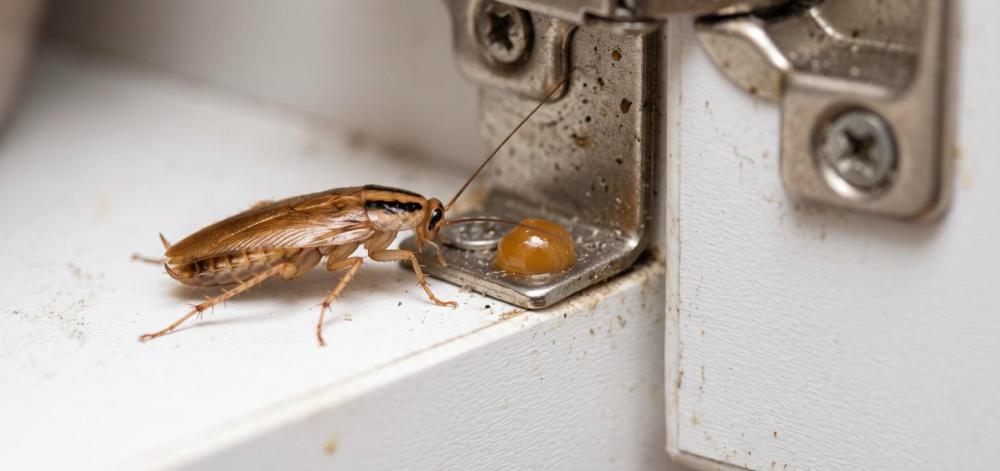

You put cockroach gel in the kitchen, saw clear results in the first week, and two months later the small cockroaches are walking over the same gel as if it were not there. That is where the questions start: is the gel fake? Have the cockroaches become immune? Or is something wrong with the way it is used?
The answer differs from home to home, and most of the "gel stopped working" cases we see at Orkida come from how the gel is used, not from resistance. This article separates the two and explains how to rotate between gel types correctly.
- The problem: cockroaches, especially the German cockroach, ignore the gel or eat it and survive.
- The most common cause: usage mistakes such as spraying over the gel, old dried-out gel, or exposed food competing with the bait.
- Real resistance: develops with long use of the same active ingredient, usually in kitchens that are treated constantly.
- The solution: fix how the gel is used first, then rotate between gels from different chemical groups.
- The rule: change the active ingredient, not just the brand name.
Signs the gel has stopped working
Before judging the gel, watch for these signs for two weeks:
- The gel is there and untouched: the dots are unchanged after a week, with cockroaches active around them.
- The gel is eaten but numbers do not drop: you see clear feeding, yet counts on the sticky traps stay the same or rise.
- Many small nymphs: large numbers of young cockroaches mean the nest is active and breeding.
- Cockroaches in daytime: seeing them by day is a sign of a heavy infestation, not necessarily resistance.
The best way to measure is with sticky traps: place two or three under the sink and behind the fridge, and count the cockroaches every week. That number tells you more than your eyes do.
Resistance or wrong use?
Mistakes that make any gel fail
- Spraying over or around the gel: sprays and aerosols repel cockroaches and contaminate the gel, so they avoid it. Do not combine spraying and gel in the same place.
- Old, dried gel: gel that is weeks old and has dried out no longer attracts. Remove it and apply fresh dots.
- Competing food: food scraps and grease around the oven and under appliances keep cockroaches fed, so they ignore the gel.
- Too few dots, or in the wrong place: gel works when it is on the cockroach's path, inside cracks, at hinges and behind appliances, not in the middle of the worktop.
- Strong cleaners over the gel dots: bleach and detergents spoil the gel and cover it with a repellent smell.
Real resistance
The German cockroach breeds very fast, with new generations every few weeks. If the same active ingredient is used for a long time, the cockroaches that can tolerate it survive and breed, and the whole population becomes less affected by that ingredient.
There is a second type called bait aversion: some German cockroach strains now avoid the sugars found in certain gels, so they do not eat them at all. The answer here is not more gel, it is a different gel with a different formulation.
Active ingredients in cockroach gel and how to rotate them
What matters in rotation is the chemical group, because two gels from different companies can contain the same ingredient. These are the most common active ingredients in cockroach gel:
Indoxacarb
- How it works: Converted inside the cockroach into a compound that paralyses the nervous system, and passed to the nest through droppings
- Speed of action: Moderate, with strong secondary kill
Fipronil
- How it works: Disrupts the nervous system and spreads between cockroaches by contact and feeding
- Speed of action: Moderate, with a strong effect on the nest
Clothianidin
- How it works: Acts on different nerve receptors and kills quickly
- Speed of action: Fast
Emamectin benzoate
- How it works: Acts on the nerves in a different way from the three above
- Speed of action: Moderate
Each of these belongs to a different chemical group, which is what makes rotating between them useful.
How to rotate correctly
- Do not mix two types in the same dot: each gel gets its own placements, as mixing weakens the attraction.
- Remove the old gel first: wipe the old placements with a dry cloth and apply the new gel in the same spots.
- Change the group, not the name: if you were using indoxacarb, move to fipronil or clothianidin.
- Do not switch every week: switching too quickly gives no ingredient a fair chance. Give each one its time.
A 3-month rotation plan
A practical plan for a kitchen with a moderate to heavy infestation:
- Week 1: clean the kitchen, remove exposed food and grease, and stop any spraying. Set the sticky traps and record the count.
- Weeks 1 to 4: gel from the first group, such as indoxacarb, in many small dots in cracks and behind appliances. Refresh eaten dots every week.
- Weeks 5 to 8: remove the remains of the first gel and switch to a second group, such as fipronil.
- Weeks 9 to 12: move to a third group, such as clothianidin, or return to the first if results with it were excellent.
- After 3 months: if the traps are almost empty, reduce the gel to monitoring dots in sensitive spots only.
If after a full month of correct use the trap counts have not dropped, that is a strong sign of resistance, and you should move straight to the next group.
When to support the gel with something else
- Very heavy infestation: gel needs time. In large infestations, start with deep cleaning and vacuuming up visible cockroaches, then apply gel.
- Cockroaches from the drains: if large cockroaches are coming from floor drains, you are dealing with the American cockroach, which needs drain treatment alongside the gel.
- Commercial kitchen or restaurant: heavy traffic and lots of food need an integrated programme and weekly monitoring.
Products from Orkida
- Advion Cockroach Gel from Syngenta: indoxacarb, activated inside the cockroach and passed to the nest. An excellent start for any rotation plan, 30 g.
- Maxforce Forte Gel from Envu (formerly Bayer): fipronil, a different group from indoxacarb, suited to the second stage of rotation.
- Maxforce Active Gel from Envu (formerly Bayer): clothianidin, a fast-acting third group, 30 g, also available in a 120 g pack for large kitchens.
- Catchmaster sticky trap (USA): for monitoring and measuring results every week before and after each switch.
- Gel applicator gun: helps you place small, even dots inside cracks without waste.
Frequently asked questions
Can I use two types of gel at the same time?
You can use them in two different kitchens or areas, but not in the same dot or on top of each other. It is better to stick to one type per stage so you can measure the result.
How long should I wait before deciding the gel does not work?
Two to three weeks of correct use with monitoring traps. Gel kills slowly so it can reach the nest, so the real result shows over time.
Why do I see many dead cockroaches after using gel?
That is a sign the gel is working. Cockroaches come out of hiding once affected, and then numbers start to fall.
Is cheaper gel less effective?
Effectiveness depends on the active ingredient, the bait formulation and how it was stored. Counterfeit gel or gel stored in high heat loses its attraction, so buy from a trusted source.
Does heat affect the gel?
Yes, high heat dries gel quickly. Store it somewhere cool, and refresh dots near ovens and heaters more often than others.