
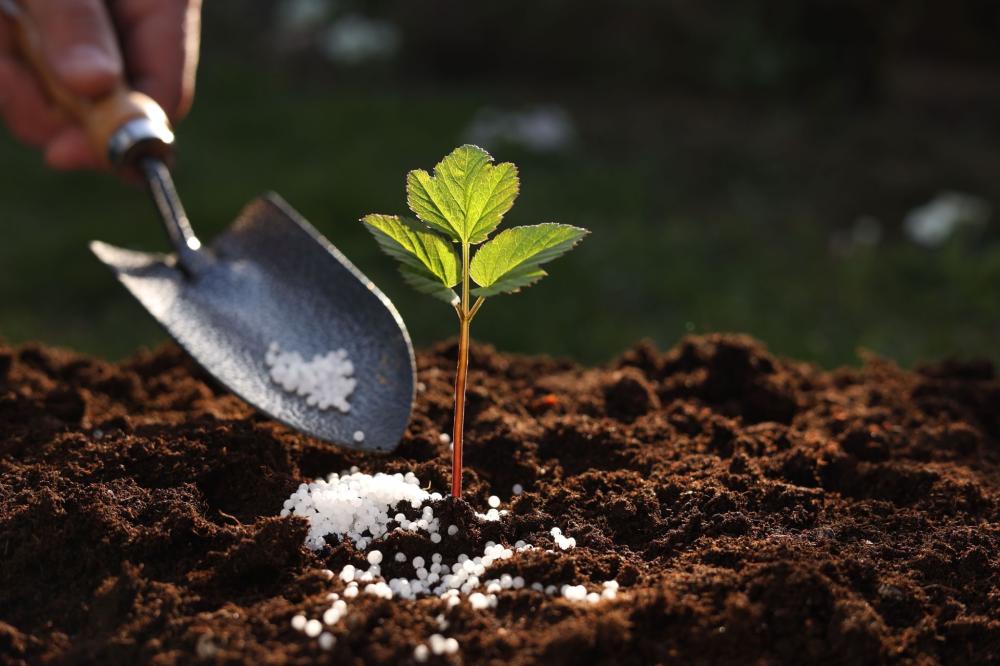

Building a healthy plant does not start with the shape of the leaves or the visible speed of growth, but with the roots. The roots are the foundation on which everything later rests; if they are strong and well branched, it shows in the strength of growth, flowering and yield. If they are weak, no later fertilization will make up for it. That is why choosing the best fertilizer for strengthening roots is a real foundational step, not just a passing stage in a fertilization program.
The goal: Strengthening roots means improving their environment (soil, water and nutrition), not just adding a single fertilizer.
Nutrients: Phosphorus is the basis of early root growth, potassium and calcium strengthen the tissues, and organic matter and humic acid improve the environment.
Timing: Root feeding helps most at planting, after transplanting, or after any stress on the roots.
The common mistake: Overdoing nitrogen fertilization, which gives weak leafy growth at the expense of the roots.
The rule: Fix the soil and drainage first, then feed the roots in balance, because a healthy root needs a healthy environment before any product.
Why Is the Root System Considered the "Foundation"?
Just as any building needs a solid base, a plant needs a strong root system. The roots are responsible for absorbing water and nutrients and for regulating the plant's balance in the soil. The more the roots spread and the better they work, the better the whole plant performs, and the better it tolerates heat, drought and environmental stress. Weak roots mean weak uptake, and therefore general weakness even when nutrients are available.
Building the right foundation at the start saves the plant many problems in later stages.
What Role Does Fertilizer Play in Building This Foundation?
Fertilizer does not create roots out of nothing, but it prepares the right conditions for their growth. The nutrient most tied to root building is phosphorus, because it helps form new roots and stimulates the fine root hairs responsible for uptake. For this reason, the focus is on fertilizers with a higher phosphorus share at the establishment stage or after transplanting seedlings.
But fertilizer alone is not enough. It must be used at the right time and at the right dose so that it does its job effectively.
How Do You Choose the Right Formula?
Choosing the right fertilizer starts with reading the NPK numbers on the pack. These numbers stand for nitrogen, then phosphorus, then potassium. The second number tells you the phosphorus share. When this number is relatively higher than the others, it means the fertilizer suits supporting roots in the early building stage.
Once the plant has settled and formed strong roots, you can move to a balanced formula suited to vegetative growth or flowering. The idea is not to use one formula all season, but to choose the right formula for each stage.
Is Root Strengthening a Temporary Stage or a Continuous Process?
Intensive root support happens at the establishment stage, but care for the root system does not stop completely after that. Once the initial build is complete, the focus shifts to maintaining balance in the soil and making sure uptake continues efficiently. Any problem with irrigation or soil may later affect the roots even if the start was strong.
Building the foundation begins at the start, but maintaining it continues throughout the plant's life cycle.
How Does Soil Type Affect Root Building?
Soil type plays a big role in the success of the establishment stage. Sandy, fast-draining soil needs careful management of irrigation and fertilization so nutrients are not lost quickly, while heavy clay soil may hinder root spread because of poor aeration. In both cases, choosing the right fertilizer must go together with improving soil conditions, because an unsuitable environment can limit the effectiveness of any formula.
What Can Weaken the Foundation?
Overfertilizing is one of the most common mistakes that weaken roots instead of strengthening them. Raising the dose may lead to salt buildup in the soil and an imbalance among nutrients, which hinders uptake. Excess irrigation or poor drainage can also stop roots from expanding even when the formula is suitable.
Building a strong foundation does not depend on quantity, but on balance and discipline.
How Do You Know the Foundation Needs Support?
Slow growth, quick wilting despite available water, or continued weakness of the plant for no clear reason are all signs that the problem may be in the roots. In this case the solution is to support the root system and improve the soil environment instead of randomly increasing nutrients.
Root Fertilizers and Stimulants from Global Companies Available at Orkida
- Kelpak Organic Seaweed Extract Fertilizer: An organic fertilizer from marine algae extract for root growth, 1 L pack.
- Humintech BioHealth Myco WSG Mycorrhizal Root Stimulator: A root growth stimulant, 1 kg pack.
- Agroleaf Power 12-52-5 by Everris (ICL): A high-phosphorus foliar fertilizer to stimulate root growth and flowering, 2 kg pack.
- Humintech Powhumus Soluble Humic Acid: Humic acid to treat soil salinity and activate the roots, 1 kg pack.
You can find all the options in the Agricultural Fertilizers and Soil section. Follow the usage rate written on the label according to the crop and the growth stage.
Conclusion
The best fertilizer for strengthening roots is the one used at the initial building stage, with a suitable phosphorus share within a balanced program, taking soil conditions into account and sticking to the correct doses. When roots are built properly, the plant becomes better able to grow, produce and tolerate environmental conditions without frequent intervention. Caring for roots is a long-term investment that shows in the health of the whole plant.
Frequently Asked Questions About Strengthening Roots with Fertilizers
When do I add a root-strengthening fertilizer?
When planting or transplanting seedlings, at the start of growth, and after any stress on the plant such as heat, salinity or root damage.
Are phosphorus-rich fertilizers enough?
Phosphorus matters for root growth, but balance with the other nutrients, aerated soil and regular irrigation are what give a good result.
Can you overfertilize?
Yes, excess can burn roots and cause salt buildup. Stick to the dose written on the label and do not double it to speed up the result.
How do I know the roots are weak?
Slow growth, yellowing leaves, wilting despite irrigation, a plant that pulls out of the soil easily, and dark or sparse roots when you inspect them.