
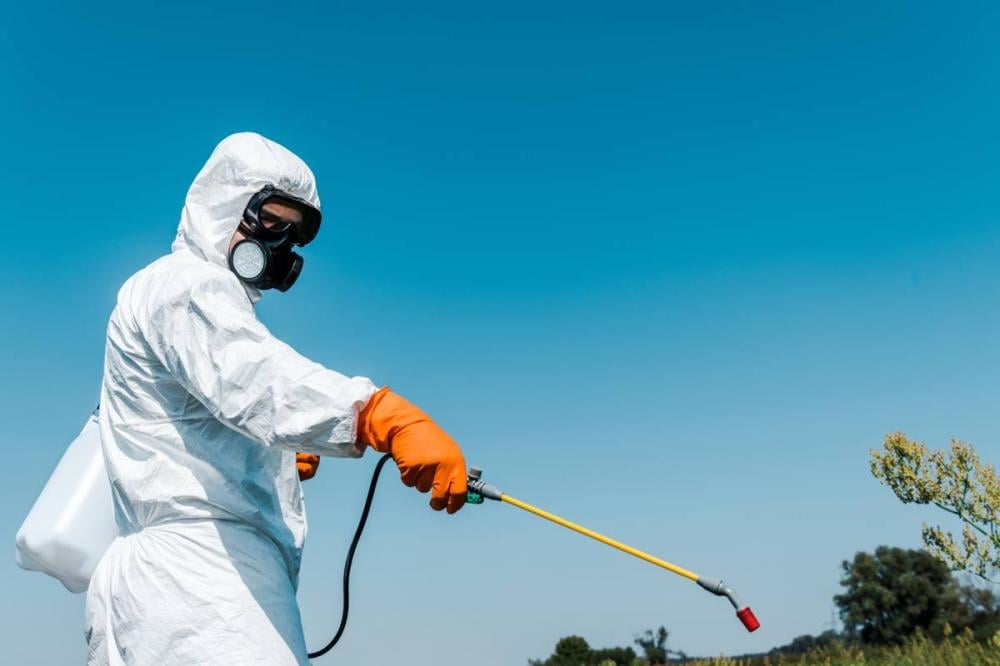

Pesticide safety is the first thing we advise anyone who sprays themselves, at home or on the farm. Most poisoning cases are not caused by the product itself but by how it is handled: mixing without protection, storing it in a water bottle, or spraying with children nearby.
This article walks you from buying the product to disposing of the empty container, and explains the signs of poisoning and what to do if it happens.
Before you buy
- Buy from a trusted source, with the container sealed and a clear Arabic label.
- Check the expiry date.
- Choose the right product for the pest and location, and never use an agricultural product indoors.
- Read the label before opening the container. See How to Read a Pesticide Label.
Personal protective equipment
- Nitrile or rubber gloves resistant to chemicals, not fabric gloves.
- A mask suitable for pesticides, especially when mixing and spraying indoors.
- Safety goggles against spray mist.
- Long sleeves and trousers, and closed shoes.
- Do not eat, drink or smoke while spraying.
When mixing
- Mix outdoors or somewhere well ventilated.
- Fill the sprayer half way with water first, then add the product, then top up.
- Use a dedicated measuring cup for pesticides that never goes back to the kitchen.
- Never mix by hand, even wearing gloves.
- Mix only what you need.
When spraying
- Take children, pregnant women and pets out of the area.
- Cover food, kitchen utensils and fish tanks.
- Spray with the wind behind you outdoors, and do not spray in strong wind.
- Do not spray surfaces children touch, such as toys and beds, unless the product is meant for them.
- If you feel dizzy or get a headache, stop and get fresh air.
For the full method, see How to Spray Pesticides at Home Yourself.
After spraying
- Respect the re-entry time on the label.
- Ventilate well before children return.
- Wash your hands and face with soap and water, and wash spray clothes separately.
- Clean the sprayer and dispose of rinse water away from drains and plants.
- See How to Clean Your Home After Pesticide Spraying.
Storing pesticides
- Always in the original container; never transfer it to a water or juice bottle.
- In a locked cupboard away from children, food and animal feed.
- In a cool, dry place out of the sun.
- Do not store mixed product for days.
Disposing of empty containers
- Triple rinse the container and add the rinse water to the sprayer.
- Puncture the container so no one reuses it.
- Do not burn it or use it for food or water.
Signs of pesticide poisoning
- Headache, dizziness and nausea.
- Excess saliva, sweating and tears.
- Shortness of breath or coughing.
- Skin or eye irritation.
- Seizures or fainting in severe cases.
What to do if poisoning happens
- Inhaled: move to fresh air immediately.
- On the skin: remove contaminated clothing and wash the skin with soap and water for 15 minutes.
- In the eyes: rinse with running water for 15 minutes, keeping them open.
- Swallowed: do not induce vomiting unless the label says so, and go to the emergency department immediately.
- In every case: call an ambulance (997 or 911) or go to the emergency department, and take the pesticide container or a photo of the label.
Products from Orkida
Pesticide safety FAQs
How long should children stay away after spraying?
Until the spray is completely dry and the area ventilated, usually two to four hours indoors; most importantly, follow the label.
Can the smell of pesticide cause poisoning?
The smell usually comes from the solvent and is not always a sign of danger, but continuous inhalation in a closed room can cause headache and dizziness. Ventilate and leave the room. See Odourless Insecticide.
Are household insecticides safe during pregnancy?
No insecticide is completely safe. It is best for a pregnant woman not to spray herself, and to leave during spraying and return after full ventilation.
What should I do if pesticide gets in my eyes?
Rinse them with running water for 15 minutes while open, then go to the emergency department with the pesticide label.