
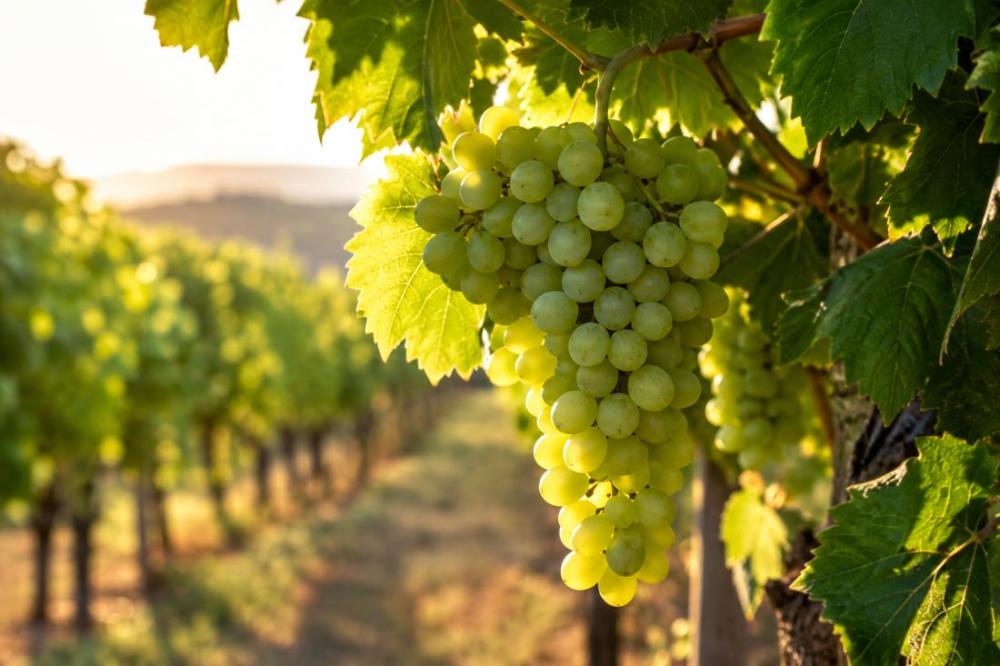

Grapevines are among the trees most affected by fungal disease. The most dangerous are powdery mildew, downy mildew and grey mould, any of which can ruin bunches within weeks if you act late. Pests such as red spider mite and mealybugs also weaken the vine and soil the fruit.
In this article we explain the most common grape diseases and pests, how to recognise each one, treatment with rates, and when to start spraying in the season.
Powdery mildew
Symptoms
- A white-grey powdery coating on leaves and bunches.
- Berries crack and dry and show a brown net pattern.
- Spreads in warm, dry weather and with poor air flow inside the vine.
Treatment
- Vivando 50 SC: 25 ml per 100 litres of water from the start of vegetative growth, repeated every 10 to 14 days, with a maximum of 3 sprays per season. Pre-harvest interval 28 days for table grapes.
- Or Azox 250 SC: 80 to 100 ml per 100 litres of water, repeated every 10 to 14 days.
Downy mildew
Symptoms
- Yellow oily spots on top of the leaf with white fuzz underneath.
- Young bunches wilt and are covered with a grey layer.
- Spreads with rain, high humidity and dew.
Treatment
- Pirastak 45 SC: 50 ml per 100 litres of water. Pre-harvest interval 10 days.
- Or a preventive copper fungicide such as Kados: 240 g per 100 litres of water, repeated every 10 to 14 days, applied before infection appears.
Grey mould (botrytis)
Symptoms
- Soft brown rot on berries covered with grey fuzz, usually starting from damaged or crowded berries.
- Common near ripening and with humidity and crowded bunches.
Treatment
- Rimanil 40% SC: 2 ml per litre of water, from the start of flowering or during fruit development.
- Thin the leaves around the bunches so sun and air can reach them.
Anthracnose
- Small sunken spots with dark edges on leaves, young shoots and berries.
- Preventive treatment: Kados at 240 g per 100 litres of water every 10 to 14 days.
Red spider mite
- Yellow speckles on leaves with silk underneath; leaves bronze and dry in the heat.
- Kanemite 15% SC: 2 to 3 ml per litre of water on leaf undersides, once per season and rotated with a different product. Pre-harvest interval 14 days.
Mealybugs
- White cottony clusters under the bark and between berries, with honeydew and black sooty mould.
- They need a systemic product that reaches under the bark; see the rates in our spirotetramat article.
A short seasonal spray programme
- Start of vegetative growth: preventive spray for powdery mildew.
- Before and after flowering: prevention of downy mildew and grey mould, especially in humid weather.
- Berry set and sizing: watch for red spider mite and mealybugs.
- Near harvest: respect each product's pre-harvest interval before picking.
- Rotate between different groups at each spray to avoid resistance.
Prevention tips
- Correct winter pruning opens the vine to light and air.
- Drip irrigation instead of wetting the leaves.
- Remove infected berries and leaves and pruning debris from under the vine.
Products from Orkida
- Vivando 50 SC: for powdery mildew, 25 ml per 100 litres for grapes.
- Azox 250 SC: for powdery and downy mildew, 80 to 100 ml per 100 litres.
- Pirastak 45 SC: for downy mildew, 50 ml per 100 litres.
- Kados Copper Fungicide: preventive for downy mildew and anthracnose, 240 g per 100 litres.
- Rimanil 40% SC: for grey mould, 2 ml per litre.
- Kanemite 15% SC: for red spider mite, 2 to 3 ml per litre.
Frequently Asked Questions
What is the white powder on grape leaves?
Powdery mildew, treated with Vivando at 25 ml per 100 litres or Azox at 80 to 100 ml per 100 litres.
Why do grapes rot before ripening?
Usually grey mould, especially with humidity and crowded bunches.
When should I start spraying grapes?
From the start of vegetative growth to prevent powdery mildew, then before and after flowering.
What is the pre-harvest interval for grapes?
It depends on the product: Vivando 28 days for table grapes, Pirastak 10 days, and Kanemite 14 days.
Can I spray the same product every time?
No, rotate between products from different groups so the fungus does not build resistance.