
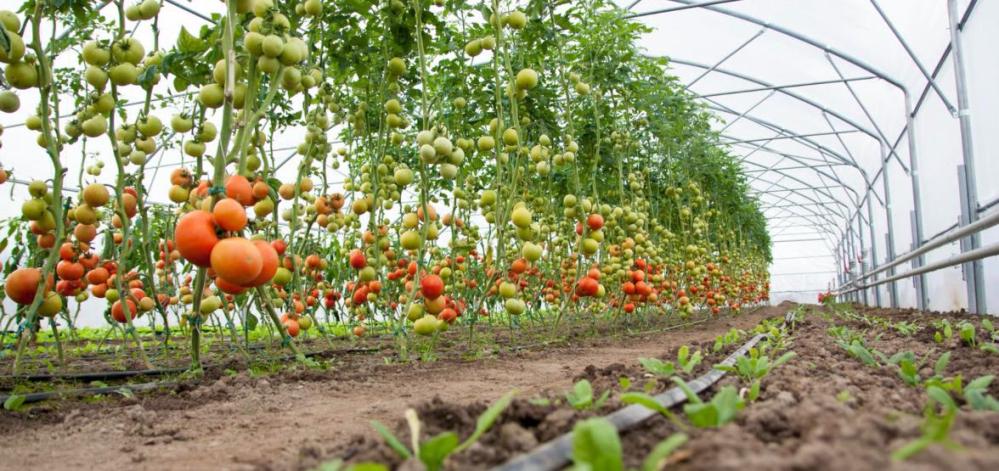

Velum Prime from Bayer is a nematicide applied through drip irrigation, containing fluopyram 400 g/L. It stops root-knot nematodes moving and reproducing, and the dose is small: 37.5 to 62.5 ml per 1,000 square metres.
This article gives the dose for each crop, exactly when to apply it, a step-by-step drip application method, a worked example for a greenhouse, and the mistakes that waste it.
Product facts
- Active ingredient: fluopyram 400 g/L.
- Formulation: suspension concentrate (SC).
- Manufacturer: Bayer.
- Main target: root-knot nematodes (Meloidogyne).
- Application: through drip irrigation to the root zone.
- Dose: 37.5 to 62.5 ml per 1,000 m².
- Number of applications: maximum twice a year in greenhouses, once in open fields.
How does it work?
Fluopyram blocks energy production inside nematode cells, so they stop moving within hours and cannot enter the root or reproduce. That is why the best result comes when you apply it before galls form, around transplanting.
There is a bonus: after soil application it also protects tomato, cucumber and courgette from powdery mildew for 30 to 60 days.
Dose by crop
Greenhouse vegetables
Tomato, aubergine, pepper, cucumber, courgette, melon, watermelon and pumpkin:
- Dose: 37.5 to 62.5 ml per 1,000 m².
- First application: 1 to 3 days before or after transplanting.
- Second application: 15 to 30 days after transplanting.
- Maximum: twice a year.
Open-field vegetables
- Dose: 62.5 ml per 1,000 m².
- Timing: 1 to 3 days before or after transplanting.
- Maximum: once a year.
Strawberry in greenhouses and tunnels
- Dose: 62.5 ml per 1,000 m².
- First application: 1 to 3 days before or after transplanting.
- Second application: 15 to 60 days later.
When should you use the lower dose? Use 37.5 ml only for light or moderate infestations. If the ground is known to have had heavy nematode pressure last season, use 62.5 ml.
Water volume: 200 to 600 litres per 1,000 m² per application, depending on soil type and plant age.
Step-by-step drip application
- Moisten the soil first. Dry soil does not distribute the product properly.
- Calculate the dose for the greenhouse area (see the example below).
- Dilute the dose in a bucket of clean water and stir well.
- Start irrigating and let the first half of the water run without product.
- Inject the product with the next part of the water (about 40%) through the fertilizer tank or injector.
- Finish with clean water (the last 10%) to flush the lines and carry the product down to the roots.
- Do not over-irrigate for three days afterwards to the point of run-off, so the product is not moved away from the roots.
Worked example for a greenhouse
A 500 m² greenhouse planted with tomatoes, with heavy infestation last season:
- Dose: 62.5 ml per 1,000 m² → about 31 ml for the greenhouse.
- Water: about 150 litres for the greenhouse.
- Split: 75 litres of plain water, then 60 litres with the product, then the last 15 litres of clean water.
- Second application: 15 to 30 days after transplanting at the same dose.
Important cautions
- Cucumber and pepper: they can be sensitive, so test on a few plants before treating the whole greenhouse.
- Do not spray it on the leaves. It belongs in the root zone with irrigation water.
- Do not exceed two applications a year on the same ground in greenhouses.
- Do not rely on it alone every season. Rotate with nematicides from other groups, such as fosthiazate or abamectin.
Signs your soil has nematodes
- Midday wilting while the soil is moist, with plants recovering by evening.
- Yellowing and weak growth, with uneven plants in the same row.
- Galls and swellings on the roots when you pull up a plant and wash the roots.
Symptoms and prevention are covered in detail in Nematodes in Plants: Symptoms, Prevention, and Control.
Products from Orkida
- Velum Prime 400 SC, 1 litre: fluopyram from Bayer for root-knot nematodes through irrigation water.
- Nemax 20 SC, 1 litre: abamectin 2% acting by contact in the root zone.
- Thiafos 500 EC, 1 litre: fosthiazate 50% for soil nematodes.
- Nema Gold 750 EC, 1 litre: fosthiazate 75%, a systemic nematicide.
- Nema Sol 10 GR, 1 kg: fosthiazate 10% granules mixed into the soil.
- Nemakick 30% SL, 500 ml: imicyafos 30% for soil treatment and root protection.
Frequently Asked Questions
How many ml of Velum Prime per 1,000 m²?
37.5 to 62.5 ml per 1,000 m². The lower dose is for light infestations, and the higher one for heavy infestations or ground that was infested before.
How many times per season?
In a greenhouse, twice: once around transplanting and again 15 to 30 days later. In open fields, once.
When will I see results?
Nematodes stop moving within hours, and the difference in growth shows within two to three weeks, especially in new roots.
Does it work in sandy soil?
Yes, but use the lower end of the water range (about 200 litres per 1,000 m²) and avoid heavy irrigation afterwards, because sand washes the product away quickly.
Is there a pre-harvest interval?
The European label sets no pre-harvest interval for soil application, because it is applied at the start of the season around transplanting.