
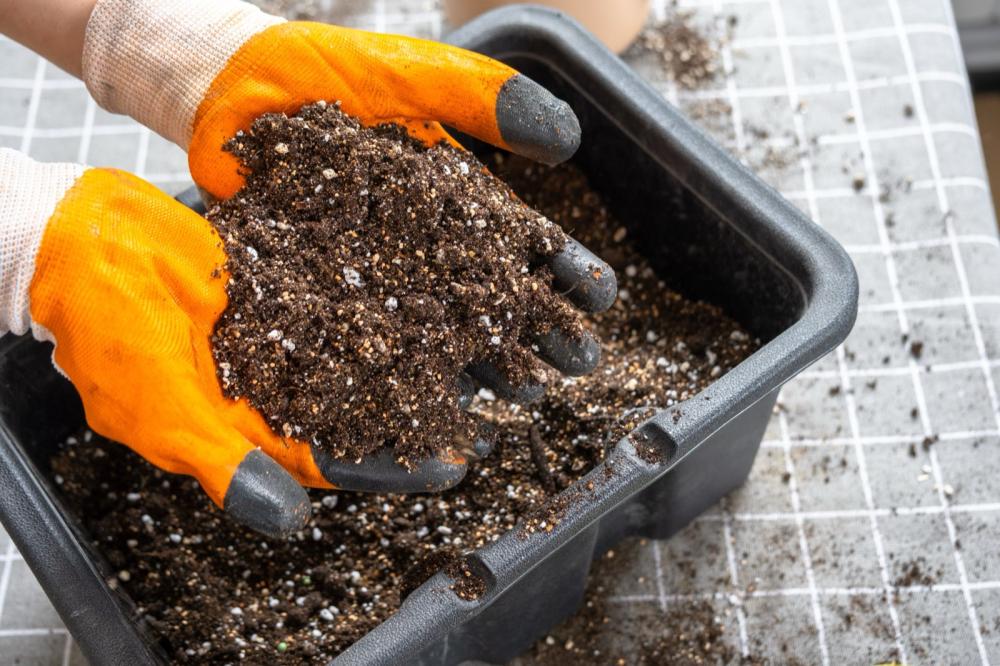

Half the success of growing in pots and home gardens starts with the potting soil. Most local soil is sandy, alkaline and somewhat saline, so it dries fast and does not hold fertiliser. That is why many customers ask: should I buy ready-made potting soil, peat moss, or mix my own?
This guide explains the types of growing media, the difference between raw peat, enriched peat and potting soil, and how to choose the right mix for each use.
What is ready-made potting soil?
Ready-made potting soil is a peat-based mix with adjusted pH, usually with a light starter fertiliser. You use it straight in pots and trays without mixing.
Its advantages:
- Light, letting roots breathe.
- Holds water without compacting or rotting.
- Free of weed seeds and diseases when it comes from a reliable source.
- Low salinity, suitable for sensitive seedlings.
What is peat moss?
Peat moss is organic material formed from sphagnum moss decomposing in bogs over hundreds of years, mostly sourced from Germany and northern Europe. It is the base of most ready-made growing media.
Raw peat moss
- No fertiliser and naturally very acidic.
- Used as a soil improver: mix it with sand or local soil to improve water holding and aeration.
- We do not recommend planting straight into it without adjustment.
Enriched peat moss
- pH-adjusted with a starter fertiliser that feeds the seedling for the first few weeks.
- Ready to plant in trays and pots.
- After 3 to 4 weeks you need to start a feeding programme.
Fine vs coarse peat
- Fine: for germination and seedling trays, because small seeds need full contact with the medium.
- Coarse or medium: for large pots and perennials, as it gives more aeration.
What to add to your growing mix
- Perlite: light white granules that improve aeration and drainage and stop compaction.
- Compost or well-rotted cow manure: raises organic matter and feeds plants gradually. More in our organic fertiliser article.
- Hydroton (expanded clay): a drainage layer at the bottom of the pot, also used in hydroponics.
- Humic acid: improves sandy soil structure and root growth; see our humic acid article.
The right mix for each use
Seed germination and seedlings
- Fine peat or ready germination mix with no additives.
- Do not add strong fertiliser at first; young roots burn easily.
Pots and ornamental plants
- 60% ready-made potting soil.
- 20% perlite.
- 20% compost or well-rotted cow manure.
- Plus a layer of hydroton at the bottom of deep pots.
Vegetables in raised beds
- Ready-made potting soil with 20 to 30% compost.
- Make sure the bed has drainage holes. For sizes see our planters article.
Improving sandy garden soil
- Mix raw peat and compost into the top 20 to 30 cm of soil.
- The result: soil that holds water longer, with less irrigation and less fertiliser washed away.
How to choose the right potting soil
- Decide the use: germination, pots, or improving garden soil.
- Read the label: a pH of 5.5 to 6.5 suits most plants, and salinity (EC) should be low.
- Check whether it contains fertiliser: enriched mixes are for direct planting, raw peat is for mixing.
- Choose a reliable source: cheap soil of unknown origin may be saline or carry weed seeds and fungi.
Common potting soil mistakes
- Overwatering: peat holds water, and too much causes root rot and attracts fungus gnats.
- Letting peat dry out completely: once fully dry it is hard to re-wet, so moisten and mix it before use.
- Using garden soil in pots: it compacts and suffocates roots.
- Reusing old infected soil: it can pass damping-off and root rot to new seedlings.
Raw peat moss vs enriched peat moss vs ready potting soil
- Raw peat moss: natural peat without fertilizer or with very little, suitable when you want to make your own mix and control feeding.
- Enriched peat moss: peat with a light starter fertilizer and pH adjustment, enough for the first few weeks only, after which plants need a feeding programme.
- Ready potting soil: a mix ready to plant in directly, with peat and soil improvers, suitable for pots and houseplants.
If your soil is heavy or holds too much water, add perlite. Details in Agricultural Perlite: What It Is, Its Benefits and How to Mix It with Peat Moss.
Products from Orkida
- Klasmann TS3 enriched peat
- Klasmann Potgrond H germination mix
- Klasmann Green Peat raw peat
- Stender potting soil 80 L
- Stender raw peat 300 L
- Agaris Florastar potting soil
- Agricultural perlite 100 L
- Black Cow composted cow manure
Potting soil and peat moss FAQs
What is the difference between potting soil and peat moss?
Peat moss is a single material, while ready-made potting soil is a peat-based mix with adjusted pH, usually with added fertiliser and improvers.
Can I plant directly in raw peat moss?
Better not. Raw peat is acidic and unfertilised, so use it for mixing or choose a ready enriched peat.
How often should I change pot soil?
Usually every one to two years, or when the soil compacts and water stops draining well.
Does peat moss need fertiliser?
Yes, after a while. Even enriched peat only feeds the plant for the first 3 to 4 weeks.