
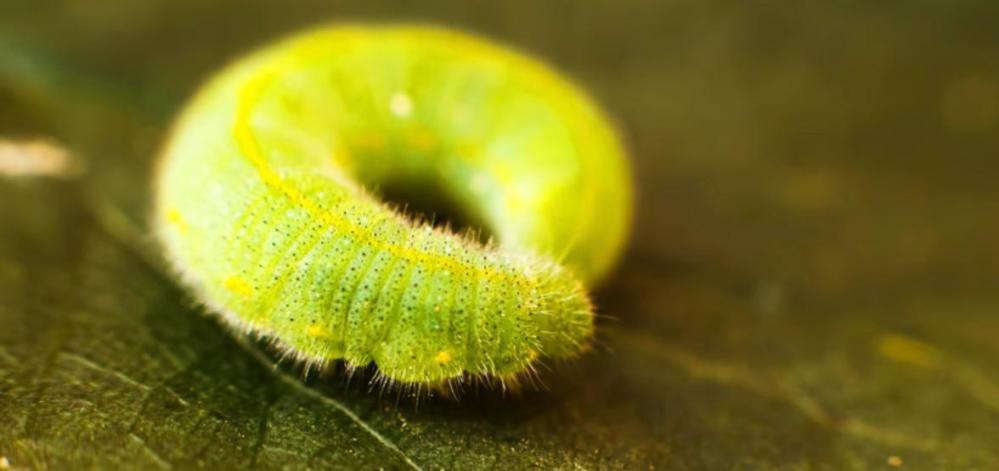

Lufenuron and diflubenzuron are insect growth regulators from the same family. They do not kill the insect by direct poisoning; instead they stop the larva from building its new skin, so it dies while molting. That makes them strong on young larvae and gentle on many beneficial insects.
This article explains how these actives work, which pests they control, why you must spray them early, and how the two differ.
- Group: benzoylureas, IRAC group 15.
- Type: insect growth regulators, working mainly by ingestion.
- Work on: larvae in their early stages.
- Do not work on: adult insects or moths.
- Common forms: lufenuron as an emulsifiable concentrate (EC) at 5%, and diflubenzuron as a wettable powder (WP) at 25%.
How do they work?
A larva's outer skin is built from a substance called chitin, and the larva replaces its skin each time it grows. These actives stop chitin production, so when the larva molts its new skin does not form properly and it dies.
- Death is not immediate; it happens at the next molt, within 3 to 7 days.
- The larva feeds less before it dies.
- Lufenuron reduces egg hatch from females that were exposed to it.
Which pests do they control?
- Tuta absoluta and stem borers: lufenuron.
- Cotton leafworm and fall armyworm: in vegetables and corn.
- Bollworm: while still small.
- Cutworms and fly larvae: diflubenzuron, as the label directs.
When to spray them
1. Early, at egg hatch
They work best on young larvae. A large larva is close to pupating and has few molts left.
2. Do not expect a fast kill
If the infestation is heavy and needs to be stopped quickly, mix or rotate with a fast-acting insecticide as the label directs.
3. Cover the leaves the larvae eat
Because they work by ingestion, they must reach the leaves and growth the larvae feed on.
Lufenuron and diflubenzuron: what is the difference?
- Lufenuron: stays longer in the leaf and in the insect's body, reduces egg hatch, and is known for Tuta and stem borers.
- Diflubenzuron: older and cheaper, known for cutworms and fly larvae.
How to protect them from resistance
- Rotate with other groups such as chlorantraniliprole (28), emamectin (6) and indoxacarb (22).
- Do not repeat the same group for more than one pest generation.
Safety
- Wear gloves, goggles and a mask.
- Keep away from water bodies, as they harm aquatic crustaceans.
- Respect the pre-harvest interval stated on the label.
Products from Orkida
- Deltaron 50 EC, 1 litre: lufenuron 5% for stem borers and Tuta absoluta.
- Consido 25% WP: diflubenzuron 25% for chewing larvae and caterpillars.
Frequently asked questions
Why did the larvae not die a day after spraying?
Growth regulators are slow. The larva dies at its next molt, usually within 3 to 7 days.
Do they kill moths?
No. They work on larvae, and lufenuron reduces egg hatch.
Are they safe for bees?
They are gentler on adult bees than many insecticides, but do not spray while bees are working the flowers, and follow the label.