
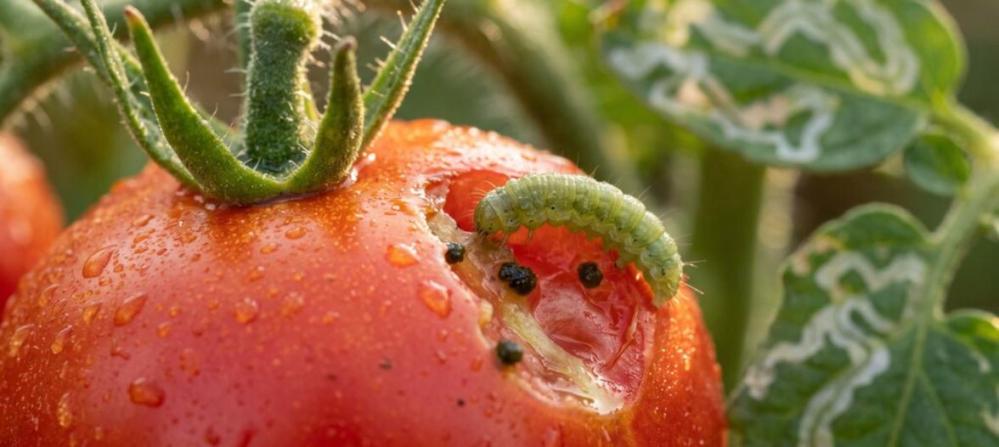

Chlorantraniliprole is an insecticide that specialises in moth and butterfly larvae: Tuta absoluta, tomato fruitworm, fall armyworm, cutworms and cotton leafworm. The larva stops feeding within hours of taking the dose, even if it takes one to three days to die.
This article explains how chlorantraniliprole works, which pests it controls, when to spray it or apply it through irrigation, and how to protect it from resistance.
- Group: diamides, IRAC group 28.
- Type: systemic and translaminar insecticide, killing mainly through feeding and also by contact.
- Works on: Lepidoptera larvae, some beetles and leafminers.
- Does not work on: aphids, whitefly, thrips or spider mites.
- Common forms: suspension concentrate (SC) at 20%, or mixed with abamectin.
How does chlorantraniliprole work?
It keeps the calcium channels in the larva's muscles open, so the muscles contract and become paralysed. First the larva stops feeding, then it stops moving, and it dies within one to three days.
- It enters the leaf and moves to the other side, reaching larvae that mine inside the leaf, such as Tuta.
- It moves upward with the sap when applied to the soil or through drip irrigation as the label directs.
- It lasts longer on leaves than many insecticides.
Which pests does it control?
- Tuta absoluta: larvae in mines inside tomato leaves and in fruit.
- Bollworm (tomato fruitworm): in tomato, cotton and corn.
- Fall armyworm and cotton leafworm: in corn and vegetables.
- Cutworms: around young transplants.
- Stem and fruit borers: in several crops as the label directs.
When to spray it
1. On young larvae
You get the best result when you spray at egg hatch and the first mines or holes. A large larva that has entered the fruit is much harder.
2. Cover the whole plant
Especially the tops and new leaves where moths lay eggs, and the leaf undersides.
3. Do not judge too fast
The larva stops feeding quickly but stays alive on the leaf for a day or more. What matters is that new damage stops.
4. Through drip irrigation
Some products allow application through irrigation water for new transplants, protecting the plant from inside in the first weeks. For foliar spraying, Coragen 20 SC is used at 0.17–0.20 ml per litre of water on vegetables.
How to protect it from resistance
Tuta and caterpillars develop resistance quickly when the same insecticide is repeated, and in some areas diamides have become weaker than before.
- Use a window approach: use group 28 in one period of the season (roughly one pest generation), then switch to another group.
- Do not alternate chlorantraniliprole with cyantraniliprole or flubendiamide as if they were different; they are all the same group.
- Rotate with groups such as: emamectin benzoate (6), spinosad (5) and indoxacarb (22).
- Combine control methods with pheromone traps and removal of infested leaves and fruit.
Safety
- Wear gloves, goggles and a mask.
- Be careful near water bodies when spraying.
- Respect the pre-harvest interval stated on the label.
Products from Orkida
- Coragen 20 SC, 200 ml: chlorantraniliprole 20% for Tuta absoluta and leaf caterpillars.
- Voliam Targo 063 SC, 250 ml: chlorantraniliprole with abamectin for Tuta and spider mites.
- Neogen 200 SC, 1 litre: chlorantraniliprole 20% for cutworms and borers.
- Fabogen 20% SC, 200 ml: chlorantraniliprole 20% for fruit and leaf caterpillars.
Frequently asked questions
I sprayed and the larvae are still on the leaves. Did it fail?
Probably not. The larva stops feeding within hours but dies after one to three days. Check whether there are new mines or holes.
Does it work on whitefly and aphids?
No. It specialises in larvae. Whitefly and aphids need a different insecticide.
Can I repeat it every week all season?
No. Use it in one window, then switch to another group, or resistance will appear quickly.
Does it kill eggs?
It affects larvae at hatching when they chew the eggshell or the sprayed leaf, but its main target is the larvae.