
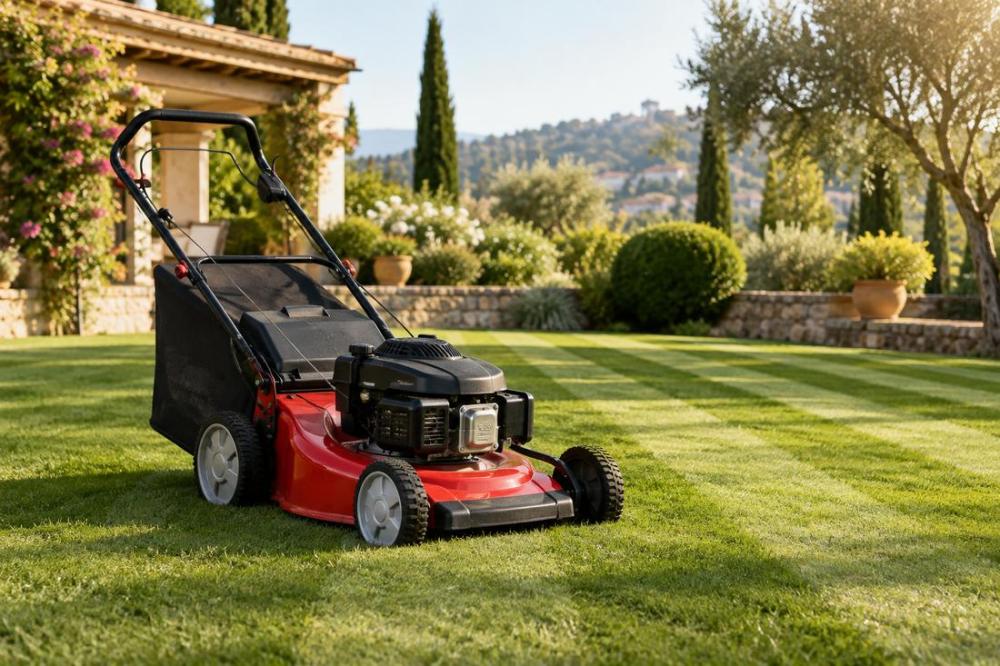

A lawn mower is the most important tool for any garden with a lawn. The questions we hear most are: push or self-propelled? What cutting width do I need? And how do I run it and look after it?
In this article we explain how to choose the right lawn mower for your space, the differences between the models we stock, the correct way to mow, and the maintenance that extends the mower's life.
Push or self-propelled?
Push mower
- You push the mower and the engine only drives the blade.
- Lighter, simpler and cheaper, suited to home gardens, rest houses and small to medium areas.
- Easier control around beds and corners.
Self-propelled mower
- The wheels are driven by the engine, and you only steer.
- Reduces effort on large areas and gentle slopes.
- Suited to anyone who mows a large area regularly.
What cutting width do you need?
- 46 cm width: suits home gardens and rest houses.
- 53 cm width: covers more ground per pass, so fewer passes and less time.
- For very large areas such as pitches and big gardens, consider a ride-on lawn tractor.
Comparing the models we stock
WORLD push mower, 46 cm
- Briggs & Stratton 550E engine, 140 cc.
- 46 cm cutting width with adjustable cutting height.
- Suited to home gardens, rest houses and small farms.
ATCO self-propelled mower, 53 cm
- Briggs & Stratton 750EX engine, 161 cc.
- Self-propelled with a 53 cm cutting width.
- Central cutting-height adjustment from 25 to 75 mm across 8 positions.
- 4-in-1 system: rear collection, rear discharge, side discharge, or mulching the clippings back into the lawn.
- 62-litre grass box.
How to mow correctly
- Never cut more than a third of the grass height in one go.
- Start with a high cutting height and lower it gradually if needed.
- In summer, cut a little higher, because longer grass shades the soil and needs less water.
- Mow in straight lines with a slight overlap between passes so no strips are missed.
- Avoid mowing very wet grass: clippings clump under the deck and the cut is uneven.
- Change mowing direction each time so the grass does not lean one way.
Before starting
- Check the engine oil and fuel before every use.
- Clear the lawn of stones, wires and branches before you start.
- Wear closed shoes and goggles, and keep children and pets away from the mowing area.
Maintenance that extends the mower's life
- Clean under the cutting deck and the grass box after every use.
- Check the air filter and clean it regularly, especially in dusty weather.
- Sharpen the blade when needed: a blunt blade tears grass tips and turns them brown.
- Never touch the blade or clean it until the engine is off and the blade has completely stopped.
- Store the mower somewhere dry, away from heat.
Products from Orkida
- WORLD Petrol Push Lawn Mower, 46 cm: Briggs & Stratton 140 cc engine, for home gardens and rest houses.
- ATCO Petrol Self-Propelled Lawn Mower, 53 cm: Briggs & Stratton 161 cc engine, cutting height 25 to 75 mm, 4-in-1 system.
- Pioneers 20-20-20 Soluble Fertilizer, 1 kg: for lawns at 3 to 5 g per m² once a month.
Frequently Asked Questions
What is the difference between a push and a self-propelled mower?
A push mower is pushed by you, while a self-propelled mower moves under engine power and reduces effort on large areas.
How often should I mow?
Whenever the grass has grown enough that you are cutting no more than a third of its height at a time.
Should I collect the clippings or leave them?
Mulching returns clippings to the soil as fertilizer; collecting gives a tidier look.
Why do grass tips turn brown after mowing?
Usually the blade is blunt and tears the leaves instead of cutting them.
Can I mow wet grass?
Better not, because clippings clump under the mower and the cut is uneven.