
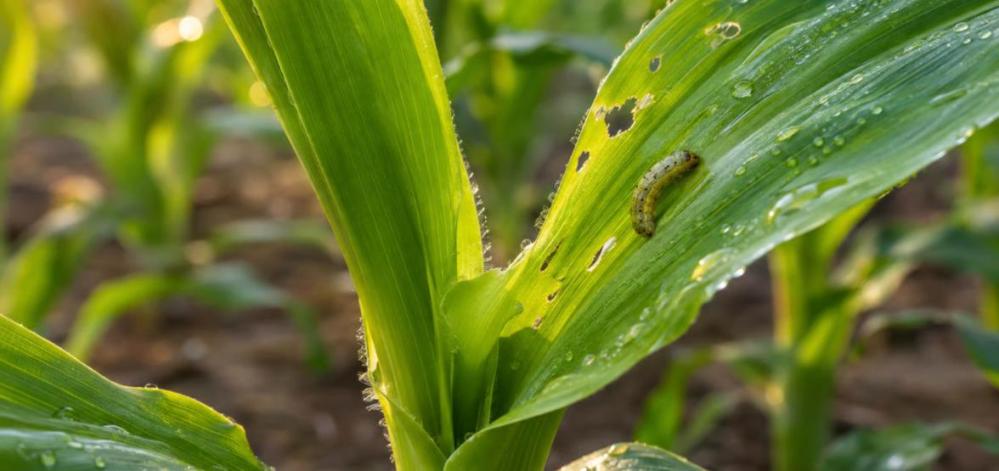

In agriculture, indoxacarb is an insecticide that specialises in caterpillars: tomato fruitworm, fall armyworm, cotton leafworm and Tuta absoluta. The larva takes it in by feeding or contact and stops eating within hours, and it is one of the gentler options for many beneficial insects.
This article explains how indoxacarb works on crops, which caterpillars it controls, when to spray it, and how to rotate it.
- Group: oxadiazines, IRAC group 22A.
- Type: ingestion and contact insecticide, not systemic.
- Works on: mainly Lepidoptera (moth and butterfly) larvae.
- Common forms: suspension concentrate (SC) or emulsifiable concentrate (EC) at 15%.
How does indoxacarb work?
It enters the larva's body in a weak form, and there the larva's own enzymes convert it into an active substance that blocks sodium channels in the nerves. The result: the larva stops feeding and moving and dies within one to three days.
- It binds to the leaf wax once dry, so it resists rain and overhead irrigation.
- It does not move much into the leaf, so good coverage matters.
- It is gentler on many natural enemies than organophosphates and pyrethroids.
Which pests does it control?
- Bollworm (tomato fruitworm): in tomato, cotton and corn.
- Fall armyworm: in corn and sorghum.
- Cotton leafworm: in vegetables, cotton and alfalfa.
- Tuta absoluta: as part of a rotation programme.
- Cabbage and cauliflower caterpillars.
When to spray it
1. On young larvae
The best time is at egg hatch and the first holes, before the larva enters the fruit or the corn whorl.
2. Cover the whole plant
Because it does not move much within the leaf, the spray must reach where the larva feeds, especially the corn whorl and small fruits.
3. Do not judge too fast
The larva stops feeding within hours of the dose, but you may see it for a day or two before it dies.
How to protect it from resistance
- Rotate with other groups such as chlorantraniliprole (28), emamectin (6) and spinosad (5).
- Use a window approach: one group for one pest generation, then switch.
- Do not repeat it in every spray all season.
Safety
- Wear gloves, goggles and a mask.
- Do not spray while bees are working the flowers.
- Respect the pre-harvest interval stated on the label.
Products from Orkida
- Valent 150 EC, 500 ml: indoxacarb 15% for fall armyworm and fruitworms.
- Advantage 15% SC, 1 litre: indoxacarb for tomato fruitworm.
- Advantage 15% SC, 500 ml: indoxacarb for chewing pests and fruitworms.
Frequently asked questions
Is it the same indoxacarb as in cockroach gel?
Same active ingredient, but a completely different concentration and formulation. Crop products are made for spraying plants and are not used indoors.
Why do I still see larvae after spraying?
The larva stops feeding quickly but dies within one to three days. Check whether there are new holes.
Does rain wash it off?
Once dry on the leaf, it binds to the wax and resists rain. The label gives the exact time.
Does it work on aphids and whitefly?
No. It specialises in caterpillars.
Read also
- American Bollworm: Symptoms, Life Cycle and Control Before It Enters the Fruit
- Fall Armyworm: Symptoms in Corn, Spray Timing and Pesticide Rotation
- Chlorantraniliprole: The Insecticide for Caterpillars and Tuta, and How to Spray It
- Indoxacarb: The Active Ingredient in Cockroach and Ant Gel and How It Works