
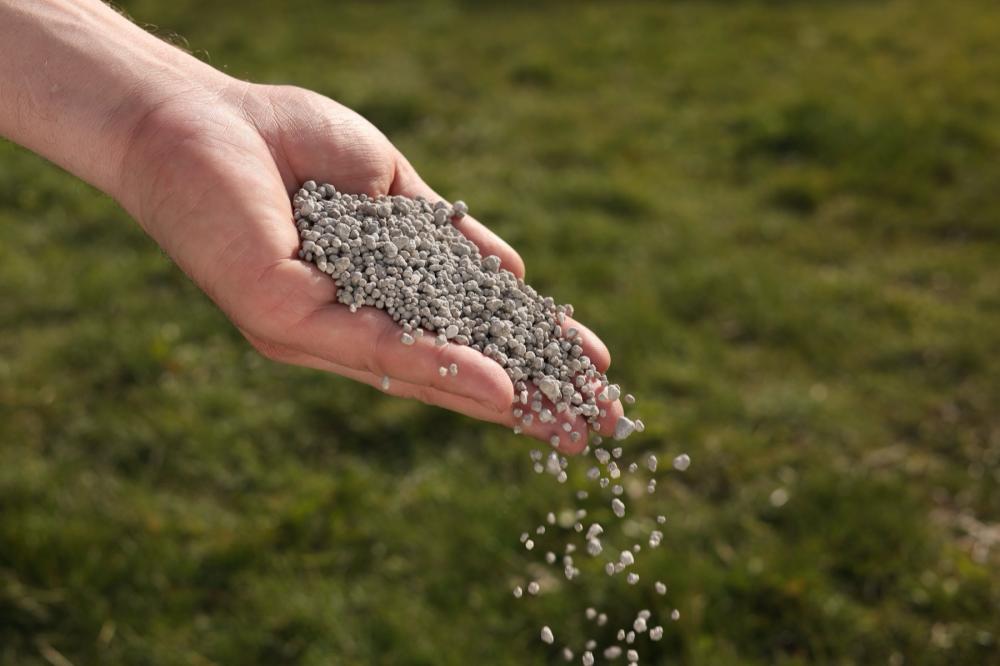

DAP fertiliser is one of the best-known fertilisers among farmers, often called the "root fertiliser". DAP stands for diammonium phosphate, and its analysis is 18-46-0: 18% nitrogen, 46% phosphorus and no potassium.
This article explains the benefits of DAP, when to use it, how much to apply, and the mistakes that waste it.
What does 18-46-0 mean?
- 18% nitrogen (N): in ammonium form, supporting early vegetative growth.
- 46% phosphorus (P₂O₅): the key nutrient, making DAP one of the most concentrated phosphorus fertilisers.
- 0% potassium (K): so DAP alone is not enough at flowering, fruit set and fruiting.
To understand fertiliser numbers in general, see our NPK fertiliser article.
Benefits of DAP fertiliser
- Stronger roots: phosphorus is essential for root development, especially early in the plant's life.
- Strong early growth: seedlings establish faster after planting.
- Flowering support: phosphorus is involved in flower formation and energy transfer in the plant.
- Correcting phosphorus deficiency: symptoms include stunted growth and older leaves that turn dark green or purplish. More in our nutrient deficiency article.
When to use DAP
- Before planting: as a basal fertiliser mixed into the soil during land preparation. This is the best time.
- At planting: beside and below the planting row, not touching the seeds.
- For trees: at the start of the season, spread around the root zone, worked into the soil and watered in.
Phosphorus moves very little in soil, so it must be placed close to the roots. Broadcasting it on the surface without incorporation wastes much of it.
How much DAP to apply
- Fields and land preparation: the SABIC DAP label gives 100 to 150 kg per feddan, roughly 25 to 35 kg per 1,000 m².
- Trees: the amount depends on tree age and size; base the dose on a soil test.
- Home gardens and pots: a very small amount mixed into the soil before planting, not repeated often.
Does DAP dissolve for drip irrigation?
Granular agricultural DAP largely dissolves, but it contains impurities that can clog drippers. So:
- For soil application: use granular DAP.
- For drip and foliar feeding: choose a soluble high-phosphorus fertiliser made for fertigation, such as a 10-52-10 formula.
DAP vs other fertilisers
- DAP vs urea: urea is nitrogen only (46%) for vegetative growth, while DAP is mainly phosphorus for roots and flowering.
- DAP vs MAP (12-61-0): MAP has more phosphorus and less nitrogen, and a milder effect in alkaline soils.
- DAP vs balanced NPK: NPK contains potassium, so it suits later growth stages better.
For the full picture, see our agricultural fertilisers article.
Common DAP mistakes
- Placing it in contact with seeds: the ammonia it releases can burn seeds and reduce germination.
- Mixing it with calcium nitrate in the same tank: phosphorus and calcium form a precipitate that clogs lines and wastes fertiliser.
- Relying on it all season: plants need potassium and micronutrients during fruiting.
- Broadcasting on the surface without incorporation: phosphorus gets fixed in the top layer and never reaches the roots.
- Overdosing: causes salinity and root burn, and in calcareous soils worsens iron and zinc uptake problems.
Products from Orkida
- SABIC DAP 18-46-0, 50 kg
- FertDrip 10-52-10 soluble high-phosphorus fertiliser
- FertDrip 15-30-15 high-phosphorus foliar fertiliser
DAP fertiliser FAQs
Is DAP suitable for date palms?
Yes, as a basal fertiliser at the start of the season worked into the root zone, but palms also need potassium and organic matter.
Can I spray DAP on the leaves?
We do not recommend granular DAP for foliar feeding. Use a soluble high-phosphorus foliar fertiliser.
How soon does DAP work?
Its effect on roots and growth shows within weeks of planting, especially in phosphorus-poor soils.
Does DAP change soil pH?
It raises the pH around the granule at first, then the effect tends towards acidity over time. In very alkaline soils some growers prefer MAP.