

Chelated iron is the treatment we use most for yellowing leaves, because most of our soils are alkaline and calcareous: the iron is there, but plants cannot absorb it. Many people buy iron, apply it and see no result, and the reason is usually the type of chelate or the way it was applied.
This article explains what chelated iron is, how to tell a plant needs it, how to choose the right type for your soil, and how to apply it correctly.
What does chelated iron mean?
- A chelate is an organic molecule that wraps around the iron and protects it from binding to soil particles and turning insoluble.
- Ordinary iron (such as iron sulphate) precipitates quickly in alkaline soil and is lost to the plant.
- Chelated iron stays dissolved in the soil solution until the roots reach it.
Signs of iron deficiency
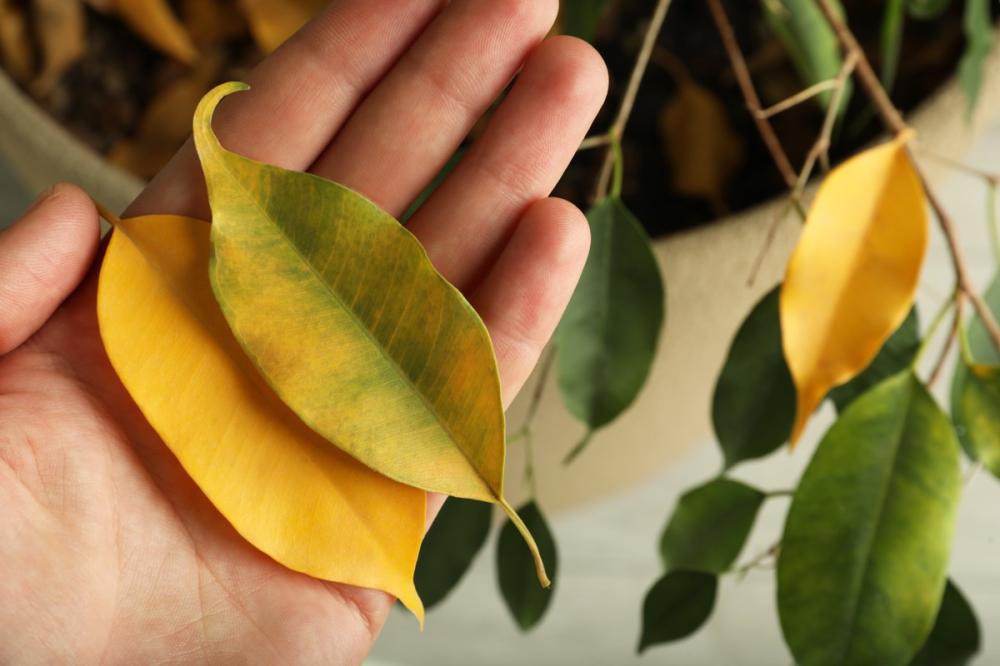
- Yellowing between the veins while the veins stay green, like a net.
- It starts on new leaves at shoot tips, because iron does not move from old leaves to new ones.
- In severe cases leaves turn white, edges burn and growth weakens.
- Common in citrus, lemon, roses, grapes and ornamental trees, and in young palms.
Note: if yellowing starts on old, lower leaves, the problem is more likely magnesium or nitrogen, not iron. See Yellow Leaves and Nutrient Deficiency.
Why does deficiency happen when the soil has iron?
- Alkaline, calcareous soil: the higher the pH, the less iron is available.
- Bicarbonate in irrigation water: well water here often contains bicarbonate, which makes it worse.
- Overwatering: waterlogged soil weakens roots and their uptake.
- Weak roots: from root diseases, nematodes or salinity.
- Cold: uptake drops in winter and you may see temporary yellowing.
Types of chelated iron and how to choose
| Chelate | Stable up to pH | Best use |
|---|---|---|
| EDDHA | about 9 | Alkaline, calcareous soil, soil application |
| DTPA | about 7.5 | Neutral soil and hydroponics |
| EDTA | about 6.5 | Foliar spray and acidic soil |
Why EDDHA suits our soils best
- It is the only one that stays stable in highly alkaline soil.
- It turns dark red when dissolved, which is normal.
- 6% is the common concentration, and more important than the number is the ortho-ortho fraction, the stable part that works in alkaline soil. The higher it is, the stronger and longer the result.
Higher concentrations such as 12%
- Usually made with EDTA or DTPA chelates, so they are better for foliar spraying or neutral soils.
- A higher percentage does not mean stronger in alkaline soil. Check the chelate type on the label before choosing.
How to apply chelated iron
Soil application (best for alkaline soil)
- Dissolve the amount on the label in water, according to plant size or tree age.
- Apply around the root zone under the edge of the canopy, not against the trunk.
- Irrigate straight afterwards so it reaches the roots.
- Apply in late afternoon or evening, because EDDHA breaks down in sunlight if left on the soil surface.
- Best timing: early spring growth and before flowering, then again as the plant needs.
Foliar spray (faster but temporary)
- Use a type suitable for spraying, such as EDTA or DTPA.
- Spray early morning or evening, wetting both sides of the leaves.
- Foliar spraying greens existing leaves but does not fix the soil problem, so repeat it or combine it with soil application.
- For details, see Foliar Fertiliser.
When will you see results?
- New leaves come out green within roughly one to three weeks.
- Very yellow old leaves may not fully recover; what matters is healthy new growth.
Mistakes that make iron fail
- Using EDTA in alkaline soil and expecting a lasting result.
- Spraying iron in strong sun, which burns leaves.
- Leaving iron on the soil surface without irrigating.
- Exceeding the label rate, which can affect uptake of other nutrients.
- Mixing with fertilisers or pesticides without a jar test, especially concentrated phosphate fertilisers.
- Ignoring overwatering or weak roots, which are the real cause.
Chelated iron for palms and citrus
- Citrus and lemon are among the most sensitive trees to iron deficiency. See Lemon Tree Diseases.
- Young palms can yellow in calcareous soil. See Date Palm Fertiliser.
- To improve root uptake, humic acid helps alongside iron. See Humic Acid.
Products from Orkida
- Sequestrene 138 chelated iron 6% by Syngenta 1 kg
- Sequestrene 138 chelated iron 6% by Syngenta 5 kg
- Bavaria chelated iron 6%
- Ages chelated iron 6%
- Sangral chelated iron 6%
- Fiber chelated iron 6%
- Hortag iron chelate 6%
- Dolphin chelated iron 12%
Chelated iron FAQs
How often should I apply chelated iron?
Usually once or twice a season for soil application, most importantly in early spring. Foliar sprays need repeating more often because the effect is temporary. Follow the label.
Can chelated iron burn plants?
Not at the correct rate. Damage happens when the dose is too high, it is sprayed in the heat, or it is placed against the trunk.
What is the difference between 6% and 12% iron?
The number is the iron content, but the chelate type matters more. 6% EDDHA iron suits alkaline soil, while higher concentrations usually use chelates better suited to foliar spraying.
Can I mix iron with fertiliser?
It is best to apply it on its own with irrigation water. If you want to mix, test a small amount in a bucket first and check for precipitation.