
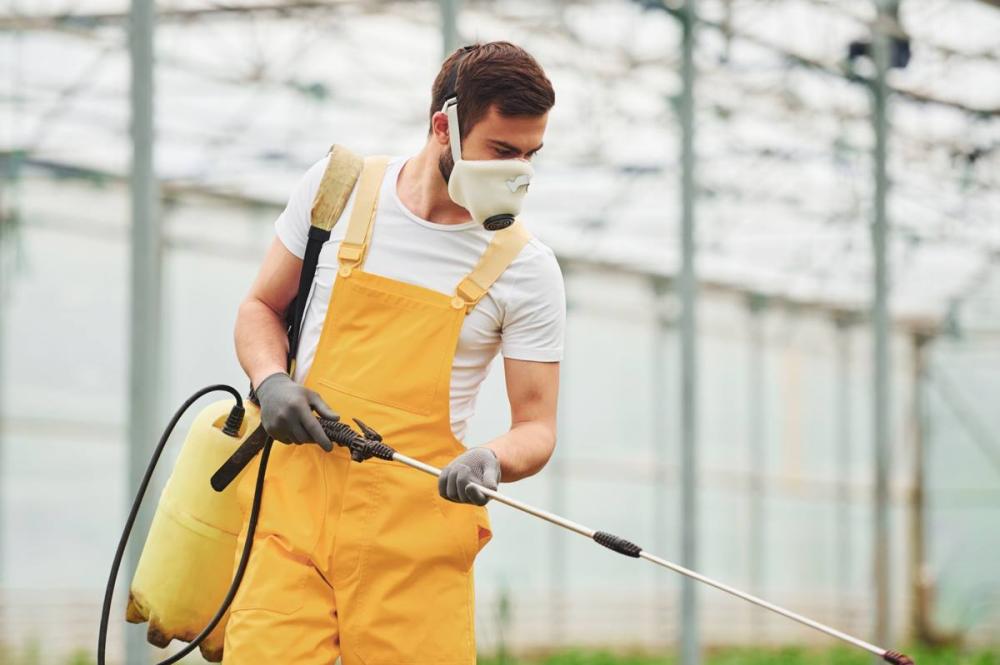

Banned pesticides are a question we hear often: which pesticides must not be sold, and how do I know the one I bought is registered and permitted? Today the real risk is not only old pesticides banned internationally, but counterfeit and unregistered products sold without a label or under unknown names.
This article explains the difference between banned and restricted pesticides, the best-known internationally banned ones, and how to tell a registered product from a fake.
Banned vs restricted pesticides
- Banned pesticide: may not be imported, sold or used, usually because it accumulates in the environment and the human body or is extremely toxic.
- Restricted pesticide: permitted, but for specific uses or under conditions, such as agricultural use only, set concentrations, or application by licensed professionals.
- So a substance appearing on a restricted list does not mean it is banned; you need the exact classification and conditions of use.
Why are some pesticides banned?
- Persistence: they stay in soil and water for years without breaking down.
- Build-up in the food chain: they reach people through food.
- High toxicity: to people, birds, fish or bees.
- International conventions: Saudi Arabia has joined the Stockholm Convention on persistent organic pollutants and the Rotterdam Convention on hazardous chemicals.
The best-known internationally banned pesticides
These are old organochlorine pesticides listed under the Stockholm Convention for elimination:
- Aldrin, dieldrin and endrin
- Chlordane and heptachlor
- Mirex and toxaphene
- Lindane
- Endosulfan
- DDT: severely restricted worldwide, with permitted use limited to official public health programmes for disease vector control.
If you find any product listing one of these substances, do not buy or use it.
Dangerous products that must never be used at home
- Grain fumigation tablets (aluminium phosphide): release a highly toxic gas and are meant only for licensed professionals in stores. Use inside homes has caused deaths, so never use them.
- Concentrated agricultural pesticides indoors: agricultural products are designed for farms, and spraying them in bedrooms is dangerous. Indoors, use public health insecticides registered for that purpose.
- Unknown "poison" sold in bags or tins without a label: you do not know its substance or strength, and it is a serious risk to children.
How to tell a pesticide is registered and permitted
- A clear Arabic label with the product name, active ingredient and concentration.
- A registration number on the container.
- The manufacturer's name and the local importer or distributor.
- Batch number, production and expiry dates.
- Directions for use, warnings and pre-harvest or re-entry interval.
- An original sealed container with no tampering or refilling.
Registering bodies: agricultural pesticides fall under the Ministry of Environment, Water and Agriculture, while public health pesticides used in homes fall under the Saudi Food and Drug Authority. We explain label details in How to Read a Pesticide Label.
Signs of a counterfeit pesticide
- A price far below the market with no reason.
- A label in a foreign language only, or poorly printed with errors.
- An opened container or a cap without a seal.
- A colour, smell or texture different from the original you know.
- Exaggerated claims such as "kills every insect for good with one spray".
- A seller with no invoice who does not know where the product came from.
To know where to buy original products, see Where to Buy Original Household Insecticide.
What to do if you have a banned or unknown pesticide
- Do not use it or give it to anyone.
- Do not pour it into drains, soil or ordinary rubbish.
- Keep it in its original container, closed and away from children.
- Contact the municipality or the hazardous waste authority in your area for safe disposal.
Products from Orkida
- Demand CS by Syngenta
- Advion cockroach gel by Syngenta
- Optiguard Flex by Syngenta
- Aqua K-Othrine EW
- K-Othrine dust
Banned pesticide FAQs
How do I know if a pesticide is banned?
Check the active ingredient on the label. If it is one of the internationally banned substances such as endosulfan or lindane, or the product has no Arabic label and registration number, do not use it.
Is every old pesticide banned?
No. Some substances have been around for decades and are still registered and permitted; bans depend on the active ingredient and its scientific assessment, not on its age.
Is a restricted pesticide banned?
No. A restricted product is permitted under conditions, such as agricultural use only or professional application. Follow the label and never use it outside what is written.
What should I do if I suspect a counterfeit pesticide?
Do not use it, keep the container and invoice, and report it to the relevant authority: the Ministry of Environment, Water and Agriculture for agricultural pesticides, and the Saudi Food and Drug Authority for public health pesticides.