
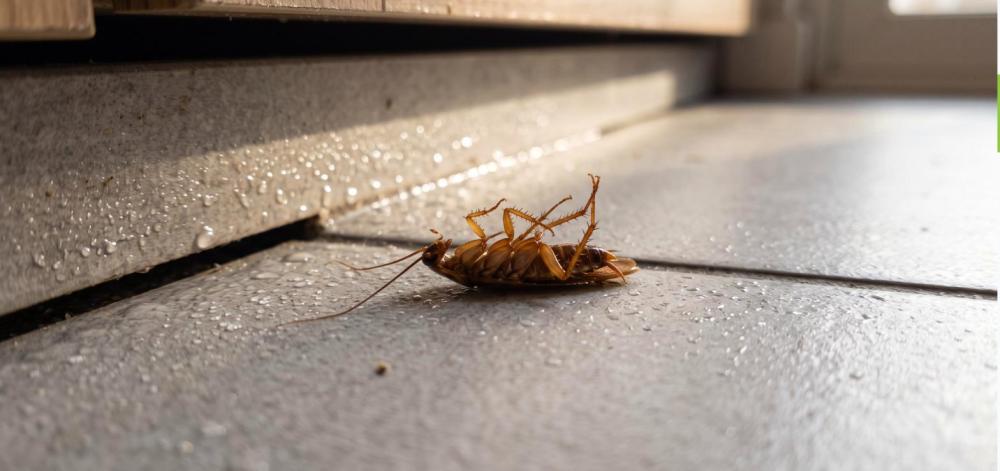

Alpha-cypermethrin sounds almost the same as cypermethrin, and the difference is more than a word. It is the most active part of cypermethrin, so you need less of it for the same strength or more. That is why you find it in insecticides for cockroaches, flies and mosquitoes, and in farm sprays for aphids and caterpillars.
This article explains what alpha-cypermethrin is, how it works, the difference between EC and SC formulations, and where it fits at home and on the farm.
- Group: pyrethroids (IRAC group 3A).
- Targets: cockroaches, flies, mosquitoes and ants, and in agriculture aphids, caterpillars and piercing insects.
- Mode of action: contact and ingestion, not systemic.
- Common forms: emulsifiable concentrate 10% (EC), and suspension concentrate 6% and 10% (SC).
How is it different from cypermethrin?
Cypermethrin is a mixture of several forms of the same molecule, and some are stronger than others. Alpha-cypermethrin is the strongest form, separated and concentrated. The result:
- A lower dose for the same effect.
- Fast knockdown of the insect.
- Good residual effect on surfaces when the formulation is right.
How does it work?
It acts on the insect's nerves, keeping sodium channels open so the nerve keeps firing without stopping. The insect trembles, loses balance and dies. An insect walking on a treated surface picks up the dose through its legs.
EC or SC: which to choose?
EC formulation
- An oily liquid that turns milky in water.
- Excellent for farm spraying on plant leaves.
- Works well on smooth surfaces such as tiles and ceramics.
- Has more smell than SC.
SC formulation
- Fine particles suspended in water.
- Better on porous surfaces such as concrete, wood and plaster, because the active stays on the surface instead of soaking in.
- Milder smell, more suitable for homes and kitchens.
- Longer residual on walls and corners.
Where it works at home
- Cockroaches: corners, behind appliances, under sinks and around pipes.
- Flies and mosquitoes: walls where they rest and shaded spots around the house.
- Ants: along ant trails and around entry points.
Focus the spray on hiding places and travel routes, not the middle of the room. The insect has to walk on the treated surface to be affected.
Where it works on the farm
- Aphids and thrips on vegetables.
- Caterpillars and moth larvae on leaves.
- Cutworms at the base of seedlings.
- Piercing-sucking insects on various crops.
Respect the pre-harvest interval stated on the label.
Resistance
German cockroaches and house flies in many places have become resistant to pyrethroids. If you spray alpha-cypermethrin and do not see a clear result on cockroaches:
- Switch to another group, such as gels or baits with different actives.
- Do not switch to another pyrethroid such as deltamethrin, because it is in the same group and usually shares the same resistance.
- Combine cleaning and sealing cracks with spraying.
Safety
- Keep children and pets away until the spray dries.
- Cover fish tanks and switch off their pumps, because the active is highly toxic to fish.
- Do not spray flowering plants while bees are working.
- Wear gloves and a mask. If you feel burning or tingling on the skin after contact, wash with soap and water; the feeling usually fades within hours.
Products from Orkida
- Alpha Sect 6 SC, 1 litre: alpha-cypermethrin 6% suspension concentrate for crawling and flying insects, suited to porous surfaces.
- Alphafind 100 EC, 1 litre: alpha-cypermethrin 10% for mosquitoes and cockroaches.
- Alphaquest 100 EC, 1 litre: alpha-cypermethrin 10% for crawling and flying insects.
- Alphaquest 100 EC, 5 litres: the same product in a large pack for wide areas.
- Project 100 EC, 1 litre: alpha-cypermethrin 10% for crawling and flying insects.
- Project 100 EC, 250 ml: a small pack for homes.
- Mastak 100 EC, 1 litre: alpha-cypermethrin 10% for cutworms, aphids and piercing insects.
- Alphatrin 100 EC, 1 litre: alpha-cypermethrin 10% for aphids, caterpillars and other crop pests.
- Super Care 10 EC, 1 litre: alpha-cypermethrin 10% for aphids and whitefly on crops.
Frequently asked questions
How long does it last at home?
On porous surfaces with an SC formulation it lasts weeks, and less with wiping, cleaning and humidity. Do not wipe treated corners after spraying.
Does it repel cockroaches?
You may see cockroaches coming out of their hiding places after spraying; that is the active affecting them. They die afterwards.
Which is stronger: alpha-cypermethrin or deltamethrin?
Both are strong pyrethroids at small doses. The practical difference is in the formulation, the dose and the pest. If an insect is resistant to one, it is usually resistant to the other.
Can I use the same product at home and on the farm?
Follow the label. Some products are registered for public health and some for agriculture, and the doses and sites differ.