
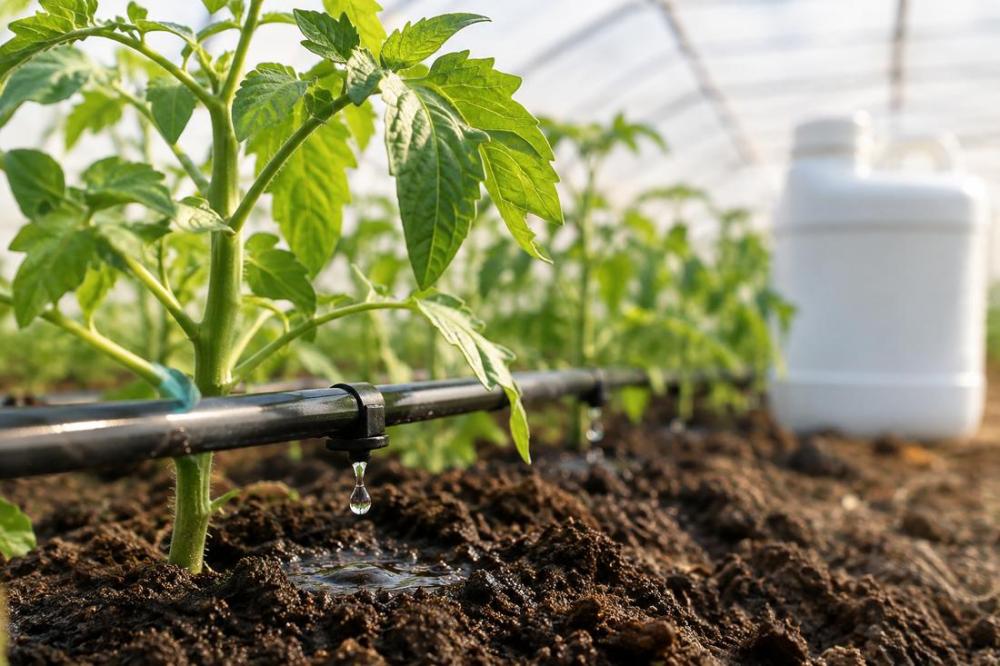

Phosphoric acid is one of the strongest liquid sources of phosphorus, and growers use it for three jobs: feeding plants with phosphorus, lowering the alkalinity of irrigation water, and cleaning lime deposits out of drip lines. Because it is a concentrated acid, you need to know how to use it and the right dose.
In this article we explain the benefits of agricultural phosphoric acid, the rates for each crop, how to add it through irrigation, and what it must not be mixed with.
What is agricultural phosphoric acid?
- A high-phosphorus liquid fertilizer at 85% phosphoric acid, equal to 61.5% phosphorus pentoxide (P₂O₅).
- Fully water soluble and applied with irrigation water (fertigation).
- Very acidic (pH around 2), which is why it helps with alkaline water.
Benefits for the plant
- Strong roots: phosphorus is the basis of root formation, especially after transplanting.
- Better flowering and fruit set: it supports energy transfer inside the plant at flowering.
- Better nutrient uptake: when water pH drops, nutrients such as iron, zinc and phosphorus become more available.
Benefits for the irrigation system
- Dissolves lime and salt deposits in lines and emitters.
- Reduces emitter clogging and keeps water distribution even.
Rates by crop
- Fruit trees: 100 ml per tree with irrigation water every two weeks, depending on the tree's age and size.
- Vegetables: 1 to 3 litres per hectare with irrigation water, split over several applications during growth.
- Alfalfa and fodder: 2 litres per hectare with irrigation water after each cut, to speed regrowth.
- Cereals and field crops: 1 to 3 litres per hectare from tillering to stem elongation.
Best times to use it
- After transplanting or moving seedlings.
- At the start of vegetative growth.
- Before flowering and after fruit set.
- When phosphorus deficiency symptoms appear.
How to lower irrigation water pH
- Measure the water pH first with a meter or test strips.
- Add the acid gradually to the fertilizer tank and measure after each addition until you reach the right value for your crop.
- Keep measuring regularly, because water alkalinity varies from well to well and season to season.
Signs of phosphorus deficiency
- Weak root growth and slow growth.
- Poor flowering and fruit set and small fruit.
- Dark green or purple colour on older leaves in some crops.
Safety and mixing precautions
- Always add acid to water, never water to acid, because the reaction gives off strong heat.
- Never use it concentrated or spray it on leaves; apply it diluted with irrigation water.
- Do not mix it with calcium fertilizers or alkaline products, or with chelated iron in the same tank.
- Wear gloves and safety glasses while preparing it.
- Store it in a cool, well-ventilated place away from sun and children.
Products from Orkida
- Al-Takamol Phosphoric Acid 85%, 17 L: 100 ml per tree every two weeks, and 1 to 3 litres per hectare for vegetables.
- SAF 12-61-0 Fertilizer: soluble mono-ammonium phosphate, high phosphorus for roots and flowering.
- Libro 10-52-10 + Trace Elements: acidic soluble high-phosphorus fertilizer.
- Nours 10-52-10 + Trace Elements: soluble high-phosphorus fertilizer for roots and flowering.
Frequently Asked Questions
Is phosphoric acid a fertilizer or a drip cleaner?
Both: it feeds plants with phosphorus and cleans lime deposits from the lines at the same time.
How much phosphoric acid per tree?
100 ml per tree with irrigation water every two weeks.
Can I spray it on the leaves?
No, use it only diluted with irrigation water.
Can I mix it with calcium?
No, it precipitates and both lose their effect.
Why is alkaline water a problem?
It locks nutrients such as iron and phosphorus in the soil so plants cannot absorb them, and deposits clog the drippers.