
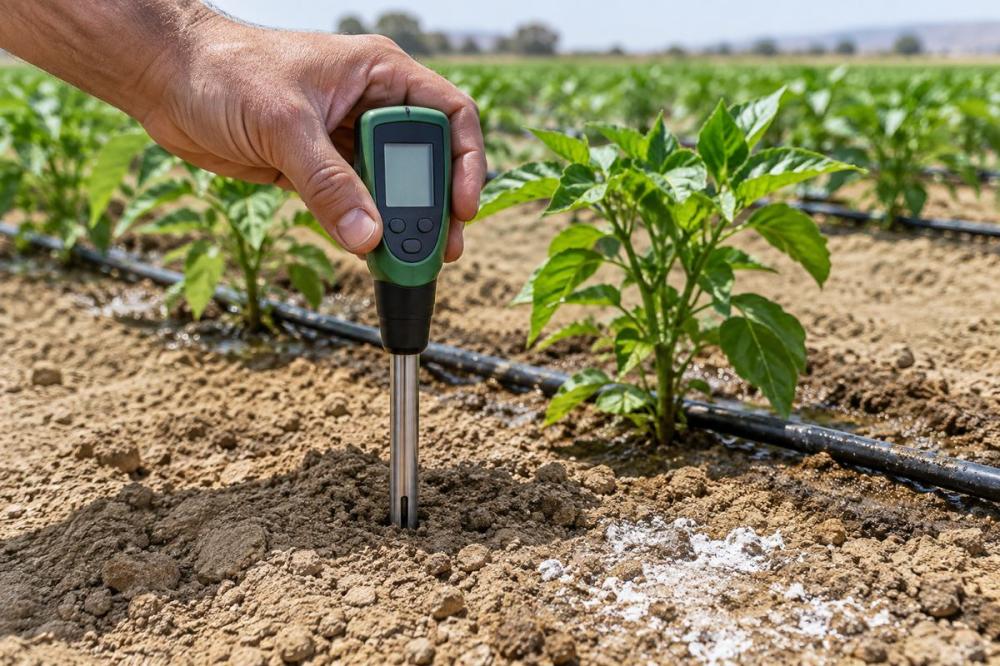

You fertilize and water, yet the plant stays weak and the leaves turn yellow? Sometimes the problem is not the fertilizer but the soil itself: either it is alkaline, which locks nutrients away from the plant, or it is saline, which leaves roots thirsty even when there is water.
In this article we explain what soil acidity and alkalinity mean, how to tell whether your soil is alkaline or saline, and how to treat each case, with rates.
What does soil pH mean?
The pH number shows whether soil is acidic, neutral or alkaline:
- Below 6.5: acidic soil.
- 6.5 to 7.5: neutral soil, the best range for most vegetables and fruit.
- Above 7.5: alkaline soil.
In hot, dry regions most soils are alkaline and calcareous (they contain calcium carbonate), usually between pH 7.5 and 8.5. Acidic soil is uncommon here.
Why is alkalinity bad for plants?
The nutrients are present in the soil, but the plant cannot take them up when pH is high, especially:
- Iron: the most common problem. Young leaves turn yellow between the veins while the veins stay green.
- Zinc and manganese: small, distorted leaves and mottled yellowing.
- Phosphorus: weak roots and flowering, sometimes a purple tint on older leaves.
How to tell if your soil is alkaline
- pH meter or test strips: mix a soil sample with distilled water at 1 part soil to 2 parts water, let it settle, then measure.
- Simple vinegar test: pour a spoon of vinegar onto a handful of dry soil. If it fizzes, the soil is calcareous and most likely alkaline.
- Plant symptoms: yellow young leaves with green veins, especially on citrus, roses and gardenias.
Treating alkaline soil
1. Agricultural sulphur
Soil bacteria turn sulphur into acid, gradually lowering pH. It works slowly, over weeks to months.
- Vegetables: 200 kg per hectare, about 20 g per square metre, once before planting.
- Greenhouses: 25 kg per 1,000 m², about 25 g per square metre.
- Fruit trees: 250 to 500 g per tree depending on size.
- Ornamentals: about 20 g per plant depending on size.
- Mix it into the soil 10 to 15 days before planting and water lightly afterwards.
2. Organic matter
Composted manure, compost and humic acid reduce the effect of alkalinity and improve nutrient uptake. Add them every season.
3. Acidic fertilizers
Use fertilizers with an acidifying effect, such as acidic phosphate fertilizer. Example: acidic 5-75-3 at 0.5 to 1 litre per 100 litres of water (5 to 10 ml per litre) for vegetables.
4. The right chelated iron for alkaline soil
If iron deficiency appears, do not use just any iron. Choose EDDHA iron, which stays stable in alkaline soil up to pH 10:
- Trees: dissolve 15 to 30 g in water and apply around the roots.
- Irrigated crops: 5 to 10 g per square metre through irrigation.
What is soil salinity?
Saline soil has a build-up of soluble salts (sodium chloride, sulphates and others). The salts pull water away from the roots, so the plant is thirsty even when the soil is moist.
Causes of salinity:
- Saline irrigation water (wells).
- Frequent light watering without leaching, so salts collect near the surface.
- Overuse of chemical fertilizers.
- Poor drainage and a high water table.
Signs of soil salinity
- A white crust on the soil surface or around the edges of beds and planting holes.
- Brown, burnt leaf tips and margins, especially on older leaves.
- Slow growth and small leaves despite watering and feeding.
- Wilting at midday even when the soil is moist.
Treating soil salinity
1. Leaching irrigation
The most important step. Water deeply and heavily at intervals so the salts move below the root zone. Frequent light watering collects salts near the surface and makes things worse.
2. Agricultural gypsum
If the salinity is sodic (the soil crusts and does not drain), gypsum replaces sodium with calcium, which you then wash out with irrigation. The rate is 0.8 to 2 kg per square metre depending on salinity and soil type. Full details are in our agricultural gypsum article.
3. Salinity treatments through irrigation
- Sirslt (calcium + carboxylic acids): 6 to 7 litres per hectare on clay soil and 4 to 6 litres per hectare on sandy soil by drip, repeated every 2 to 3 weeks with deep irrigation.
- Potassium humate (Taka Humus): for open-field vegetables 1 to 1.5 kg per hectare through irrigation every two weeks; for fruit trees and palms 1.5 to 2 kg per hectare every 15 days; for a greenhouse (2,000 m²) 1 to 1.5 kg every two weeks. Do not mix it with calcium or phosphorus products.
4. Reduce fertilizer and change how you water
- Split fertilizer into small doses instead of one large dose.
- Drip irrigation keeps salts away from the root zone better than surface watering.
- Mulch the soil surface to cut evaporation so salts do not rise to the top.
Common mistakes
- Adding ordinary (non-chelated) iron to alkaline soil, where it gets locked up within days.
- Expecting sulphur to work in a week. It needs weeks to months.
- Treating salinity with more fertilizer. Extra fertilizer adds to the salinity.
- Light daily watering on saline land without leaching.
- Adding gypsum without watering afterwards, so the sodium is not washed out.
Products from Orkida
- SAF Granular Agricultural Sulphur, 1 kg: about 20 g per m² for vegetables before planting, and 250 to 500 g per fruit tree.
- Agricultural Gypsum for Soil Salinity, 25 kg: 0.8 to 2 kg per m² depending on salinity and soil type.
- Sirslt Soil Salinity Treatment, 20 L: 4 to 7 litres per hectare by drip depending on soil type, every 2 to 3 weeks.
- Taka Humus Potassium Humate, 1 kg: 1 to 1.5 kg per hectare through irrigation every two weeks for vegetables.
- Bavaria 6% EDDHA Chelated Iron, 1 kg: stable in alkaline soil; 15 to 30 g around the roots of a tree.
- Strong 5-75-3 Acidic Fertilizer, 1 L: 0.5 to 1 litre per 100 litres of water for vegetables.
Frequently Asked Questions
How do I know if my soil is alkaline?
The easiest way is a pH meter or test strips. If soil fizzes when you pour vinegar on it, it is calcareous and most likely alkaline.
How long does agricultural sulphur take to lower soil pH?
It works gradually, over weeks to months depending on soil temperature and moisture. That is why it is added at least 10 to 15 days before planting.
What is the difference between gypsum and sulphur?
Sulphur lowers pH. Gypsum does not change pH much, but it treats sodic soil and helps wash out sodium.
Does saline well water damage soil?
Over time, yes, without leaching irrigation and good drainage. Water deeply at intervals and use soil conditioners.
Why are my lemon tree leaves yellow with green veins?
Usually iron deficiency caused by alkaline soil. Apply EDDHA iron around the roots and add organic matter.
Read next
- Agricultural Gypsum: Benefits for Saline Soil, How to Use It and How Much
- Chelated Iron: When Plants Need It, Choosing the Right Type and How to Apply It
- Humic Acid: Benefits for Soil and Roots, How to Use It and Rates
- Acidic Fertilisers: When You Need Them for Alkaline Soil and Water, and How to Use Them