
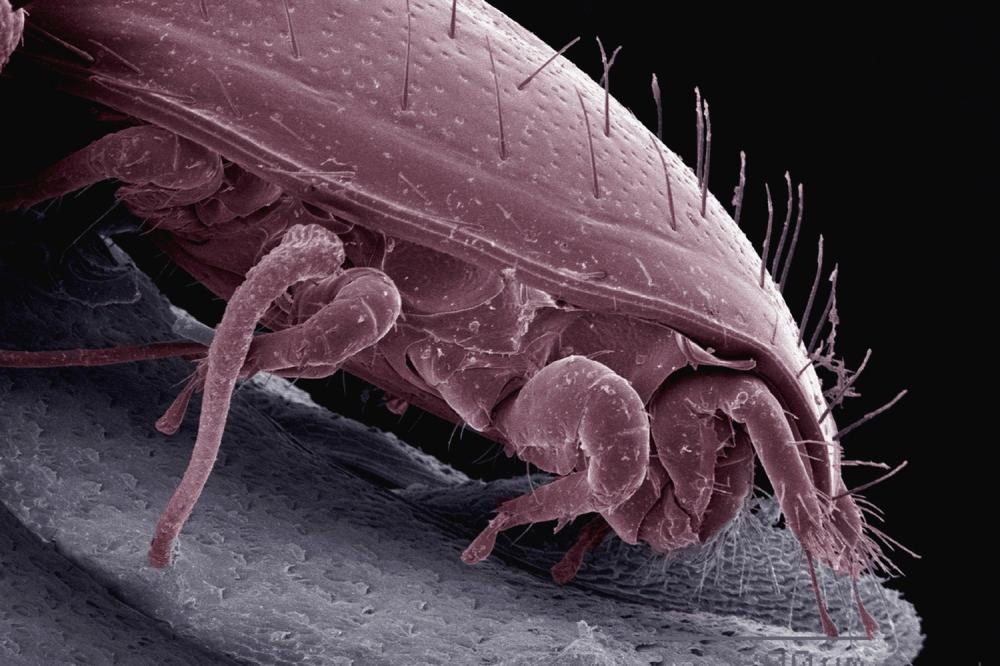

Frequent sneezing every morning, a blocked nose on waking, itchy eyes that ease when you leave the house, and perhaps a cough or wheeze in the chest at night. If this describes you or your child, the cause may be a creature you have never seen and cannot see with the naked eye: the house dust mite.
This creature does not bite, suck blood, or transmit infection, yet it is one of the leading causes of allergy and asthma inside homes. And the news that surprises many people is that the treatment is not pesticides but changing the bedroom environment. This guide explains how to do that step by step, and what actually works and what does not.
Scientific name: House dust mites, the best-known two species being Dermatophagoides pteronyssinus and Dermatophagoides farinae.
Size and color: About a quarter of a millimeter long and almost transparent, visible only under a microscope.
Where it lives: In mattresses, pillows, comforters, carpets, and upholstered furniture.
How dangerous: It does not bite or transmit infection, but it is one of the main causes of allergy and asthma inside homes.
Best time to control: All year round, by washing bedding weekly at 60 degrees Celsius (140 F) or higher and keeping humidity between 30 and 50 percent.
What Is the House Dust Mite and Where Does It Live?
The dust mite is not an insect but an arachnid, related to spiders and ticks. The two best-known species in homes are Dermatophagoides pteronyssinus and Dermatophagoides farinae. Each is about a quarter of a millimeter long and almost transparent, so it can only be seen under a microscope.
It feeds on the skin flakes people shed every day, especially after they have been partly broken down by microscopic fungi. It does not drink water but absorbs moisture from the surrounding air, which is why air humidity is the key to its life and death. Its favorite places in the home are:
- Mattress and pillow: The most important habitat of all, with warmth and moisture from our breath and sweat and skin flakes every night.
- Comforters and blankets: Along with thick bedspreads.
- Carpets and wall-to-wall rugs: Especially in bedrooms.
- Sofas and fabric seats: As well as heavy curtains.
- Stuffed toys: That a child sleeps with.
Because people spend a third of their day in bed, the bedroom is the first battlefield, and any effort in the rest of the home comes after it.
Why Does It Cause Allergy and Asthma?
The problem is not the mite itself but its droppings. Its feces contain powerful allergenic proteins, and each mite produces a large number of fecal pellets every day.
These tiny particles stay in fabrics and become airborne when you make the bed, shake out pillows, or walk on carpets, then settle again after a few minutes. Notably, they remain allergenic even after the mite dies, which is why killing the mites without removing the dust is not enough. In sensitive people, dust mites are linked to:
- Chronic allergic rhinitis: Sneezing, a runny or blocked nose, and itching in the nose and throat, especially in the morning and all year round rather than in a specific season.
- Asthma: Night cough, wheezing, and shortness of breath. Dust mites can be one of the triggers of asthma attacks.
- Eczema (atopic dermatitis): It may get worse in some patients.
- Eye symptoms: Itching and redness of the eyes.
Diagnosis is made by a doctor, with a skin prick test or a blood test for specific antibodies. This matters, because the steps described here are worth the effort once it is confirmed that dust mites are really the cause.
Doctors also have treatment options such as nasal sprays, asthma treatment, and immunotherapy (allergy shots) for some cases.
What Is the Difference Between Dust Mites, Bed Bugs, and Fleas?
Many people confuse dust mites with the pests that actually bite. The deciding question is simple: do you have bites on your skin, or respiratory symptoms?
- If you have real bites: Itchy red bumps on the skin in the morning, or small spots of blood on the sheet, then the suspect is not the dust mite, because it does not bite. Think of bed bugs, or fleas if there are cats or dogs in the house, or mosquitoes.
- If the symptoms are respiratory and allergic: Sneezing, a blocked nose, itchy eyes, and cough. This is the picture of the dust mite.
For more household pests, browse the Pest Library.
Should I Spray a Pesticide on the Mattress?
The first thing that may come to mind is to buy a pesticide and spray it on the mattress. Do not do that, for the following reasons:
- The pesticide does not remove the cause: The accumulated mite droppings remain, and they are the real cause of allergy.
- The mattress is the closest thing to you: The mattress and pillow are against your nose, face, and skin for hours every night, and it is the last place you want chemical residues, especially for a child or an asthma patient whose chest may be irritated by smells and spray.
- Spraying does not reach deep: The mite lives deep in the filling, and surface spraying does not reach it.
- Quick return: The mite returns quickly if the humidity and food stay the same.
Scientific reviews indicate that relying on a single method, chemical or physical, does not noticeably improve asthma symptoms. What works is a set of measures together that reduce mites and their droppings in the bedroom, along with appropriate medical treatment.
How Do I Get Rid of Dust Mites?
The successful plan combines several simple measures applied together and regularly: a barrier that isolates the bedding, heat that kills mites, low humidity that weakens them, and fewer fabrics for them to hide in. Start with the bedroom, then move on to the rest of the home.
Barrier Covers and Hot Washing
These are the two most important steps in the whole plan, and the rest of the work builds on them:
- Barrier covers for the mattress, pillows, and comforter: A zippered cover that fully encloses the mattress on all sides, and the same for pillows and comforters, made of a tightly woven fabric that blocks mites and their droppings, and is breathable so you do not feel hot.
- Choosing the right cover: Look for tested covers made for allergy sufferers, and cover every mattress in the room, including the second bed. These covers are washed every few months according to the manufacturer's instructions.
- Weekly hot washing: Wash sheets, pillowcases, and comforter covers once a week at 60 degrees Celsius (140 F) or higher. This heat kills the mites, while cold or lukewarm washing removes part of the droppings temporarily but the mites themselves survive and return.
- Complete drying: Dry the laundry completely before putting it back.
Lowering Humidity
Dust mites do not live long when relative humidity falls below 50 percent, and they multiply quickly above it. So:
- Measure humidity: Buy an inexpensive hygrometer and place it in the bedroom.
- Target: Aim for humidity between 30 and 50 percent.
- Air conditioner and dehumidifier: The air conditioner lowers humidity, and an electric dehumidifier is useful in coastal homes and hot, humid climates.
- No humidifiers: Do not use humidifiers in the room of an allergic person.
- Ventilation: Air out the room, run the bathroom and kitchen exhaust fans, and do not hang wet laundry in the bedroom.
- Uncover the bed in the morning: Leave it uncovered for a few minutes before making it so the night's moisture evaporates.
Fewer Fabrics and Proper Cleaning
Every piece of fabric in the bedroom is a potential hiding place for mites and their droppings, and the cleaning method itself can help or hurt. Focus on these points:
- Floors: Hard floors (tile, wood, vinyl) are much better than wall-to-wall carpet. If a rug is needed, make it a small washable one.
- Curtains and furnishings: Replace heavy curtains with light washable ones or blinds, and reduce extra pillows, decorative bedspreads, and fabric sofas in the room.
- Clothes: Do not leave them piled on chairs, and keep wardrobes closed.
- The right vacuum cleaner: Use a vacuum with a HEPA or high-efficiency filter, because ordinary vacuums can blow fine droppings back into the air.
- Vacuuming frequency: Vacuum carpets and fabric sofas at least twice a week, and ideally the allergic person should not be in the room during vacuuming and for half an hour afterward.
- Dusting: Wipe dust with a damp cloth instead of feather dusting, which throws dust into the air.
- Stuffed toys: Reduce their number in the child's bed, choose washable ones, and wash them like sheets at 60 degrees Celsius (140 F). Whatever cannot take that heat goes in a sealed bag in the freezer for at least 12 hours once a month, then is washed according to its instructions to remove the droppings and dead mites.
Does Steam Cleaning Kill Dust Mites?
High-temperature steam kills mites in carpets, sofas, and upholstery that cannot be washed, and allergy associations recommend it as an option for carpet that cannot be removed.
But there is an important condition: the moisture left after steaming feeds the mites again if the item does not dry completely. So dry, high-temperature steam is preferred, with good ventilation and the air conditioner running until the furnishings dry completely before use, followed by vacuuming with a HEPA vacuum to remove residues.
What Mistakes Keep the Allergy Going?
Many homes put in great effort and still the symptoms remain, and the cause is usually one or more of these mistakes:
- Shaking out the mattress and carpets inside the house: It spreads the droppings in the air and increases symptoms.
- Buying an air purifier alone: Mite droppings are heavy and settle quickly on surfaces, so the device catches only a little of them. It may help as an addition, but it is not the solution.
- Cold washing: It gives a feeling of cleanliness while the mites stay alive.
- Covering only the mattress: While leaving pillows and comforters without covers.
- Forgetting the bedroom: Caring for the living room and leaving the most important place.
- Spraying insecticide sprays on the bedding: It does not solve the problem and adds a new irritant for the chest.
A Suitable Product
At Orkida Agri we do not recommend pesticides for dust mites, but heat is an effective weapon for large furnishings that do not fit in the washing machine. That is why we suggest a professional steam machine as an addition to the plan, not a replacement for it:
- POLTI Professional Steam Cleaner, Business Model: dry steam reaching up to 180 degrees Celsius (356 F), used to sanitize mattresses, sofas, curtains, and carpets without pesticides, and steam at this temperature kills dust mites on direct contact. Suitable for hotels, furnished apartments, health facilities, and anyone who wants periodic heat treatment of large furnishings.
Make sure to dry completely after use, and remember that the machine does not replace barrier covers and weekly washing.
Frequently Asked Questions
Do dust mites bite?
No. Dust mites do not bite, suck blood, or live on the human body. They feed on shed skin flakes, and the problem is their droppings, which cause allergy in sensitive people.
How do I know I am allergic to dust mites?
Symptoms that last all year, and get worse in the morning or when making the bed or cleaning, are a strong sign. But confirmation comes from an allergist with a skin test or a blood test.
Does putting the mattress in the sun kill dust mites?
Sun and heat dry the mattress and may kill some of the mites in the outer layers, but they do not reach the depth and do not remove the droppings. It is a useful addition in hot climates, but it does not replace barrier covers.
How often should I replace the mattress and pillow?
There is no fixed period, but old pillows accumulate large amounts of mites and droppings. Enclosing the mattress and pillows in barrier covers protects you even if you do not replace them, and replacing very old pillows is a reasonable step when there is an allergy.
Does the air conditioner reduce dust mites?
Yes, indirectly, because it lowers the room humidity, and low humidity weakens mites. But clean the air conditioner filters regularly so they do not become a dust reservoir themselves.
Is one deep cleaning of the house enough?
No. Dust mites keep multiplying as long as humidity and food are available. Success comes from steady habits: barrier covers, hot weekly washing, low humidity, and regular vacuuming.