
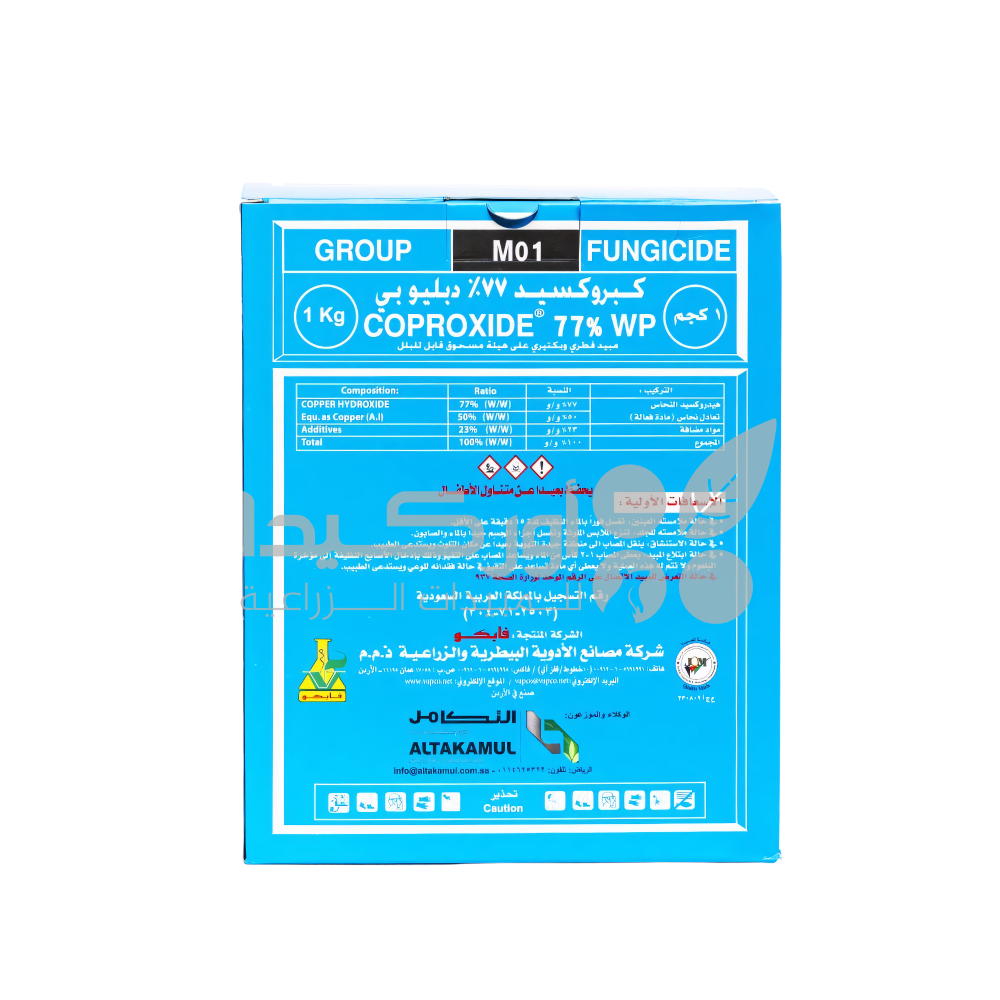

- Copper hydroxide 77% WP is a protective fungicide and bactericide containing 77% pure copper hydroxide . It is used to protect crops from blight, leaf spot, and downy mildew in vegetables, fruits, and field crops. It works by forming a protective layer on the leaf surface that inhibits the growth of fungi and bacterial spores. It is considered one of the safest and most effective copper compounds for agricultural use. It is easily soluble and distributed on the plant, ensuring uniform and long-lasting protection.
Product features:
- It contains highly purified and soluble copper hydroxide for excellent plant surface coverage.
- Effective against a wide range of fungal and bacterial diseases such as blight, spotting, mold, and anthracnose.
- It is used on vegetables, fruits, olive trees, potatoes and other agricultural crops.
- It forms a protective layer on the leaves and fruits that prevents the growth of fungi and germs.
- Safe for crops when adhering to the recommended rates.
- It helps to enhance the plant's natural resistance to diseases and improve the quality of production.
Technical specifications:
- Trade name: Caproxide 77% WP
- Type: Protective fungicide and bactericide
- Active ingredient: Copper hydroxide 77% (equivalent to 50% active copper)
- Formula: Wettable powder (WP)
- Scent: Light
- Country of origin: Jordan
- Manufacturer: VAPCO
- Size: 1 kg
How to use:
- Tomatoes, potatoes, peppers, eggplants: to combat early and late blight and bacterial spot at a rate of 150-200 g per 100 liters of water .
- Cucumber, zucchini, cucurbits: to combat downy mildew and angular spot at a rate of 200 g per 100 liters of water .
- Onions and garlic: to combat leaf mold and white mold at a rate of 200 g per 100 liters of water .
- Citrus, grapes and olives: To combat leaf blight, mildew and anthracnose at a rate of 200-250 g per 100 liters of water .
- Beans and legumes: to combat bacterial leaf spot at a rate of 150 g per 100 liters of water .
- It is preferable to repeat the spraying every 7 to 10 days or as needed depending on weather conditions and the severity of the infestation.
- The prohibition period (before harvest):
- Spraying should be stopped at least 7 days before harvest for vegetables and 14 days for fruit trees.
Precautions for use:
- Wear gloves and a mask during preparation and spraying to avoid direct contact.
- Spraying is prohibited during periods of high heat or near bees and water sources.
- Do not mix with alkaline pesticides or mineral oils to avoid a reaction.
- Store in a cool, dry place out of reach of children.
- Workers are prohibited from entering the field until the spray has completely dried.
Advice for farmers:
- Use caproxine in the early stages of plant growth as a primary preventative measure against fungal and bacterial diseases.
- Make sure to cover the leaves well on both sides and repeat the spraying every 7-10 days to maintain continuous protection and production quality.