
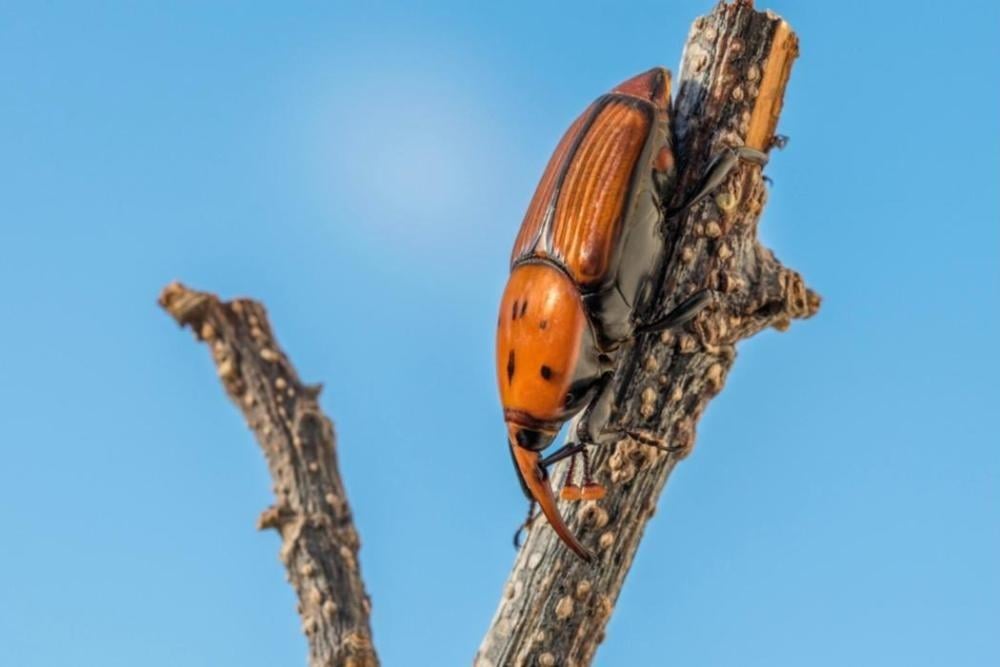

The palm is a long-lived tree that takes years to bear fruit, so losing a single palm means losing whole seasons. The most dangerous thing about palm pests is that some of them work inside the trunk or the heart of the palm, so the damage only shows once treatment has become difficult.
This guide covers the most common palm pests, how to tell their symptoms apart, and the general steps for control and prevention. Each pest has its own article, linked under its name.
Quick overview
- Main pests: red palm weevil, dubas bug, palm stem borer, date moth and scale insects.
- Affected crops: palms of all varieties, in productive farms as well as gardens and resorts.
- Symptoms: wilting or drooping fronds, sticky or honey-like secretions, sawdust and tunnels in the trunk, and damaged or falling fruit.
- Most important step: regular early inspection. Finding the problem at the start is what saves the palm.
What are the types of palm pests?
Palm pests differ in where they attack: some hit the trunk and the heart, some the fronds, and some the fruit. Knowing the location helps you identify the pest before choosing a treatment.
Red palm weevil
A beetle that lays eggs in the trunk, where its larvae feed inside. It is one of the most dangerous palm pests because the infestation stays hidden for a long time.
Dubas bug
A sucking insect that produces honeydew. Dust and fungi collect on it, so fronds and fruit get dirty and growth weakens.
Palm stem borer
Its larvae dig tunnels in the trunk, which weakens the palm and opens the door to secondary infestations.
Date moth
Its larvae feed on dates in the farm and in storage after harvest, spoiling the crop and lowering its value.
Scale insects
Small insects that attach to fronds and trunk under a protective cover and suck sap, so fronds turn yellow and the tree weakens.
How do I recognise a palm infestation?
Inspect the palm from base to crown and watch for these signs:
- Wilting or yellowing of the middle fronds, or a drooping heart.
- Sawdust or a brown liquid with a fermenting smell at the frond bases or in the trunk.
- A shiny sticky layer on the fronds followed by black sooty mould.
- Small white or brown spots on the fronds that do not move.
- Fruit fouled with webbing and droppings, or falling before it ripens.
If more than one symptom shows up together, photograph the palm and compare the photos with the articles on each pest above.
What damage do palm pests cause?
The damage varies by pest, but the results are clear:
- A weaker palm and a lower date yield.
- Damaged fruit that loses its market value.
- A falling trunk or a dead palm in advanced infestations.
- Spread of the infestation to neighbouring palms.
- Rising control costs the longer the problem goes unnoticed.
Signs that call for checking the palm right away
- Wilting, yellowing or falling middle fronds even though irrigation is fine.
- Brown secretions or a fermenting smell near the frond bases or the trunk, which are signs of red palm weevil.
- Tunnels or wood dust at the base of the trunk or between the frond stubs.
- A white layer or grey scales on fronds and fruit stalks, which is the sign of scale insects.
- Falling or damaged fruit with larvae inside the dates, which is what date moth causes.
Regular inspection and follow-up
The best protection for palms is regular inspection, especially in the warm seasons. Check the frond bases, the trunk and the fruit stalks every month, place pheromone traps against red palm weevil according to the guidelines, and note any change in how the palm looks. Early detection greatly reduces losses and makes treatment easier.
Basic preventive steps
- Avoid wounding the palm during pruning or propagation, because wounds attract the weevil.
- Disinfect pruning tools between one palm and the next.
- Clear palm bases of dry fronds and debris.
- Do not move offshoots or palms from infested areas without inspection.
- Carry out the suitable preventive spray programme on time.
- Report to the relevant authorities when a red palm weevil infestation is suspected.
Common mistakes
- Delaying inspection until severe symptoms appear.
- Heavy pruning that wounds the palm.
- Relying on spraying alone without hygiene and traps.
- Not reporting suspected infestations.
How do I get rid of palm pests?
No single treatment suits every pest. The choice depends on the pest, where it is and how far the infestation has gone:
- Identify the pest first from the symptoms and its own article, because the wrong treatment wastes time and money.
- Remove heavily infested parts and dispose of them away from the farm.
- Use registered pesticides suited to the pest and follow the label and the safety intervals. Options include contact and systemic products and trunk treatments.
- Infestations inside the trunk, such as weevil and stem borer, usually need a dedicated trunk treatment. Message Orkida engineers with photos and we will guide you to the right step.
- Use pheromone traps to monitor and reduce numbers.
- Inspect again after treatment to confirm the infestation has stopped.
How do I stop pests coming back to palms?
- Inspect palms regularly, especially in the warm seasons.
- Prune fronds carefully, disinfect the tools and do not leave pruning wounds exposed.
- Keep the ground around the palm clean and remove fallen fruit and debris.
- Manage irrigation and avoid excess nitrogen fertiliser, which attracts sucking insects.
- Inspect new offshoots and palms before planting and keep them apart from the rest of the farm.
- Coordinating control with neighbouring farms reduces reinfestation.
If you are not sure which pest you have, or you need a control plan for your farm, message Orkida engineers on WhatsApp with clear photos of the palm, or visit your nearest Orkida branch with a photo or a sample, and we will point you to the right step.
Image source: Shutterstock
Frequently asked questions
What is the most dangerous palm pest?
Red palm weevil is among the most dangerous because its larvae feed inside the trunk and symptoms can show up late.
Should I spray palms as prevention?
Prevention is an important part of the programme, but the method and timing depend on the pest and the size of the trees. Follow the product instructions.
When can I detect weevil infestation?
The clearest signs are brown secretions, a fermenting smell and tunnels at the base of the fronds. All of these call for checking the palm right away.
How do I protect dates from the moth?
By cleaning fruit stalks and debris, covering the stalks when needed, watching for infestation before ripening, and following the product instructions.