
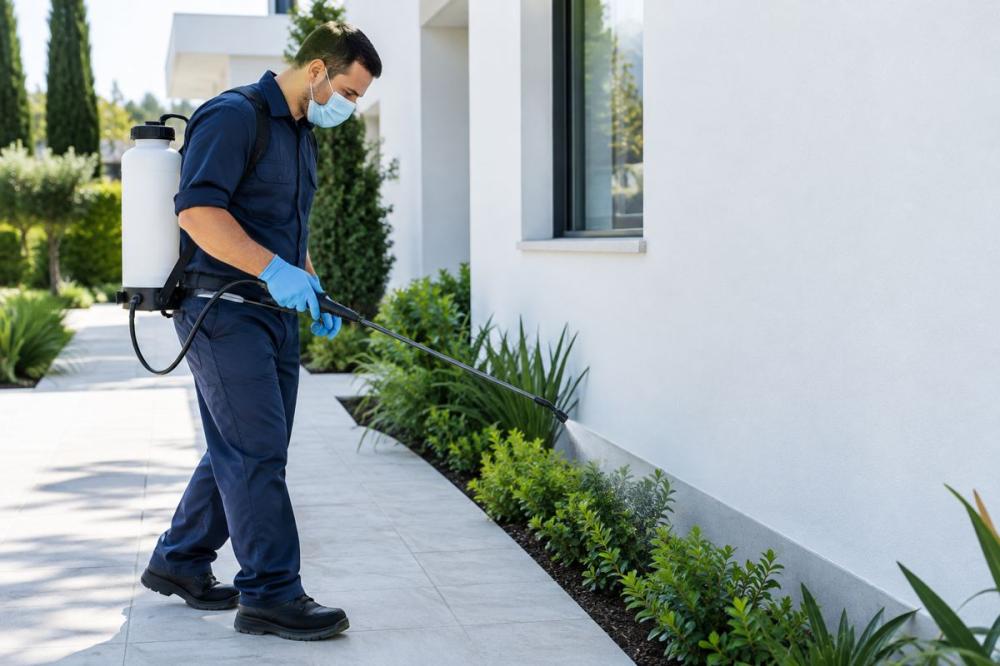

Alpha-cypermethrin is one of the most widely used active ingredients against cockroaches, mosquitoes, flies and bed bugs. It comes in many products under different trade names, such as Alfaquest, Alfavend, Alpha Sect and Project. But each product has its own concentration, use and dose, and this is where many people go wrong.
In this article we explain what alpha-cypermethrin is, which insects it kills, how its products differ, and the dose in millilitres for each use.
What is alpha-cypermethrin?
It is a synthetic pyrethroid, a stronger, purified form of cypermethrin. Same family, but you need a smaller amount to get the same kill.
How does it kill insects?
- By contact and ingestion: the insect dies when it touches or feeds on a treated surface.
- Acts on the nervous system: it causes rapid paralysis, then death.
- Residual effect: on treated surfaces it keeps killing insects that walk over it for a period, depending on the surface, sunlight and cleaning.
Which pests does it control?
- Crawling insects: cockroaches, ants, bed bugs, fleas and silverfish.
- Flying insects: mosquitoes and flies.
- In agriculture: aphids, whiteflies, caterpillars and grasshoppers, with dedicated agricultural products.
How the products differ, and their doses
Alfaquest 100 EC (1 L)
- Concentration: alpha-cypermethrin 10% emulsifiable concentrate.
- Surface spray: 10 to 25 ml per litre of water.
- Fogging: 5 to 10 ml per litre of diesel.
Alfaquest 100 EC (5 L)
- Mosquitoes: 1 ml per litre of water.
- Cockroaches: 2 ml per litre of water.
- Suited to large areas such as drains, warehouses and public gardens.
Alfavend 100 EC
- Made for thermal fogging in open areas.
- Mix: 1 litre of insecticide per 150 litres of kerosene or diesel.
- Rate: 10 litres of the mix per hectare.
Alpha Sect 6 SC
- Odourless suspension concentrate, suitable inside homes, hotels and hospitals.
- Cockroaches and ants: 25 ml per litre of water.
- Flies and mosquitoes: 50 ml per litre of water.
Project 100 EC
- ULV spray: 50 ml per litre.
- Surface spray: 20 ml per litre of water.
- Thermal fogging: 10 ml per litre of diesel.
Agricultural products: Alphacide and Alfatrin
- For field crops such as wheat, barley, maize and alfalfa.
- Rate: 150 to 200 ml per hectare.
- Pre-harvest interval: 14 days.
Where and how to spray
For cockroaches and crawling insects
- Spray cracks and corners behind the fridge and oven, under the sink and around drain pipes.
- Spray along the edges of walls and floors, not the middle of the room.
- Do not wipe treated surfaces for several days, so the residual effect remains.
For mosquitoes and flies
- Spray where the insects rest: shaded walls, under canopies and around dense plants.
- Use fogging for large open areas, with a thermal fogger or a ULV machine.
- Treat breeding sites: standing water needs a dedicated larvicide; spraying alone is not enough.
Common mistakes
- Overdosing: it does not increase the kill; it only increases odour and risk to people and animals.
- Spraying food surfaces and utensils: cover or remove everything before spraying.
- Relying on the same active ingredient for a long time: cockroaches and mosquitoes can develop resistance to pyrethroids. Rotate with another group, such as gels or baits.
- Using an agricultural product at home: agricultural products are not designed for homes. Use a public-health product indoors.
- Spraying near fish tanks or water: alpha-cypermethrin is highly toxic to fish and bees.
Safety
- Wear gloves and a mask while mixing and spraying.
- Leave the treated area and ventilate it for two to three hours before returning.
- Keep children and pets away until the spray has dried.
- Cover fish tanks and switch off their pumps before spraying.
Products from Orkida
- Alfaquest 100 EC 1 L: alpha-cypermethrin 10%, surface spray 10–25 ml per litre, fogging 5–10 ml per litre of diesel.
- Alfaquest 100 EC 5 L: for large areas, 1 ml for mosquitoes and 2 ml for cockroaches per litre of water.
- Alfavend 100 EC 1 L: for thermal fogging, 1 L per 150 L of kerosene or diesel.
- Alpha Sect 6 SC 1 L: odourless for homes, 25 ml for cockroaches and 50 ml for flies and mosquitoes per litre.
- Project 100 EC 1 L: ULV 50 ml, surface spray 20 ml, fogging 10 ml per litre of diesel.
- Alphacide 100 EC 1 L: for field crops, 150–200 ml per hectare.
Frequently Asked Questions
What is the difference between cypermethrin and alpha-cypermethrin?
Alpha-cypermethrin is a purified, stronger form of cypermethrin, so you need less of it for the same result.
How many ml of alpha-cypermethrin per litre for cockroaches?
It depends on the product: Alfaquest 1 L 10–25 ml, Alpha Sect 25 ml, and Project 20 ml per litre of water.
How long does alpha-cypermethrin last?
On shaded indoor surfaces it lasts for weeks, and less with sunlight, cleaning and humidity.
Is alpha-cypermethrin dangerous for cats?
Cats are sensitive to pyrethroids. Keep them away until the spray is completely dry, and do not spray their bedding or bowls.
Does it kill bed bugs?
It kills bed bugs that contact the spray, but bed bugs need a full programme: treat cracks and bed edges and repeat after 10 to 14 days to catch newly hatched bugs.