
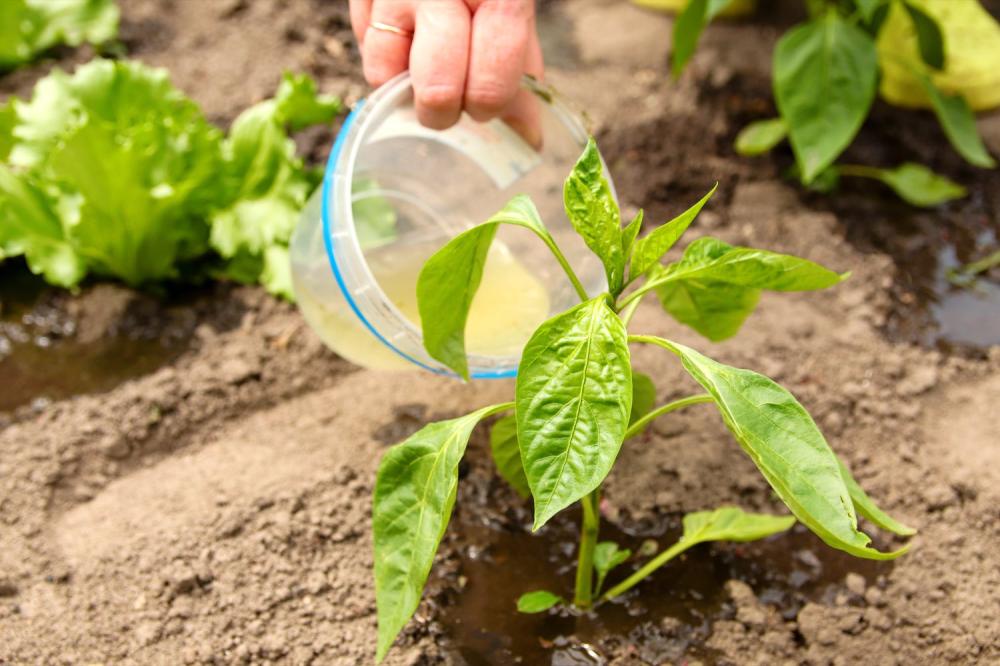

Fish fertiliser is a liquid organic fertiliser made from marine fish such as sardines, and it has become one of the most popular organic fertilisers for farms and home gardens. Its strength is that it combines major nutrients (nitrogen, phosphorus and potassium), amino acids and micronutrients in one liquid that plants absorb quickly.
This article explains the benefits of fish fertiliser, how much to use on vegetables, trees and palms, and how to apply it properly through irrigation or as a spray.
What is fish fertiliser?
It is made by breaking down fish and fish by-products into a concentrated liquid. There are two well-known types:
- Fish emulsion: made with heat; higher in major nutrients, but some of the protein and oils break down.
- Fish hydrolysate: made with enzymes at low temperature, so it keeps more amino acids and oils and feeds soil microorganisms.
Either way, the result is an organic fertiliser that works fast compared with solid organic fertilisers.
Benefits of fish fertiliser
- Feeds plants quickly: it is a liquid and its nitrogen is easy to absorb.
- Rich in amino acids: helps plants cope with heat, salinity and stress and saves them the energy of building proteins.
- Activates soil microorganisms: improving fertility with regular use.
- Supports root and vegetative growth, especially early in the season and after transplanting.
- Contains micronutrients such as iron, zinc, manganese and copper.
- Suits organic growing and home gardens when used at the right rate.
Fish fertiliser analysis
Analysis varies between products. As an example, the Omani fish fertiliser we stock has, according to its label:
- Nitrogen 12% - phosphorus 8% - potassium 5%.
- Iron, zinc, manganese and copper.
- pH around 3, so it is acidic; useful in alkaline soil, but it needs care when mixing.
How much fish fertiliser to use and how
From the liquid fish fertiliser label:
- Vegetables (with irrigation): 200 to 300 ml per 100 litres of water, repeated every two weeks.
- Trees and palms: 500 ml per tree or palm in the irrigation water, repeated every 3 weeks.
- Foliar spray: 300 to 500 ml per 100 litres of water, repeated every 10 to 15 days.
- Greenhouses: 1 litre per 500 m² once a week.
Tips for correct use
- Shake the container well before use, as the contents settle.
- With drip irrigation: strain the solution and clean the filters afterwards so emitters do not clog.
- Spray early morning or late afternoon: avoid strong sun.
- Start with the lower rate on young seedlings and sensitive ornamentals.
Fish fertiliser vs other organic fertilisers
- Fish fertiliser: liquid, fast-acting, suits frequent feeding through irrigation or spraying.
- Cow manure: solid, slow, mainly improves soil structure over the long term.
- Poultry manure: solid, higher in nitrogen than cow manure, and must be treated.
- Seaweed extract: focuses more on natural hormones and stimulating roots and flowering than on feeding.
The best results come from combining them: a solid fertiliser to build the soil, and a liquid such as fish fertiliser for fast feeding. More in our organic fertilisers article.
Common fish fertiliser mistakes
- Overdosing: burns roots or leaves, especially in the heat.
- Mixing with alkaline materials without testing: it is acidic and can cause precipitation. Test the mix in a small container first.
- Leaving it in the irrigation tank for a long time: it ferments, smells and clogs the system.
- Relying on it alone: it is fast feeding, and poor soil also needs organic matter such as humic acid.
- Storing it in the sun: it spoils and changes consistency, so keep it cool and sealed.
Products from Orkida
- Codamin 150 organic amino acids and micronutrients by Coda, 5 L
- Pixan Amino plant-based amino acids by Planta, 1 L
- LG 600 seaweed extract by Leili Group, 1 kg
- Gulf Agro liquid fish fertiliser, 5 L
Fish fertiliser FAQs
Does fish fertiliser smell?
Yes, it has a clear fishy smell when applied, but it fades within a day or two after irrigation.
Is fish fertiliser suitable for houseplants?
Yes, at a diluted rate. Start with the lowest dose, and it is better for balcony or yard plants because of the smell.
Can I use it on date palms?
Yes, at 500 ml per palm in the irrigation water every 3 weeks according to the label.
How soon does fish fertiliser work?
Usually within about a week you see new growth and darker leaves, because it is absorbed quickly.