
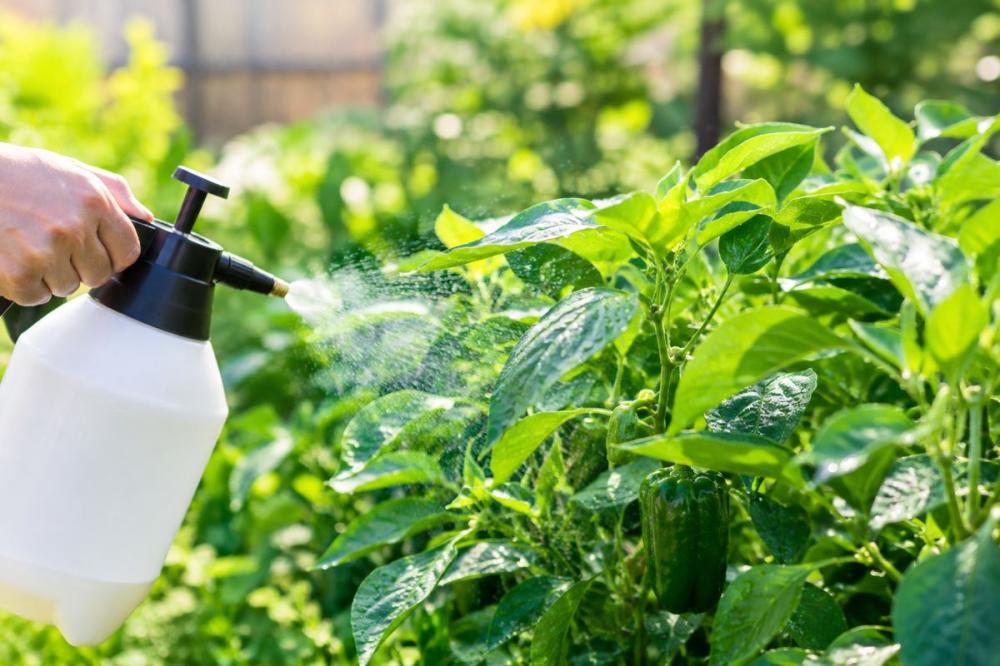

If you have aphids, whiteflies or mealybugs on your vegetables or garden trees and want something gentle on the plant that still kills the insect without a strong chemical residue, potassium soap (insecticidal soap) is one of the first options. It works on contact: it breaks down the outer layer of soft-bodied insects and blocks their breathing pores, so they die within hours.
In this article we explain what potassium soap kills and what it does not, the dose in millilitres, the right way to spray, and the mistakes that scorch leaves or waste the treatment.
What is potassium soap?
It is a soap made from potassium salts of fatty acids that dissolves in water and is sprayed on plants. It is different from ordinary dish soap: kitchen soap contains fragrances and detergents that can burn leaves, while agricultural soap is made for plants.
How does it kill insects?
- Contact only: the spray has to hit the insect itself while wet.
- No residual effect: once it dries it does not kill insects that arrive later, so repeat sprays matter.
- Cleans the leaves: it washes off honeydew and the black sooty mould that grows on it, so the leaf can breathe and make food again.
Which pests does it work on?
- Aphids of all colours, on vegetables, roses and citrus.
- Whiteflies, especially the nymphs under the leaf.
- Mealybugs in the early stage, before they build a thick waxy coat.
- Scale insects in the crawler stage (the young mobile ones).
- Red spider mites, reducing their numbers.
What does it not work on?
- Beetles and hard-bodied insects: their shell protects them.
- Large caterpillars such as fruit worms and Tuta absoluta.
- Eggs: they are not affected, which is why you repeat the spray after a few days.
Dose and mixing
With Plant Care potassium soap the dose is 10 ml per litre of water. That means:
- 1.5-litre sprayer: 15 ml.
- 5-litre sprayer: 50 ml.
- 20-litre backpack sprayer: 200 ml.
Add the water first, then the soap, and stir gently so it does not foam too much. Use the mix the same day.
Water quality matters
Hard water (salty or high in lime) makes the soap clump and weakens it. If your well or tap water is heavy, use desalinated or drinking water.
How to spray correctly
- Spray early in the morning or late afternoon, not at midday in strong sun.
- Cover the top and underside of the leaves, because aphids and whiteflies gather under the leaf.
- Wet the insect itself until the spray just starts to drip, because insects that stay dry survive.
- Repeat every 5 to 7 days, two or three times, to catch the young that hatch from eggs.
Test before spraying the whole plant
Some plants are sensitive to soap, such as some ferns and thin-leaved plants. Spray two or three leaves and wait a day. If there is no burning or yellowing, spray the whole plant.
Common mistakes
- Spraying in the heat: above about 32 °C in direct sun, soap can burn leaf edges.
- Overdosing: double the amount does not mean double the kill; it only raises the risk of burn.
- Spraying thirsty plants: water the plant a day before, because wilted leaves are damaged faster.
- Relying on it for a heavy infestation: if the infestation is widespread, start with a systemic insecticide and follow up with soap for cleaning and maintenance.
- Mixing it with sulphur or copper products without a small test, because the mix can scorch the leaves.
When to choose soap and when to choose an insecticide
Potassium soap suits early infestations, vegetables close to harvest, and indoor or balcony plants.
A systemic insecticide is better when the infestation is heavy or the insect hides inside curled leaves. For example, Acetal 20% SL for aphids and whiteflies at 0.25–0.5 ml per litre of water, and Fim 240 SC for mealybugs at 0.5–1 litre per 100 litres of water with a spreader.
You can spot the start of an infestation early with yellow sticky boards, which catch whiteflies and winged aphids.
Products from Orkida
- Plant Care Potassium Soap 1 L: agricultural soap for aphids, whiteflies, mealybugs and scale insects, 10 ml per litre.
- Eco Spray 1.5 L Sprayer, Turbo Model: a hand sprayer with good pressure for reaching under leaves at home and on the balcony.
- Acetal 200 SL 1 L: systemic acetamiprid 20% for aphids and whiteflies when the infestation grows.
- Fim 240 SC 500 ml: spirotetramat for mealybugs, aphids and whiteflies.
- Yellow Sticky Board 45×27 cm: for early monitoring of whiteflies and flying insects.
Frequently Asked Questions
How many ml of potassium soap per litre?
With Plant Care, 10 ml per litre of water, which is 50 ml in a 5-litre sprayer.
Can I use dish soap instead?
We do not recommend it. Dish soap contains fragrances and strong detergents that can burn leaves; agricultural soap is made for plants.
Does potassium soap harm bees?
It only kills insects it touches while wet. Spray in the late afternoon when bees are less active; once dry it does not harm them.
How often should I spray?
Every 5 to 7 days, two or three times, to catch the generations that hatch from eggs.
Does it work on red spider mites?
It reduces their numbers, but a heavy infestation needs a dedicated miticide.