
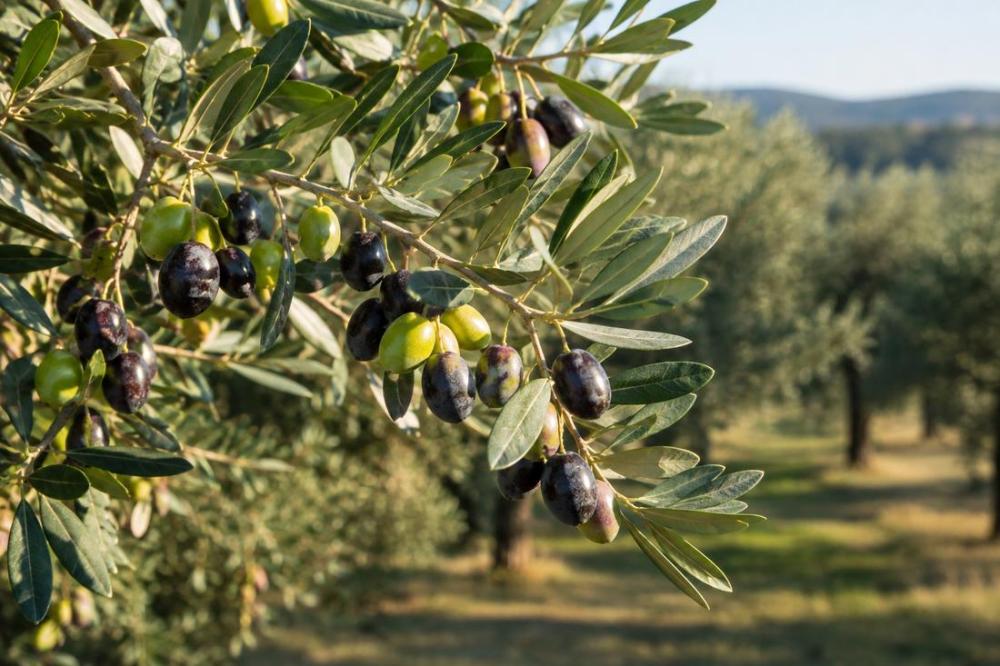

The olive tree is one of the longest-lived and most drought-tolerant trees, and does well on farms and in homes, especially in northern and highland areas. But the question asked most is: why does my olive flower but not set fruit? Or it fruits one year and rests the next.
In this article we explain how to care for an olive tree, from watering, feeding and pruning to why the crop is light, and how to treat its most common pests and diseases, with rates.
A quick look at olive
- It needs winter chill to form flowers, so in very hot areas the crop is lighter.
- It tolerates drought and salinity well, but the best yield needs regular watering during flowering and fruit set.
- It does not like heavy soil where water stands.
- It fruits on one-year-old wood, so pruning directly affects the crop.
Why does olive flower but not fruit?
- Not enough winter chill for the variety.
- Drought or hot wind during flowering.
- A lack of boron, which affects fruit set.
- Alternate bearing: a heavy crop year tires the tree so it rests the following year.
- Some varieties set better with another variety planted nearby.
Watering and fertilizing
- Watering: regular from the start of flowering until the fruit has grown, less after harvest and in winter.
- Well-rotted organic manure in winter: 5 to 15 kg per tree depending on age and size.
- Before flowering: spray calcium and boron at 1 ml per litre of water.
- While fruit is sizing: Fert Drip 10-10-40 at 50 to 100 g per tree with irrigation.
Pruning olive
- After harvest or at the end of winter.
- Open the centre of the tree so sun and air get in, because shaded wood does not fruit.
- Remove suckers and dead and crossing branches.
- Moderate pruning every year is better than hard pruning every few years, and reduces alternate bearing.
Common olive pests
Olive fruit fly
- The sign: small holes in the fruit with maggots inside, and fruit dropping or spoiling.
- The fix: see the olive fruit fly article below; the most important step is collecting fallen fruit.
Scale insects
- The sign: black or brown scales on branches and under leaves, with sticky honeydew and black mould.
- Treatment: Bon Oil mineral oil at 10 ml per litre of water in mild temperatures.
Olive moth and caterpillars
- The sign: chewed leaves and damaged flowers and buds.
- Treatment: Deltathrin 25 EC at 0.35 to 0.5 ml per litre of water.
Peacock spot (olive leaf spot)
- The sign: dark round spots with a yellow halo on the leaves, followed by leaf drop.
- Treatment: Armitel C copper fungicide at 2.5 g per litre of water, in autumn and early spring, especially after rain.
- Prevention: pruning that opens the tree to air.
Products from Orkida
- Bocal Plus calcium and boron, 1 L: 1 ml per litre before flowering.
- Fert Drip 10-10-40: for fruit sizing, 50 to 100 g per tree.
- Black Cow organic cow manure, 25 kg: 5 to 15 kg per tree.
- Bon Oil 965 EC, 1 L: for scale insects, 10 ml per litre.
- Deltathrin 25 EC: for caterpillars, 0.35 to 0.5 ml per litre.
- Armitel C copper fungicide: for peacock spot, 2.5 g per litre.
Frequently Asked Questions
Why does my olive fruit one year and rest the next?
That is alternate bearing, reduced by moderate pruning every year and feeding after harvest.
When should I prune olive?
After harvest or at the end of winter.
How many years until an olive tree fruits?
Young trees usually start fruiting after 3 to 5 years depending on the variety and care.
What are the dark spots on my olive leaves?
Usually peacock spot, treated with a copper fungicide.