

The Short Answer
Once spraying ends, every homeowner asks the same question: when can I return, and can I sleep in my room tonight? The honest answer is that no single number suits every pesticide; the period depends on the label on the pack, the treatment type, and the size and ventilation of the place. Yes, you return after treatment ends, surfaces dry and the place is well ventilated, but children, the elderly and pets return last. In this guide we explain why the period differs from one treatment to another, how to prepare the home before spraying and reorganize after, what is least exposing in bedrooms and kitchens, and what to do if you feel irritation after returning.
Why the Wait Differs
The real risk is during spraying and in the minutes right after, when mist hangs in the air and surfaces are wet. Once dry, the product stays fixed on the surface to do its job and the chance of inhaling it drops.
- Gels and baits: applied as small spots in cracks, so they rarely need a long absence.
- Dusts: blown into cracks and voids, away from sitting areas.
- Liquid sprays: need more time for surfaces to dry and the air to refresh.
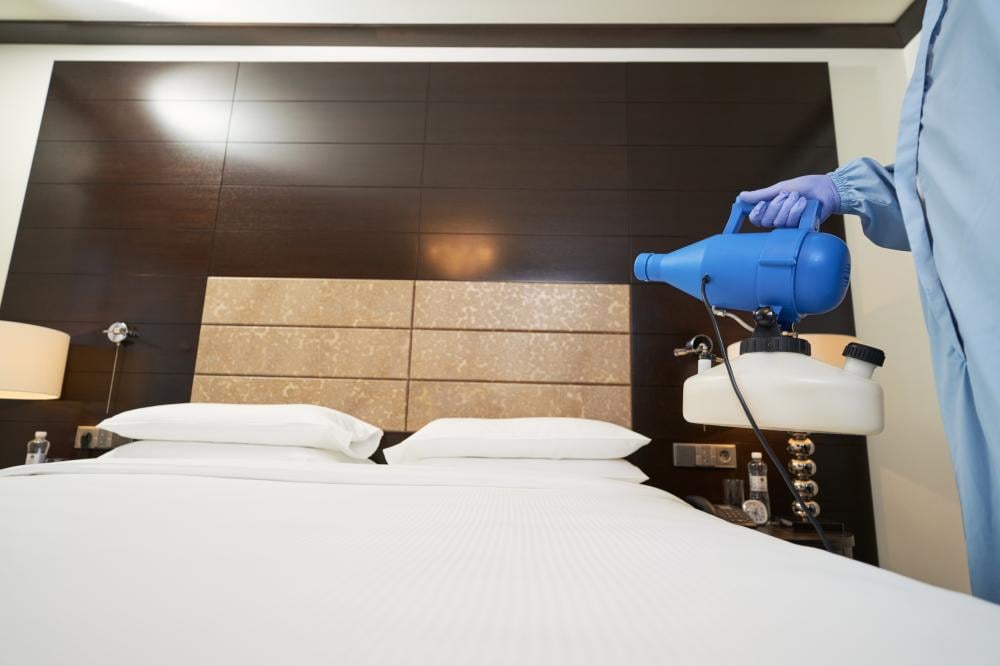
- Fogs and smokes: need a longer absence and strong ventilation, used indoors only as the label allows.
Before Treatment: Prepare the Home
- Move children and pets out of the whole place until the label time has passed.
- Cover fish tanks and switch off their air pumps.
- Put away or seal food and utensils in closed cabinets.
- Remove toys and bedding you do not want exposed.
- Pull furniture slightly from walls so the product reaches cracks behind it.
During Treatment
- Treat cracks, corners and behind appliances rather than spraying the whole room.
- Leave or move well away from treated rooms until the mist settles.
- Switch off air conditioners while spraying if the label says so.
After Treatment: Return in Order
- Wait the full time on the label before entering.
- Open windows and doors and run fans to refresh the air.
- Make sure surfaces are dry before anyone touches them.
- Bring children and pets back after ventilation, not before.
When Can I Sleep in the Treated Room?
Bedrooms and kitchens are more sensitive, so choose lower-exposure methods there, such as gels and dust in cracks instead of wide spraying, and ventilate well before sleeping. If you notice a strong smell or irritation of the eyes, nose or throat, step into fresh air and ventilate more.
Children, the Elderly and Pets
These groups are more sensitive, so let them return last, check that floors and surfaces they touch are dry, and keep pets from licking or walking on treated surfaces before they dry.
Common Mistakes After Spraying
- Wiping treated surfaces right away, which removes the residual before it works.
- Returning early because the smell faded while surfaces are still wet.
- Sealing the home with no ventilation.
- Spraying extra product assuming it works faster.
A Quick Checklist Before You Enter
Before entering, confirm four things: the period written on the label has passed, surfaces people touch are dry, air has been renewed by opening windows and doors and running fans, and the strong smell has gone. If any is missing, wait. Hurrying is not in your interest, since the smell may fade while surfaces are still wet.
Pets, Fish and Birds
Birds are very sensitive to smells and spray, so move them well away before treatment and delay their return until the air is renewed. Cover fish tanks and turn off air pumps during spraying, and restart them after ventilation. Cats and dogs should not lick or walk on treated floors and surfaces before they dry. If you have a sick or young animal, consult the veterinarian and tell them the product name.
Bedrooms and Kitchens
Treat these rooms with gel and dust inside cracks rather than broad spraying, reducing contact and smell. Before sleeping, make sure the room is well ventilated, and change bedding if spray reached it. In the kitchen, clean preparation surfaces only and keep food and dishes covered during treatment.
If You Feel Irritation After Returning
If headache, irritation of the eyes, nose or throat, or nausea appears, leave immediately for fresh air, open ventilation more and move children away. If symptoms continue, consult a doctor or call a poison center, bringing the product pack or a photo of its label. Do not ignore symptoms or return until they settle. Afterwards read our guide to cleaning the home after spraying to learn what to wipe and what to leave.
Products from Orkida
- K-Othrine DP 0.05 — An Envu dust applied inside dry cracks and voids, which keeps contact inside living areas low.
- Advion Gel — A Syngenta cockroach gel applied as small spots where roaches hide, with no spraying.
FAQ
How many hours should I stay out?
It depends on the product and method; the only reference is the label on the pack.
Should I mop the floors afterward?
Leave treated surfaces unwiped where possible, and clean only areas touched by children or food after they dry.
Does incense or an air freshener remove the smell?
No, it only masks it. Good ventilation is the fix.
How do I know the place is safe?
When the label time has passed, surfaces are dry and any strong smell is gone after ventilation.
Summary
A safe return depends on the label, ventilation and dry surfaces. Prepare the home first, prefer gels and dust in sensitive rooms, and bring children and pets back last.