
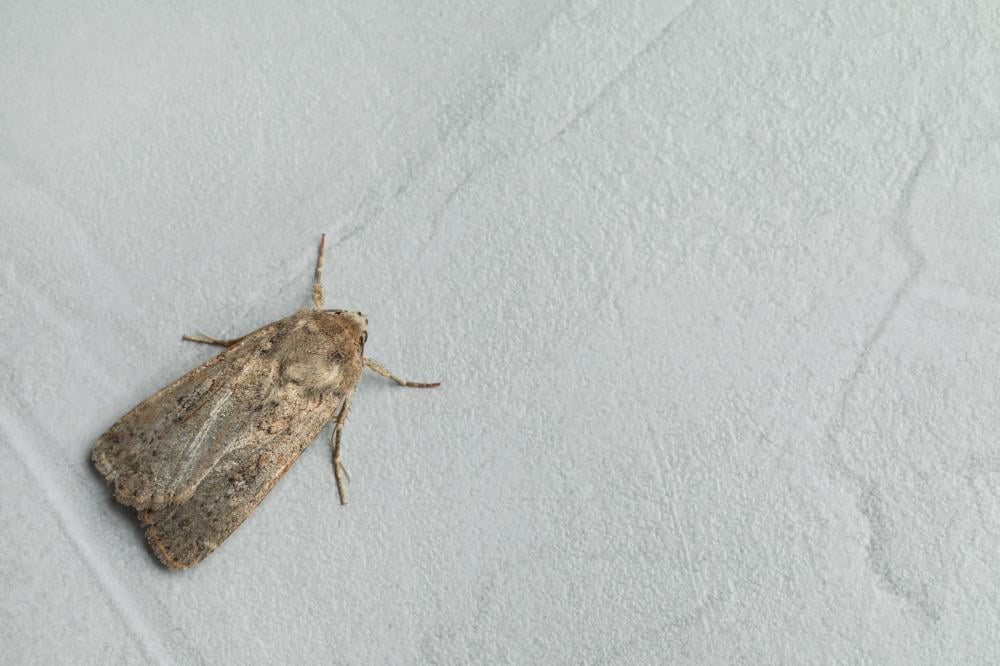

Moths (al-itta) are small butterfly-family insects, and the damage comes from the larvae, not the adult moth. You find them in clothes, carpets, grains and stored goods, and you may notice larvae or small cases on the wall and assume the wall itself is infested.
Common types
Clothes moths
- A small golden or beige moth that prefers dark places.
- Larvae feed on wool, fur and silk and on fabrics soiled with sweat or food.
- They leave small holes in clothes and carpets.
Pantry moths (grain moths)
- Infest rice, flour, nuts, dates and feed and dry grains.
- Leave silk threads and clumps inside packages.
Why moths appear on walls
- Some larvae leave the pantry or wardrobe looking for a place to pupate, climbing walls and ceilings.
- Small cases or cocoons appear in wall and ceiling corners and behind furniture.
- Small resting moths may be seen on the wall near lights.
This means the source is usually nearby: a wardrobe, food store or carpet, not the wall itself.
Signs of infestation
- Small irregular holes in wool and carpets.
- Silky webbing and tiny pellet-like droppings.
- Small moths flying slowly when you open the wardrobe or store.
- Threads and clumps inside flour and grains.
How to get rid of them
- Find the source first: check wardrobes, carpets, the store and packages.
- Throw infested food in a sealed bag outside the home.
- Wash washable clothes in hot water and dry well; use dry-cleaning for delicate items.
- Vacuum walls, corners and ceilings and empty the vacuum outdoors.
- Wash shelves with soap and water and dry them before restacking.
- Use sticky pheromone traps to monitor and reduce moth numbers.
Note: do not spray insecticide on food or clothes. If the problem is large or keeps coming back, visit your nearest Orkida branch with a photo or a sample and we will point you to the right product.
The moth life cycle: where does the damage happen?
A moth passes through four stages: a tiny egg, a larva, a pupa and an adult moth. The larva is what feeds, making the holes in fabrics and spoiling food. The adult's job is to mate and lay eggs, and it usually does not eat. So killing flying moths alone does not solve the problem, because the eggs and larvae stay hidden.
The cycle is shorter in warm weather, so moths multiply faster, which is why infestations show up more in summer.
How to check the wardrobe and pantry weekly
- Turn over woollens and rarely used clothes and check folds, collars and pockets.
- Check carpets and rugs under furniture and along edges.
- Look for fine silky threads or small cases resembling rice grains on fabric or walls.
- In the kitchen, check containers of grain, dates and nuts for clumps, threads and signs of movement.
Treating infested fabrics without damaging them
- Take out suspect items and shake them away from the other clothes.
- Wash them as the fabric label allows. Delicate fabrics need dry cleaning.
- For items that cannot be washed, sunlight and airing help, and freezing for several days in a sealed bag is possible.
- Vacuum the wardrobe, then wipe it and dry it before putting clothes back.
- Store clean clothes in sealed bags or boxes.
Traps and smells: what helps and what does not
- Pheromone traps: attract males and help detect and monitor an infestation, but they do not treat larvae.
- Lavender and aromatic woods: may keep moths away for a short time but do not kill larvae and will not protect you if the item is already infested.
- Mothballs: a toxic substance that may harm children and pets and leaves a strong smell. They are not recommended inside living rooms.
Storing dry food so moths cannot get in
- Move grain, flour and dates to sealed glass or thick plastic containers.
- Inspect new packages before bringing them into the pantry, since infestation often arrives with them.
- Do not mix a new package with an old one, and use the oldest first.
- Dispose of an infested package firmly outside the house and clean the shelf thoroughly.
How to prevent a return
- Keep grains, flour and nuts in airtight containers.
- Store clothes clean and dry in sealed bags; never store soiled clothes.
- Air out wardrobes and open them periodically.
- Check the store monthly and discard old food.
- Seal cracks and fit screens on windows.
FAQ
Do moths eat the wall?
No. The wall is only where larvae pupate or moths rest; the source is nearby.
Are moths harmful to people?
They do not bite or directly spread disease, but infested food should not be used.
Are mothballs enough?
They may repel moths temporarily but do not treat the source. Cleaning and sealed storage work better, and mothballs are unsuitable around children or food.
Summary
Treat moths at the source, not the wall. Find the wardrobe or store, discard infested items, clean corners, and store in airtight containers.Visit our branches